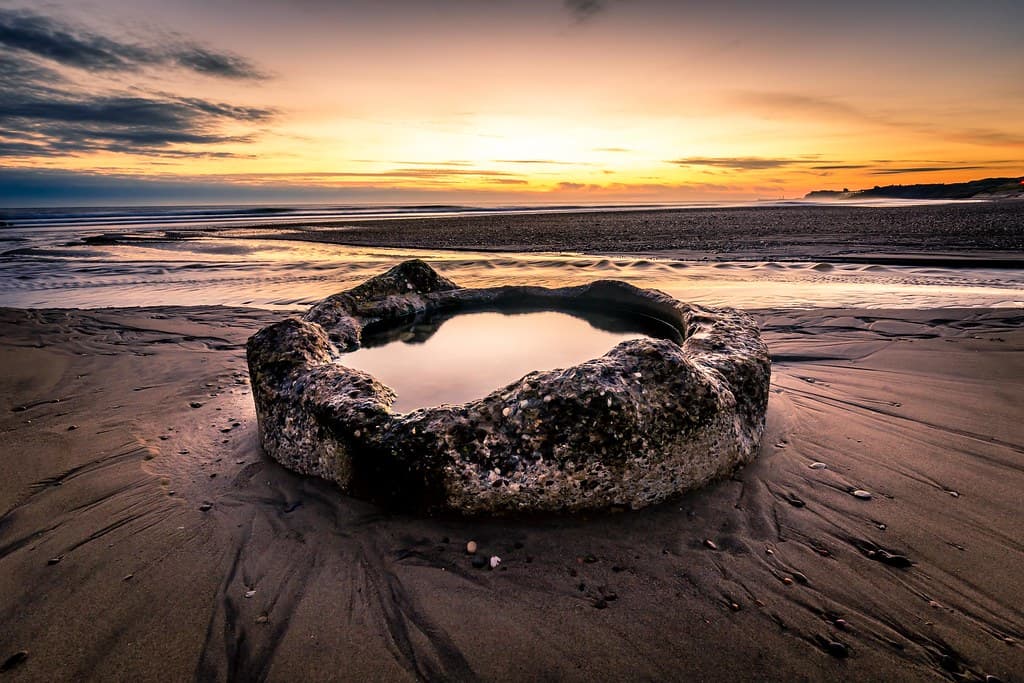
Counting the wavesβ¦

Kettleness Beach, a hidden gem on the North Yorkshire coast, is a testament to the rewards of seeking out the less-traveled path. Unlike the more accessible resort beaches, Kettleness demands a journey, typically involving a scenic walk along the Cleveland Way before a descent to its secluded shore. This effort is richly repaid by the sheer drama of the landscape: colossal, ancient cliffs loom over a rocky expanse, creating a natural amphitheater where the North Sea performs its timeless symphony. The beach itself is a captivating mix of pebbles, shingle, and exposed rock platforms, particularly striking at low tide when a wider expanse of the shore is revealed. This is a prime location for fossil hunting, with ammonites and belemnites often found embedded in the dark shale, whispering tales of prehistoric oceans. The isolation here is palpable; you're more likely to share the beach with a few fellow adventurers or a colony of seabirds than with crowds, making it an ideal spot for quiet contemplation and photography. The invigorating sea air, often carrying the scent of salt and seaweed, sharpens the senses. The soundscape is dominated by the rhythmic crash of waves and the cries of gulls circling high above the cliff face. Kettleness Beach offers a profound sense of wildness and escape, a place where you can truly disconnect and immerse yourself in the raw, untamed beauty of the English coast. It's a powerful reminder of nature's enduring grandeur.
Places, rentals, tours and events within walking and driving distance of Kettleness Beach.
Photos
Kettleness Beach is a rocky, remote shore backed by cliffs, and as such, it does not have lifeguards or typical beach facilities. The conditions can be unpredictable, with strong tides and currents possible. Swimming is generally not recommended due to the rocky nature of the beach and potential hazards. It's more suited for exploring, fossil hunting, and enjoying the dramatic scenery. Always check tide times as access can be cut off.
To experience the solitude of Kettleness Beach, visit during the off-peak seasons, such as late autumn, winter, or early spring. Weekdays are significantly quieter than weekends. Even in summer, its remote access means it rarely gets crowded. Arriving early in the morning or later in the afternoon can also enhance the feeling of seclusion. Always check tide times, as low tide is often best for exploration.
Kettleness Beach is a remote shore reached from coastal paths, rather than direct resort routes. Access typically involves parking in the small village of Kettleness or a nearby designated area, then following steep and sometimes challenging footpaths down to the beach. Suitable footwear is essential, and the descent can be strenuous. Parking is usually limited to small, informal areas in the village, so plan accordingly.
Kettleness Beach is completely undeveloped, so there are no direct food or lodging facilities on the beach itself. The small village of Kettleness may have very limited, if any, amenities. For food and lodging, you would need to travel to nearby larger villages or towns such as Runswick Bay, Staithes, or Whitby, which offer a range of pubs, cafes, and accommodation options. It's best to bring your own refreshments.
Kettleness Beach is unique for its remote, cliff-backed shore, offering dramatic scenery and a true sense of wildness, far from typical resort crowds. It's particularly known among enthusiasts for its geological interest and is a popular spot for fossil hunting due to the exposed cliffs. The challenging access adds to its allure as a hidden gem, appealing to those seeking adventure and natural beauty rather than traditional beach amenities.