Counting the waves…
Counting the waves…
A refined fusion of water purity, environmental stability, and communal vibrancy for Nightmute Beach.
View MethodologyAnalyzed via live sensors and environmental data.
Wave height, wind, and atmospheric stability.
Live footfall and crowd balance metrics.
Community reviews and curated sentiment.
“You reach Nightmute by air—no roads connect this dot on the Yukon-Kuskokwim Delta to anywhere else. The beach stretches gray and wide beneath endless sky, driftwood piled in skeletal arcs, the wind carrying salt and…”
Limited recent visitor reports — live OBI telemetry is your best guide for current conditions.
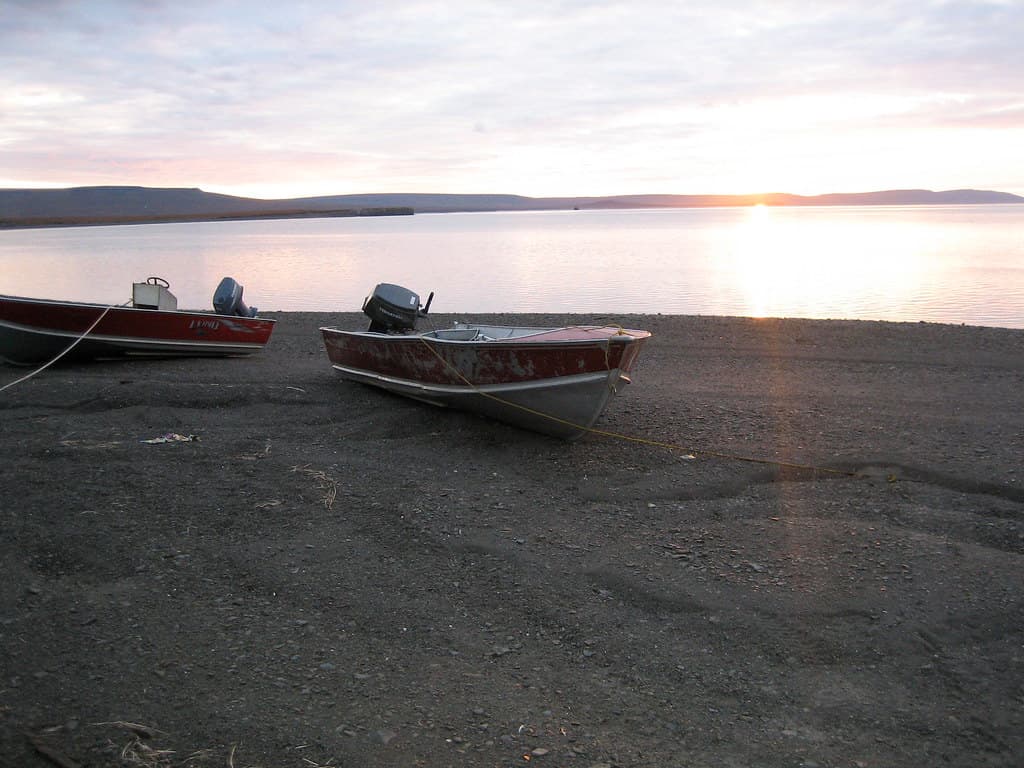
The shoreline at Nightmute refuses easy categorization. Gray sand gives way to mud flats when the tide pulls back, exposing a moonscape ribbed with channels. Driftwood—bleached white, twisted by ice and current—litters the upper beach in sculptures that shift with every storm. The Bering Sea rolls in cold and pewter-toned, its waves methodical rather than dramatic. Overhead, the light does strange things: summer brings midnight sun that turns the water molten; winter offers darkness broken only by aurora and starfields so dense they feel tactile.
This is a working beach in a Yup'ik community of fewer than three hundred souls. You'll see fishing nets stretched for mending, four-wheelers parked above the tide line, fish racks standing sentinel. The village itself clings to higher ground, wooden houses painted in primary colors against the monochrome tundra. There are no cafés, no rental kiosks, no designated viewpoints—just the raw interface of land and sea.

Driftwood Architecture
Tundra Margin Walk
Photograph ice-sculpted timber formations
Follow shoreline toward river deltas
Watch seasonal fish drying racks
Where it is
Nightmute Beach
Nightmute, Alaska, USA
60.480200°, -164.723700°
Weather
Loading…
Swell
—
Temp
Warm · Restorative
UV Index
Moderate
Wind
—
Tidal State
Last known
Max Sunlight
—
Ideal Shade
—
May - Sep (Peak)
Jan - Dec (Off-season)
Historical data suggests peak visibility and stable sea temperatures occur during the prime visitation window.
Select a category to load nearby places.
Unlock restaurants, luxury stays and curated maritime experiences within 2km
Swimming at Nightmute Beach is generally not recommended due to extremely cold water temperatures year-round, averaging 32-45°F. The Bering Sea conditions can be harsh with strong currents and unpredictable weather. Most visitors enjoy the beach for walking, wildlife viewing, and experiencing the remote Arctic coastal landscape rather than water activities. If you do enter the water, even briefly, wear appropriate cold-water gear and never go alone. Always check local conditions and consult residents about current safety considerations.
Summer months (June-August) offer the mildest conditions with temperatures ranging from 40-60°F and nearly 24-hour daylight, ideal for exploring the beach and spotting wildlife. However, Nightmute Beach has unique appeal year-round: spring brings migrating birds, fall offers dramatic coastal storms, and winter provides potential northern lights viewing over the Bering Sea. Pack layers regardless of season, as weather can change rapidly. Keep in mind that winter brings extreme cold and limited daylight, requiring serious preparation for Arctic conditions.
Nightmute is accessible only by air, with regular flights from Bethel via small regional airlines like Hageland Aviation or Ravn Alaska. There are no roads connecting to other communities. Once in Nightmute village, the beach is within walking distance, as the entire community is compact and walkable. The concept of formal parking lots doesn't apply here; residents use ATVs and snowmobiles for transportation. Plan flights carefully as weather often causes delays, and book well in advance during peak travel periods.
Nightmute is a small Yup'ik village with very limited visitor infrastructure. There are no hotels, restaurants, or tourist amenities in the traditional sense. Accommodations must be arranged in advance, typically through home stays with local families or by contacting the village council. Bring your own supplies and food, as options are limited to small community stores with basic goods at higher prices. Plan completely self-sufficiently. Respect that this is a remote indigenous community, not a tourist destination.
Nightmute is a traditional Cup'ik/Yup'ik community where indigenous culture remains strong in daily life. Visitors may observe subsistence activities like fishing and hunting that have sustained the community for generations. The beach area is integral to traditional life. However, this is a living community, not a cultural exhibition. Always ask permission before photographing people or activities, respect private property, and consider hiring a local guide who can appropriately share cultural insights. Genuine cultural exchange requires sensitivity and advance community engagement.
Photos