
You reach Scammon Bay by small plane, watching the patchwork of tundra lakes give way to the slate-colored Bering Sea. The beach unfolds along the western edge of this Yup'ik community of fewer than 500 souls, a place where subsistence fishing and hunting rhythms dictate daily life. Driftwood logs, bleached white by salt and sun, pile in chaotic sculptures along the tide line—remnants of Siberian forests carried across the sea.
“One of Alaska's most remote coastal villages, accessible only by air, where traditional Yup'ik life continues largely untouched by tourism.”
 Credit: Flickr
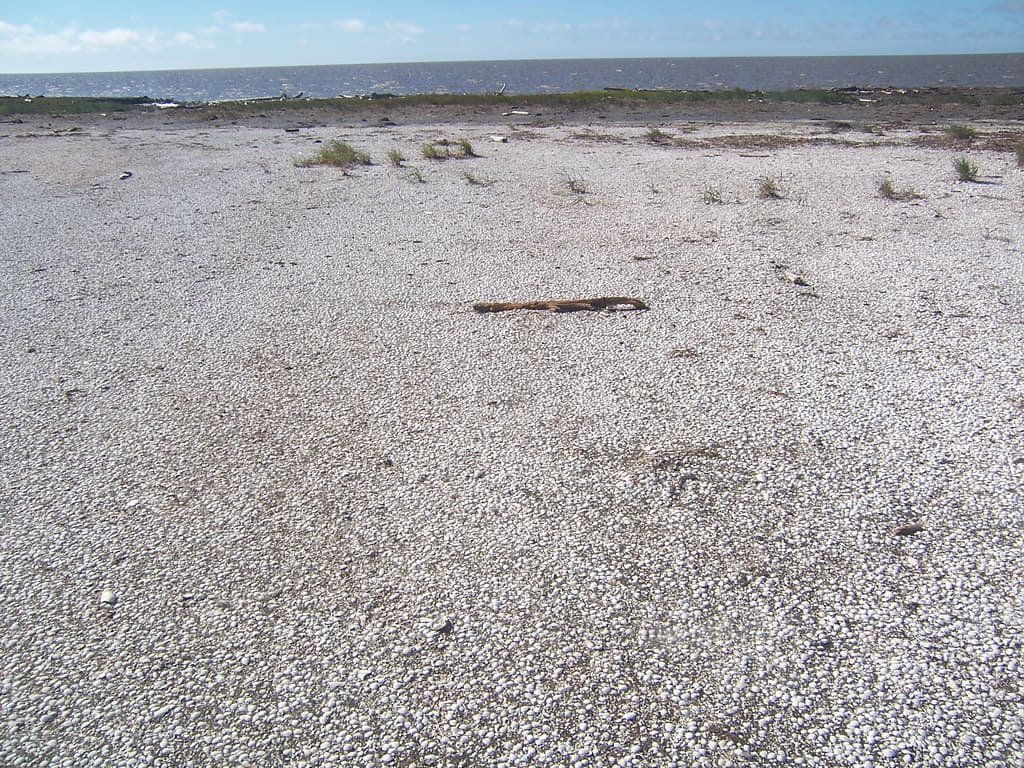
Mollusk shells on the coast of Yukon Delta
The sand beneath your boots holds a coarse, volcanic grit. In summer, when temperatures hover in the fifties, you'll spot elders gathering greens along the dunes while children chase each other near the water's edge. Seals surface offshore, their dark heads bobbing in the swell. The light here stretches impossibly long from June through August, casting amber glows at midnight that photographers travel continents to witness.
This isn't a beach for swimming or sunbathing. It's a place to walk until your thoughts quiet, to watch weather systems roll in from the open ocean, to understand remoteness not as isolation but as a kind of clarity. The village economy runs on subsistence, and visitors who make the journey here find themselves guests in a landscape that has sustained the Yup'ik people for thousands of years.


