Counting the waves…
Counting the waves…
A refined fusion of water purity, environmental stability, and communal vibrancy for Carmel River State Beach.
View MethodologyAnalyzed via live sensors and environmental data.
Wave height, wind, and atmospheric stability.
Live footfall and crowd balance metrics.
Community reviews and curated sentiment.
“You'll cross a weathered wooden footbridge over the Carmel River—often a shallow braid of channels in summer, a rushing torrent in winter—to reach a windswept strand where harbor seals haul out on sandbars and monarch…”
Limited recent visitor reports — live OBI telemetry is your best guide for current conditions.
The beach unfolds in two distinct zones. North of the lagoon, a wide apron of fine white sand stretches beneath the Monastery Beach cliffs, where tide pools hold anemones the color of pomegranate seeds and purple urchins wedge into granite crevices. South of the river mouth, the strand narrows into a crescent backed by low dunes and the tangled vegetation of the Carmel River floodplain, where willow thickets shelter warblers and the occasional river otter.
The lagoon itself shifts with the seasons. In dry months, a sandbar seals the river from the ocean, creating a shallow pond that warms in the afternoon sun and draws great blue herons to hunt. Winter storms breach the bar, sending the river charging into the surf and carving new channels across the beach. You'll share the sand with snowy plovers—threatened shorebirds that nest in roped-off sections—and the occasional sea lion that rides the river current upstream.
 Credit: Unsplash
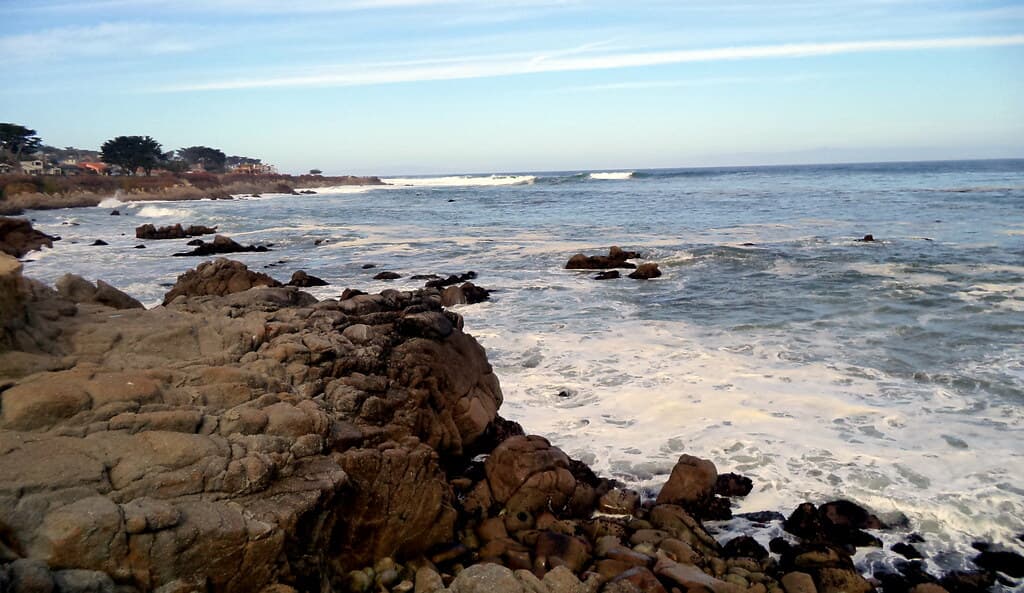
brown rocky mountain beside body of water during daytime
 Credit: Unsplash
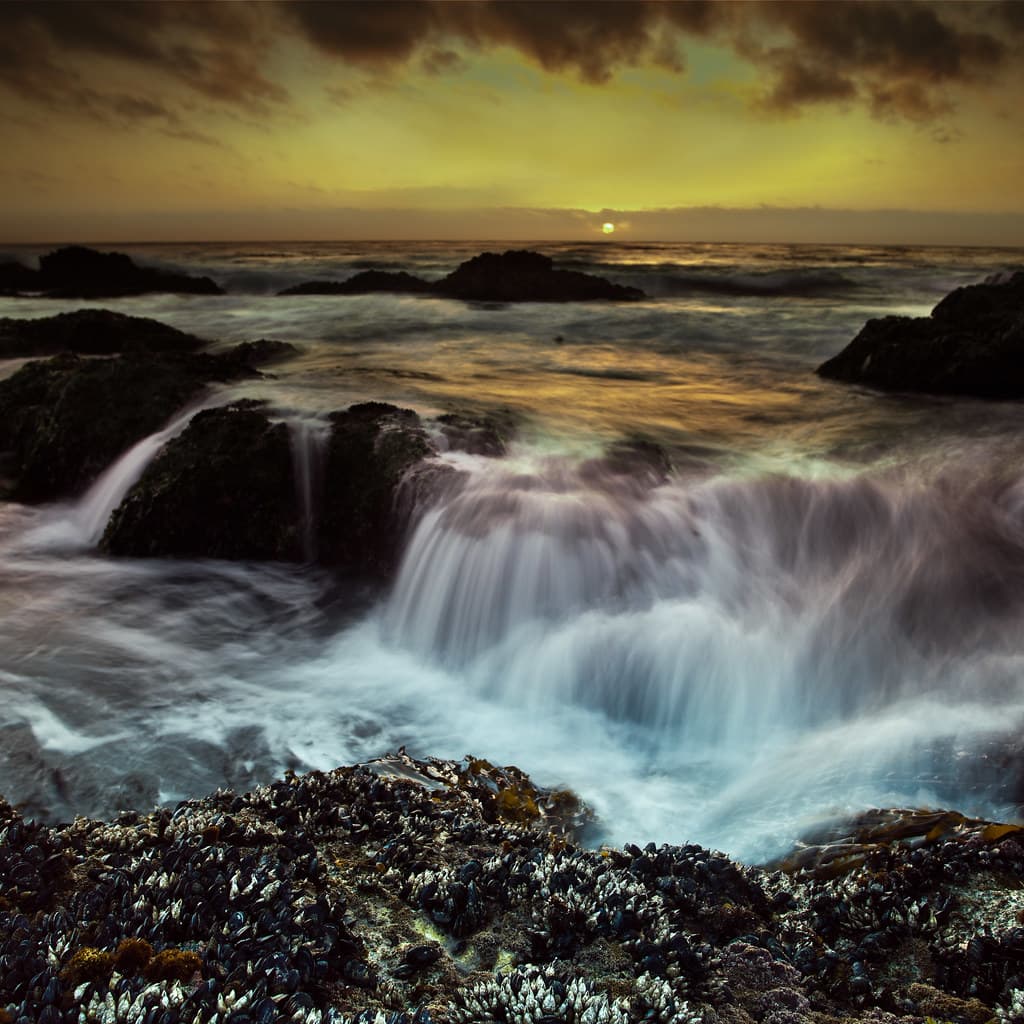
gray and brown mountain beside body of water
Cross channels, watch for otters
Herons, plovers, seasonal monarch groves
Softer underfoot, fewer crowds
Where it is
Carmel River State Beach
Carmel, California, USA
36.537000°, -121.932800°
Weather
Loading…
Swell
—
Temp
Warm · Restorative
UV Index
Moderate
Wind
—
Tidal State
Last known
Max Sunlight
—
Ideal Shade
—
May - Sep (Peak)
Jan - Dec (Off-season)
Historical data suggests peak visibility and stable sea temperatures occur during the prime visitation window.
Select a category to load nearby places.
Unlock restaurants, luxury stays and curated maritime experiences within 2km
Swimming at Carmel River State Beach is generally not recommended due to strong currents, unpredictable waves, and cold water temperatures year-round. The beach has no lifeguards on duty. Most visitors enjoy wading in the shallow lagoon area where the Carmel River meets the ocean, which is calmer and safer for families with children. The beach is better suited for scenic walks, birdwatching, and photography. Always check ocean conditions before entering the water and supervise children closely near the shoreline.
Carmel River State Beach is beautiful year-round, with each season offering unique appeal. Summer and early fall typically bring clearer skies and warmer temperatures, ideal for beach walks and picnics. Spring features migrating birds and wildflowers in the surrounding dunes. Winter storms can create dramatic wave-watching opportunities. Sunset visits are spectacular any time of year. Mornings tend to be foggy, especially in summer, while afternoons often clear up. Weekdays are less crowded than weekends. The mild coastal climate means you can enjoy this beach in any season.
The beach has a free parking lot accessed from Carmelo Street, just off Scenic Road south of Carmel-by-the-Sea. From Highway 1, exit at Ocean Avenue, drive west through Carmel's downtown, then turn left on Scenic Road and follow it south to Carmelo Street. The small parking area fills quickly on weekends and summer days, so arrive early. Street parking along Scenic Road and Carmelo Street is also available. The beach is about a 10-minute drive from downtown Carmel and easily walkable from nearby residential areas.
While there are no facilities directly at the beach, downtown Carmel-by-the-Sea is just a mile north, offering dozens of restaurants ranging from casual cafés to fine dining, plus boutique hotels, inns, and vacation rentals. The Crossroads Carmel shopping center nearby has grocery stores and eateries. For beachfront dining, nearby restaurants along Scenic Road offer ocean views. The beach itself has no amenities—no restrooms, food vendors, or water fountains—so plan accordingly. Bring your own food, water, and supplies for beach visits.
The Carmel River Lagoon forms where the river meets the Pacific Ocean, creating a unique wetland ecosystem. A sandbar often blocks the river's flow during summer months, forming a calm, shallow lagoon popular with families and dog walkers. In winter, increased river flow typically breaks through the sandbar, connecting directly to the ocean. The lagoon and surrounding marsh are important habitats for migratory birds, making this a prime birdwatching location. The scenic lagoon area offers calmer water for wading compared to the open ocean beach.
Photos