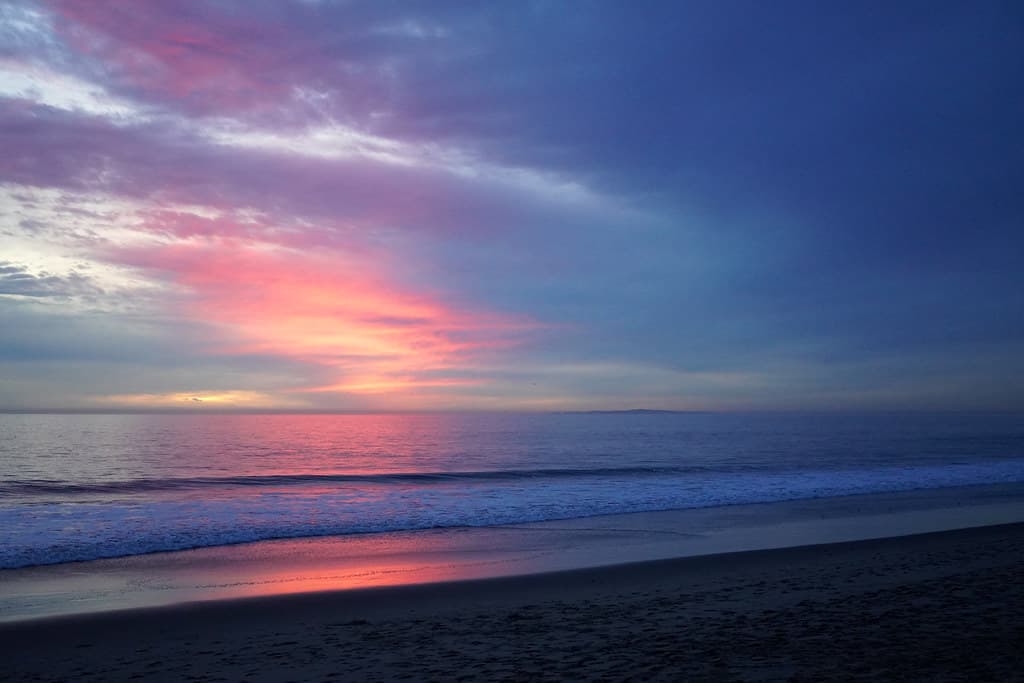
Counting the waves…
Counting the waves…
A refined fusion of water purity, environmental stability, and communal vibrancy for Carbon Beach.
View MethodologyAnalyzed via live sensors and environmental data.
Wave height, wind, and atmospheric stability.
Live footfall and crowd balance metrics.
Community reviews and curated sentiment.
“You'll walk past multimillion-dollar gates and down a narrow public staircase wedged between mansions before your feet hit sand. The scent of salt and sage meets you at water's edge, where pelicans skim knee-high waves…”
Limited recent visitor reports — live OBI telemetry is your best guide for current conditions.
The locals call it Billionaire's Beach, though the official sign reads Carbon Beach—a half-mile ribbon of tawny sand pressed between the Pacific Coast Highway and some of the priciest real estate in California. You'll find the public accessway at 28128 Pacific Coast Highway, a skinny concrete staircase that feels almost apologetic as it slices between neighboring estates. Down on the sand, the soundtrack shifts: no boardwalk chatter, no volleyball nets, just the low hiss of shore break and the occasional bark of a sea lion.
The beach itself runs narrow at high tide, widening to reveal tide pools stippled with mussels and anemones when the water pulls back. Surfers paddle out to the point break at the north end, where the waves peel left over a cobblestone bottom. You'll likely spot a celebrity walking a rescue dog or a tech founder on a sunrise jog, though the unwritten rule here is to look without staring. The sand has a coarse, mineral texture underfoot, darker than the powdery stretches farther south in Santa Monica.
 Credit: Unsplash
an aerial view of a beach with houses on it
 Credit: Unsplash
aerial photography of houses near beach
Left break over cobblestone bottom
Tide pools reveal mussels, anemones
Cliffs cast dramatic late shadows
Where it is
Carbon Beach
Malibu, California, USA
34.025600°, -118.779600°
Weather
Loading…
Swell
—
Temp
Warm · Restorative
UV Index
Moderate
Wind
—
Tidal State
Last known
Max Sunlight
—
Ideal Shade
—
May - Sep (Peak)
Jan - Dec (Off-season)
Historical data suggests peak visibility and stable sea temperatures occur during the prime visitation window.
Select a category to load nearby places.
Unlock restaurants, luxury stays and curated maritime experiences within 2km
Carbon Beach generally offers calm swimming conditions, especially during summer months when waves are gentler. However, like all Malibu beaches, conditions vary with tides and seasonal swells. Winter and spring can bring stronger currents and larger waves. There are no lifeguards stationed directly at Carbon Beach, so swimmers should exercise caution. The beach has a gradual slope, making it relatively approachable for wading. Always check local surf reports before entering the water and be aware of rip currents, which can occur along the Malibu coast.
Carbon Beach is accessible year-round, with each season offering distinct experiences. Summer (June-August) brings warm, sunny weather with temperatures in the 70s-80s°F and calm seas, ideal for swimming and sunbathing. Fall offers pleasant weather with fewer crowds. Winter and spring feature cooler temperatures and occasional rain, but can provide dramatic ocean views and better privacy. Weekday mornings are best for avoiding crowds. Sunset visits are particularly beautiful year-round. Marine layer fog is common in May and June mornings but typically clears by afternoon.
Carbon Beach has limited public access despite being a public beach. The main entry point is a narrow public accessway between beachfront homes near 42126 Pacific Coast Highway, marked by a small California Coastal Access sign. Parking is extremely challenging—there's no dedicated lot. Street parking along PCH is metered and highly competitive, with strict time limits. Arriving early morning increases parking chances. Alternatively, some visitors park in nearby Malibu public lots and walk along the beach during low tide. The accessway is easy to miss, so look carefully for signage.
Carbon Beach is nicknamed "Billionaire's Beach" due to its exclusive surroundings. The Malibu Beach Inn sits directly on Carbon Beach, offering upscale accommodations with ocean views. For dining, the beachfront Carbon Beach Club (members only) and nearby restaurants along PCH provide options. Nobu Malibu is a short walk away, offering high-end Japanese cuisine. More casual dining options are available in Malibu Country Mart and Malibu Village, both within a few miles. Cross Creek Road area has additional restaurants and shops. No facilities exist on the beach itself—no restrooms or concessions.
Carbon Beach earned the nickname "Billionaire's Beach" because it's lined with some of Malibu's most expensive oceanfront properties, owned by celebrities, tech moguls, and entertainment industry executives. Despite the exclusive residences, California's Coastal Act guarantees public access to all beaches. The contrast between the modest public accessway and the multimillion-dollar homes creates a unique dynamic. This narrow stretch of sand has become a symbol of California's ongoing tension between private property rights and public beach access, making it culturally significant beyond its natural beauty.
Photos