
Wildcat Beach stretches along Point Reyes National Seashore's southern edge, accessible only by foot through terrain that shifts from forest to meadow to coastal bluff. The trail from Five Brooks Trailhead drops 1,000 feet over six miles, passing through stands of eucalyptus before opening onto grasslands where tule elk graze. By the time you reach sand, civilization feels like a rumor.
“One of California's longest undeveloped beaches, reachable only by a wilderness hike that guarantees you'll share it with more elk than people.”
 Credit: Flickr
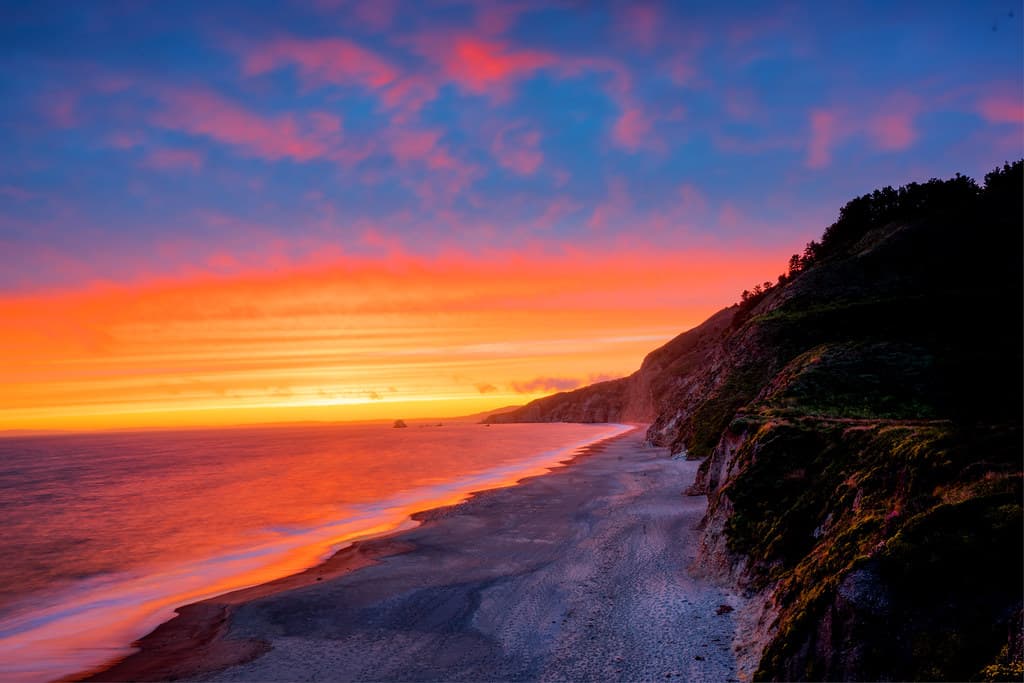
Sunset at California's Point Reyes National Seashore
The beach itself runs for five miles beneath eroding cliffs streaked with orange and gray sediment. Driftwood—entire trees, salt-bleached and smooth—scatters across the upper beach, natural benches for watching waves explode against the rocky points at either end. Wildcat Creek empties here, carving a lagoon that shifts shape with each winter storm. Seals haul out on the rocks just offshore, their barking audible above the surf.
This is raw California coast: cold water, strong rip currents, relentless wind. You won't swim here—the undertow has claimed lives—but you'll walk for miles without seeing footprints. A backcountry camp sits just inland among wind-pruned pines, seven sites with pit toilets and nothing else. Alamere Falls, where a creek drops forty feet directly onto sand, lies two miles north, but most hikers never make it past Wildcat's driftwood throne rooms and seal-watched solitude.


