
Counting the waves…
Counting the waves…

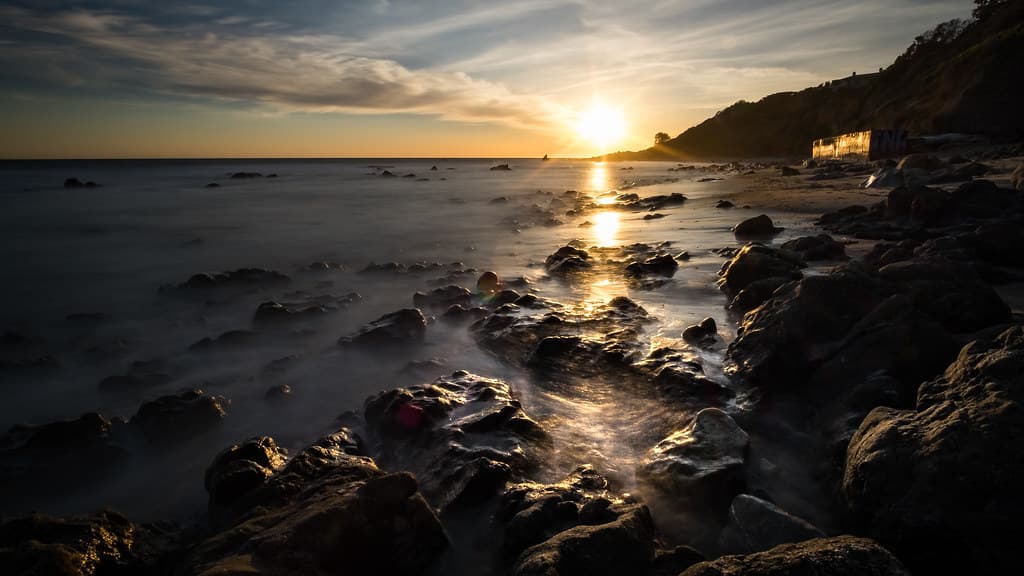
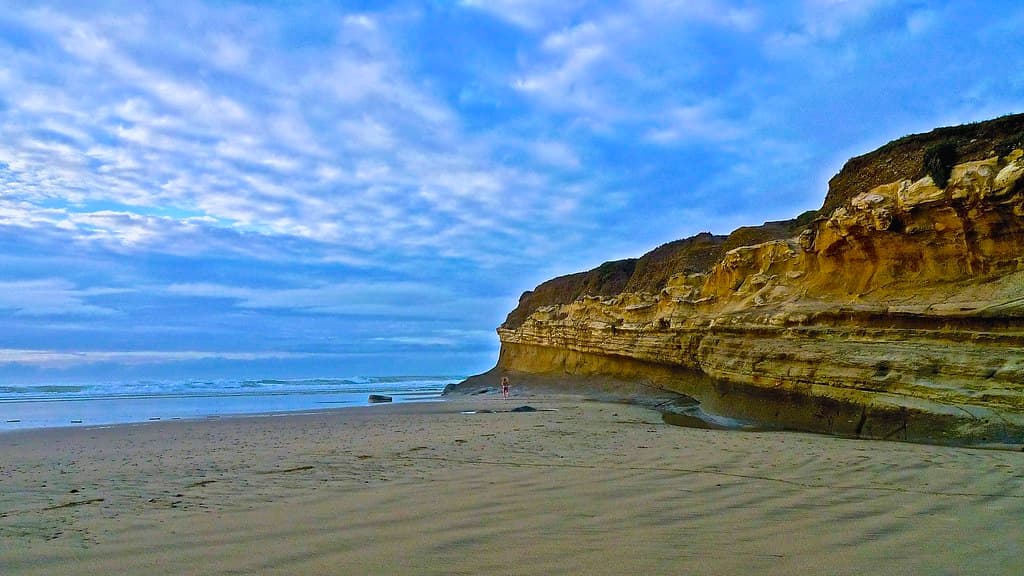
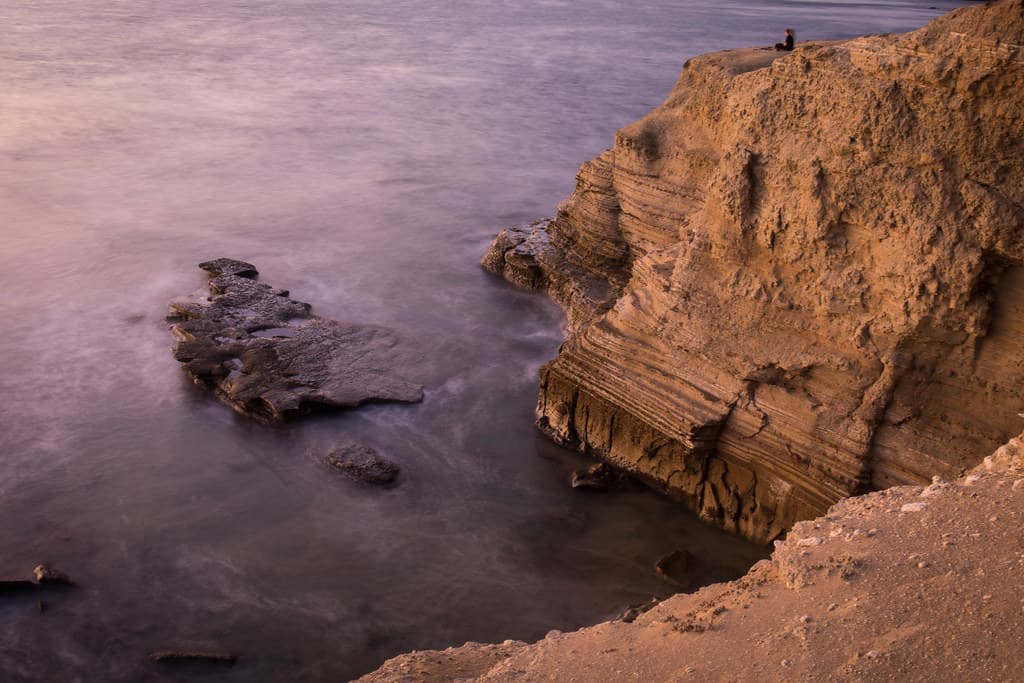
The cliffs begin where Sunset Cliffs Boulevard dead-ends into a string of dirt pull-offs, each one crowded by late afternoon with photographers angling tripods toward the horizon. Below, the shoreline is less beach than geological exhibition—layered sandstone shelves that tilt seaward, interrupted by natural arches and blowholes that hiss and spray when swells punch through. At negative tides, you can walk the exposed reef for half a mile, stepping over mussels and around tide pools thick with urchins. The water here is cold year-round, mid-fifties to mid-sixties, and the entry is rocky enough that most visitors stay dry. Surfers paddle out at the named breaks—Abs, Garbage, New Break—where rights peel along the point and locals enforce an unspoken rotation. The real draw is the light: honey-colored in the hour before dusk, turning the cliffs amber and backlighting the pelicans that skim just above the swell lines. You won't find restrooms or showers, and parking is a scramble along the boulevard's narrow shoulder. But that's the trade-off. Sunset Cliffs remains stubbornly uncommercialized, a stretch of coast where the city's sprawl halts at the bluff's edge and the only amenities are the ones the ocean provides.
Places, rentals, tours and events within walking and driving distance of Sunset Cliffs Beach.
Photos
Swimming at Sunset Cliffs is generally not recommended due to strong currents, rocky outcroppings, and unpredictable waves. The beach is better suited for experienced surfers who know the breaks. The cliffs themselves can be unstable, with frequent erosion causing collapses. Stay behind safety barriers and avoid climbing on or sitting near cliff edges. Several accidents occur yearly from people getting too close to unstable areas or being swept off rocks by unexpected waves. Enjoy the spectacular views from designated lookout points instead.
As the name suggests, sunset is the prime time to visit, when golden hour light creates stunning coastal views. The beach is accessible year-round with San Diego's mild climate, though spring and fall offer comfortable temperatures without summer crowds. Weekday visits are quieter than weekends. Winter months bring dramatic wave action and occasional whale sightings during migration season (December-April). Arrive 30-45 minutes before sunset to secure parking and find a good viewing spot along the cliffs for the best photography opportunities.
Sunset Cliffs is located in the Point Loma neighborhood, accessible via Sunset Cliffs Boulevard, which runs parallel to the coastline. Free street parking is available along Sunset Cliffs Boulevard and nearby residential streets, though spaces fill quickly during sunset hours and weekends. There's a small parking area near Ladera Street. The area is about 10 minutes from Ocean Beach and 15-20 minutes from downtown San Diego. No parking meters exist, but watch for posted restrictions. Arrive early during peak times to secure a spot.
Sunset Cliffs Beach itself has no facilities, restrooms, or food vendors. However, the nearby Ocean Beach neighborhood (less than a mile north) offers numerous restaurants, cafes, bars, and shops along Newport Avenue and Sunset Cliffs Boulevard. You'll find everything from casual fish taco spots to sit-down seafood restaurants. The closest lodging options are vacation rentals and small hotels in Ocean Beach and Point Loma. For amenities, pack what you need or plan to visit Ocean Beach before or after your Sunset Cliffs visit.
Yes, Sunset Cliffs features accessible tide pools during low tide, particularly near the southern end of the beach and around the rocky areas. Check tide charts before visiting—the best viewing occurs during minus tides. You'll find sea anemones, crabs, starfish, and small fish in the pools. Wear sturdy shoes with good grip as rocks can be slippery. Be mindful of incoming waves and never turn your back on the ocean. Respect marine life by observing without touching or removing creatures from their habitat.