
Counting the waves…
Counting the waves…

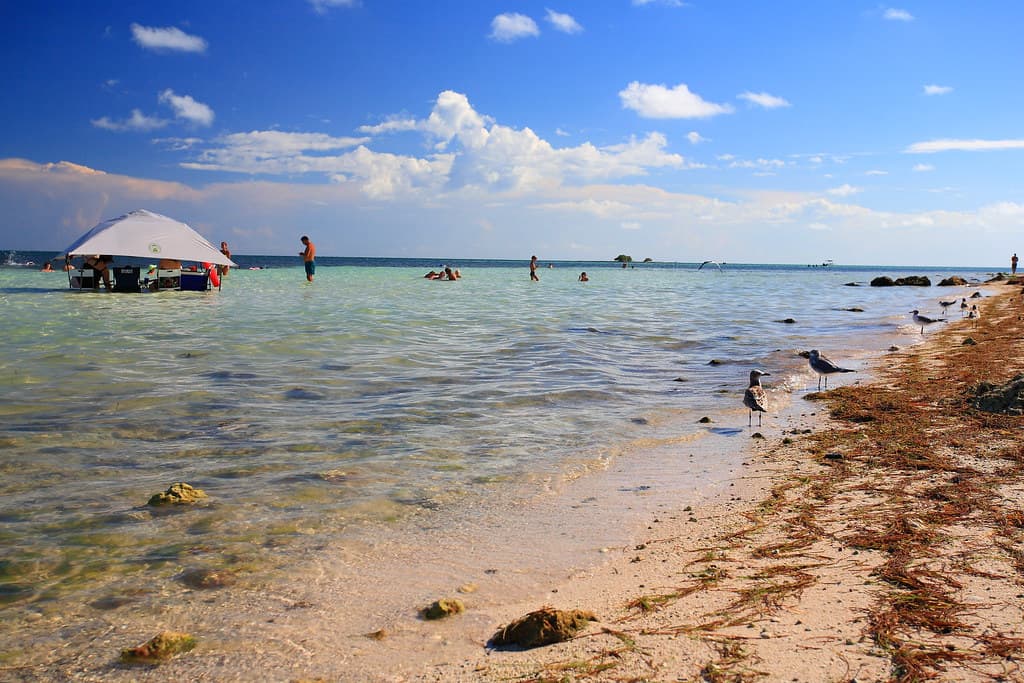
Step onto Sandspur Beach and you'll understand why Floridians drive three hours from Miami for this particular stretch of shore. The sand here is the real thing—powdery calcium carbonate that squeaks beneath your feet and stays cool even at noon, a rarity in the coral-rock Keys. Above you, the weathered steel trusses of Henry Flagler's abandoned railroad bridge arc across the channel, pelicans perched on rusted rails that once carried passengers to Key West. Wade into water so clear you'll count your toes at chest depth, the seafloor a gentle slope of rippled sand. Families cluster near the pavilions where Australian pines offer shade, while couples stake out the bridge-side stretch at Calusa Beach, accessible via boardwalk. The Atlantic side stays calmer than the Gulf, protected by the curve of the key itself, though winter cold fronts can stir up enough chop to make snorkeling the offshore patch reefs a challenge. Stay through sunset and you'll watch the sky ignite orange and pink behind that skeletal bridge, the silhouette so perfectly composed it feels staged. Rangers lock the gates at sundown, so you'll time your departure by the sun's descent rather than your own reluctance to leave. Pack out everything you bring—this is state-park Florida, where the rules are enforced and the beaches stay pristine because of it.
Places, rentals, tours and events within walking and driving distance of Bahia Honda State Park Beach.
Photos
Yes, Bahia Honda is generally safe for swimming with calm, clear waters ideal for families. The Atlantic side (Sandspur Beach) offers deeper water and gentle waves, while the bay side (Calusa Beach) features shallower, protected areas perfect for children. Lifeguards are not always on duty, so supervise swimmers carefully. Watch for occasional strong currents during tidal changes and after storms. The beach has restrooms and outdoor showers nearby. Marine life like jellyfish can appear seasonally, so check conditions at the ranger station before entering the water.
Bahia Honda is enjoyable year-round, with water temperatures staying comfortable even in winter. December through April offers the best weather—lower humidity, fewer mosquitoes, and pleasant temperatures in the 70s-80s°F. However, this is peak season with larger crowds and higher camping rates. Summer (June-September) brings hot, humid conditions and afternoon thunderstorms, but fewer visitors and better availability. Hurricane season runs June through November. Weekdays are generally less crowded than weekends regardless of season. Sunrise and sunset provide spectacular views and optimal lighting for photography.
Bahia Honda State Park is located on Big Pine Key at mile marker 37 on the Overseas Highway (US-1), about 35 miles north of Key West and 120 miles south of Miami. The park entrance is directly off US-1 with clear signage. Parking is available but limited, especially on weekends and holidays. The park often reaches capacity by mid-morning during peak season, and entry is closed once full. Arriving before 9 AM is recommended. There's a per-vehicle entrance fee (typically $8-9 for 2-8 people). No public transportation serves the park directly.
The park has a small concession stand near Sandspur Beach offering snacks, ice cream, drinks, and basic beach supplies during peak hours, though options are limited. No full-service restaurants exist within the park, so bringing your own food is recommended. Picnic areas with tables and grills are available throughout. The park offers restrooms, outdoor showers, and a gift shop. Full-service grocery stores and restaurants are located in Big Pine Key (12 miles north) or Marathon (15 miles north). The park has camping facilities, but the nearest hotels are in Big Pine Key or Marathon.
Portions of the historic Bahia Honda Rail Bridge, built in 1912 for Henry Flagler's Overseas Railroad, are accessible via a short trail from the park. You can walk partway onto the old bridge structure for unique views and photos of the turquoise waters below. However, the bridge is deteriorating and not fully accessible—safety barriers prevent walking its entire length. The bridge offers excellent sunset views and is a popular spot for photography. Informational signs explain the bridge's history as part of the railroad that once connected the Keys before the 1935 hurricane destroyed sections.