Counting the waves…
Counting the waves…

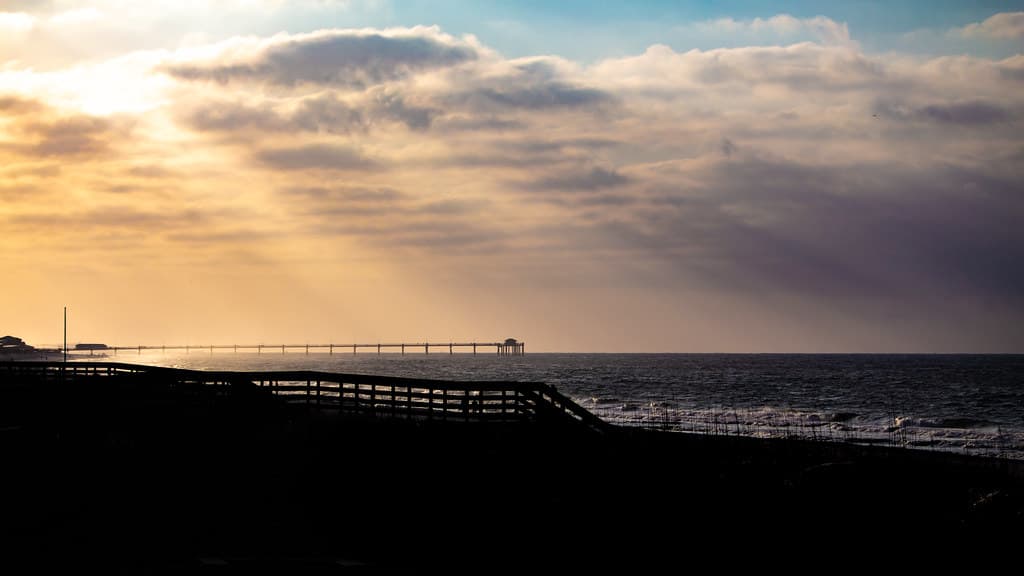
The sand here compresses with a soft squeak underfoot—pure Appalachian quartz ground fine over millennia, so reflective it never scorches bare soles. You'll spread your towel on a beach wide enough to feel uncrowded even in July, with gentle waves that barely crest before dissolving into foam. The Okaloosa Pier stretches 1,262 feet into the Gulf on your right; anglers cast for king mackerel while you float in water clear enough to watch small baitfish dart around your ankles. Beyond the beachfront hotels and tiki bars, the Gulfarium Marine Adventure Park brings families face-to-face with stingrays and sea turtles, while the boardwalk offers funnel cake stands and airbrush t-shirt vendors that anchor this beach firmly in accessible, unpretentious beach-town Florida. You'll find public access points every few blocks, most with metered parking and outdoor showers that rinse away salt and sand. Stay through sunset and you'll understand why locals time their evening walks to the hour before dusk. The sky ignites in layers—apricot near the horizon, violet overhead—as the sun drops behind Santa Rosa Island. Shrimp boats motor past in silhouette, and the breeze carries the scent of grilling grouper from the restaurants lining Miracle Strip Parkway, reminding you that this stretch of the Emerald Coast has perfected the balance between natural beauty and easy, family-friendly fun.
Places, rentals, tours and events within walking and driving distance of Fort Walton Beach.
Photos
Fort Walton Beach is generally safe for swimming, with lifeguards stationed at several public access points during peak season. The Gulf waters here are typically calm with gentle waves, making it family-friendly. Always check the beach flag warning system before entering: green means low hazard, yellow indicates moderate surf or currents, red signals high hazard, and double red flags mean water closure. Jellyfish and stingrays can occasionally be present, so shuffle your feet when entering the water and supervise children closely.
Fort Walton Beach enjoys pleasant weather year-round, but the ideal visiting periods are April-May and September-October when temperatures are warm (75-85°F), crowds are smaller, and accommodation rates drop. Summer (June-August) brings peak tourism, hot temperatures around 90°F, and afternoon thunderstorms. Winter months offer mild weather (60s) perfect for beach walks, though swimming may be chilly. Hurricane season runs June through November, with September being the most active month. Spring breakers typically arrive in March.
Fort Walton Beach offers several parking options along Miracle Strip Parkway and Okaloosa Island. The main public beach access at Beasley Park provides metered parking and facilities. Additional paid lots are available at Liza Jackson Park and along the boardwalk area, typically charging hourly or daily rates. Street parking is limited and often has time restrictions. Arrive early during summer weekends as spots fill quickly. Many beachfront hotels offer parking for guests, and some vacation rentals include dedicated spaces.
Fort Walton Beach and neighboring Okaloosa Island feature numerous beachfront restaurants ranging from casual seafood shacks to upscale dining. Popular spots include The Gulf for fine dining and various beach bars along the boardwalk. You'll find grocery stores, beach supply shops, and water sport rentals within walking distance of most beach access points. Accommodation options span budget motels to oceanfront resorts. The Boardwalk on Okaloosa Island offers dining, shopping, and entertainment. Nearby Destin provides additional upscale dining and shopping options just minutes away.
Yes, Fort Walton Beach offers excellent fishing opportunities. The Okaloosa Island Fishing Pier extends 1,262 feet into the Gulf, providing access to pompano, redfish, king mackerel, and Spanish mackerel without needing a fishing license when fishing from the pier. Surf fishing is permitted along most beach areas; however, a Florida saltwater fishing license is required. East Pass jetties are popular for anglers targeting larger species. Charter fishing boats depart nearby for deep-sea excursions. Check local regulations regarding size limits and seasonal restrictions.