Counting the waves…
Counting the waves…

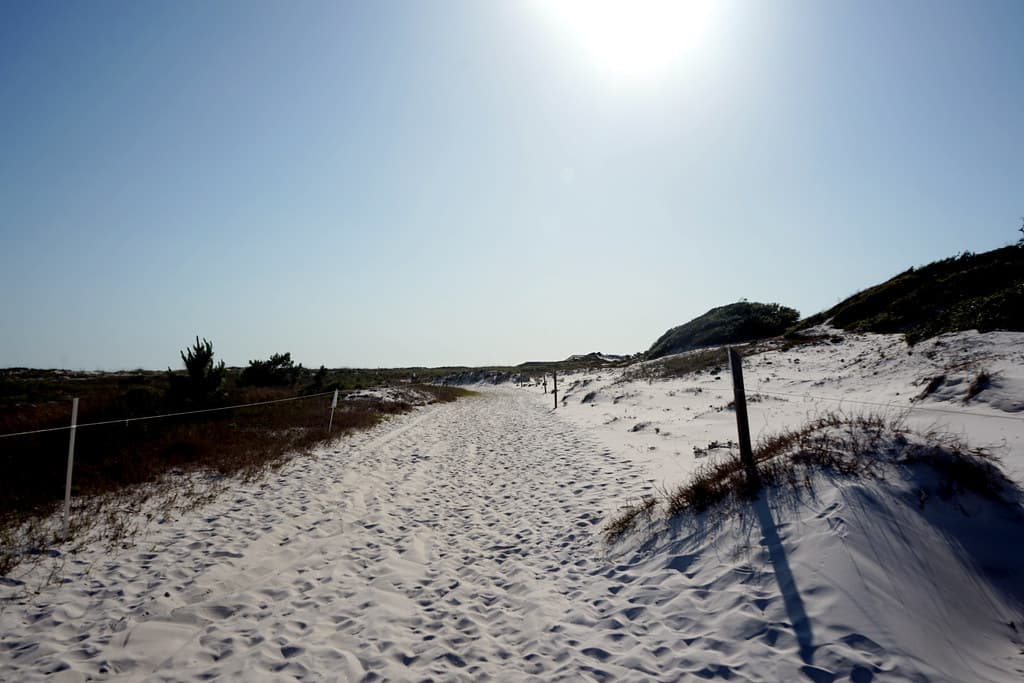
The sand at Camp Helen squeaks. That's what happens when near-pure quartz erodes into grains so fine they protest underfoot, a telltale sign of the Emerald Coast you won't find on crowded Destin stretches six miles west. You'll park beneath longleaf pines, follow a short boardwalk through scrub oak and rosemary, and emerge onto a beach bookended by the kind of solitude state parks promise but rarely deliver. Behind you, Lake Powell—one of only fifteen coastal dune lakes in the world—presses against a narrow sandbar. Depending on tide and storm surge, the lake occasionally breaches into the Gulf, creating a temporary outflow channel where redfish and flounder dart between ecosystems. You can watch ospreys dive for mullet, their talons breaking the lake's tannin-stained surface, then walk fifty yards and float in gin-clear Gulf water the color of blue curaçao. The beach faces due south, so sunset arrives as a sideshow of tangerine and rose spreading across the horizon rather than a straight-on spectacle. By five o'clock in summer, the handful of families pack their coolers, and you're left with sanderlings working the tide line and the rhythmic shush of low surf. No beach bars. No jet skis. Just 3,000 feet of shoreline that feels like the Florida your grandparents remember.
Places, rentals, tours and events within walking and driving distance of Camp Helen State Park Beach.
Photos
Camp Helen State Park Beach generally offers calm swimming conditions along the Gulf of Mexico, though visitors should always check for flag warnings posted at the beach. The park's location provides some protection from strong currents compared to more exposed beaches. However, lifeguards are not typically stationed here, so swim at your own risk and supervise children closely. Jellyfish can be present seasonally, particularly in summer months. The waters are usually clear and shallow near shore, making it suitable for families when conditions are favorable.
Camp Helen State Park Beach is enjoyable year-round, with each season offering distinct advantages. Spring (March-May) and fall (September-November) provide the most comfortable temperatures, fewer crowds, and pleasant water conditions. Summer brings warm Gulf waters ideal for swimming but higher humidity and afternoon thunderstorms. Winter months offer cooler weather perfect for beachcombing and sunset viewing with minimal crowds. The beach faces west, making any time of year excellent for sunset photography. Arrive early morning or late afternoon during summer to avoid peak heat and enjoy the most serene experience.
Camp Helen State Park is located off Highway 98 in Panama City Beach, approximately 23 miles east of Destin. The park entrance is clearly marked on the south side of the highway. A designated parking area is available near the entrance, with a small Florida State Parks entrance fee (typically $4-6 per vehicle). From the parking area, visitors access the beach via a scenic walking trail that crosses through coastal dune lakes and maritime forest. The walk to the beach takes about 10-15 minutes and is relatively easy, though not wheelchair accessible in all areas.
Camp Helen State Park Beach has minimal on-site amenities—no food vendors or concessions within the park itself. Visitors should bring their own food, water, and supplies. The nearby town of Inlet Beach (less than 2 miles west) offers several restaurants, cafes, and casual dining options. Santa Rosa Beach and Rosemary Beach, both within 5-10 minutes' drive, provide extensive dining and shopping. For accommodations, numerous vacation rentals, hotels, and resorts line Highway 30A and Highway 98 nearby. The closest lodging options are typically in Inlet Beach and Panama City Beach areas, ranging from budget motels to upscale resorts.
Camp Helen State Park is one of the few places in Florida where you can experience rare coastal dune lakes, with Lake Powell being the largest in the state at nearly 700 acres. These unique freshwater-to-brackish ecosystems exist in only a handful of locations worldwide, primarily along this stretch of Florida's Gulf Coast, New Zealand, Australia, and Madagascar. The lakes occasionally connect to the Gulf through natural outflows, creating distinctive habitats for diverse wildlife. Visitors can enjoy the unusual sight of freshwater meeting saltwater environments, excellent birdwatching opportunities, and scenic trails offering views of both lake and Gulf.