
Wassaw Island exists in a sliver of time before development, preserved as a National Wildlife Refuge since 1969. You step off the boat onto sand ribbed by tides, the only evidence of humanity a 1854 lighthouse rising white above the dunes. The beach stretches unbroken toward the horizon, a pale ribbon between the gray-green ocean and dense thickets of live oak and palmetto. Pelicans skim the breakers. Ghost crabs leave hieroglyphs near the wrack line.
“One of Georgia's last undeveloped barrier islands, accessible only by boat and managed for wildlife rather than visitors.”
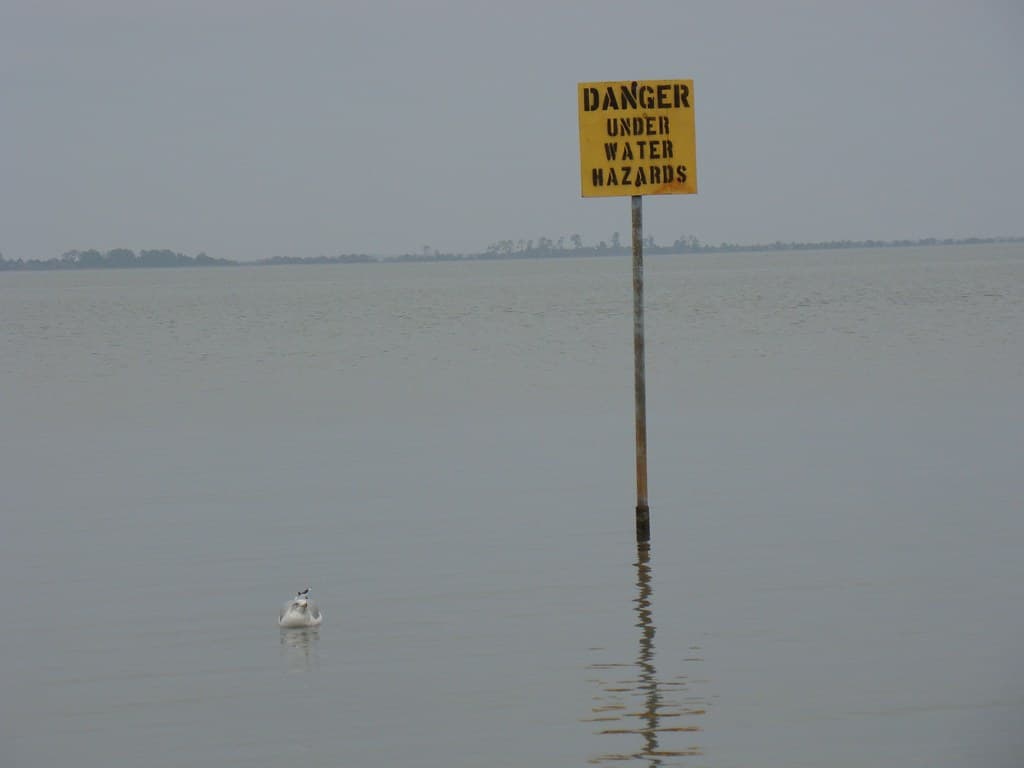 Credit: Flickr
Tybee Island, not a reassuring sign on the beach outside our rental
The surf here runs gentle most days, rolling in long, glassy sets that fold over sandbars sculpted by the last high tide. Shelling rewards the patient—whelks, sand dollars, the occasional Scotch bonnet worn smooth by current. Wade into the shallows in summer and you might see a loggerhead turtle surface, barnacled and ancient, before disappearing into the green.
Camping requires a permit, and you carry everything in: water, tent, provisions. Night falls absolute, the kind of darkness that returns stars to their proper brilliance. You hear the ocean working the shore, the rustle of something moving through the palmettos. In the morning, your footprints are the only marks on six miles of beach, at least until the tide erases them at noon.


