
The engineers who rebuilt this shoreline in the 1930s understood what families need: predictable waves that barely crest, sandbars where children crouch to examine hermit crabs, and shade trees thick enough to nap beneath. You enter the water and walk fifty yards offshore before the bottom drops away, the man-made reef doing exactly what it was designed to do—tame the Pacific into a vast, turquoise wading pool.
“A Depression-era public works project that transformed coral reef into Honolulu's safest swimming lagoon, engineered specifically for families.”
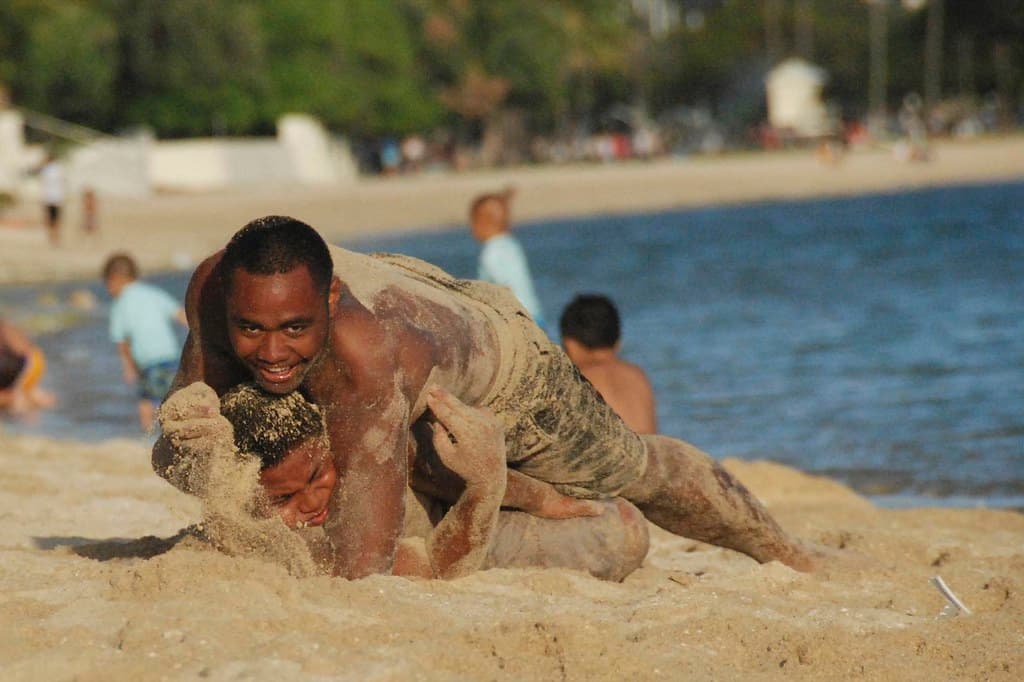 Credit: Flickr
Sand Nuggy
Beyond the reef, Diamond Head rises to the east while the Wai'anae Range shadows the western sky. Stand-up paddleboarders glide past in the late afternoon, their boards casting long shadows on the sand below. The ironwood grove rustles overhead, dropping needles onto picnic blankets where aunties unpack Tupperware filled with shoyu chicken and mac salad.
You spread your towel on grass, not sand, because Ala Moana offers both—a rarity among urban beaches. Joggers loop the perimeter path. Outrigger canoes practice in the channel. The beach never empties, yet it never feels cramped, stretching nearly a mile with room for everyone who knows that sometimes the best swim is the one you can reach by city bus, parking validated at the mall next door.


