
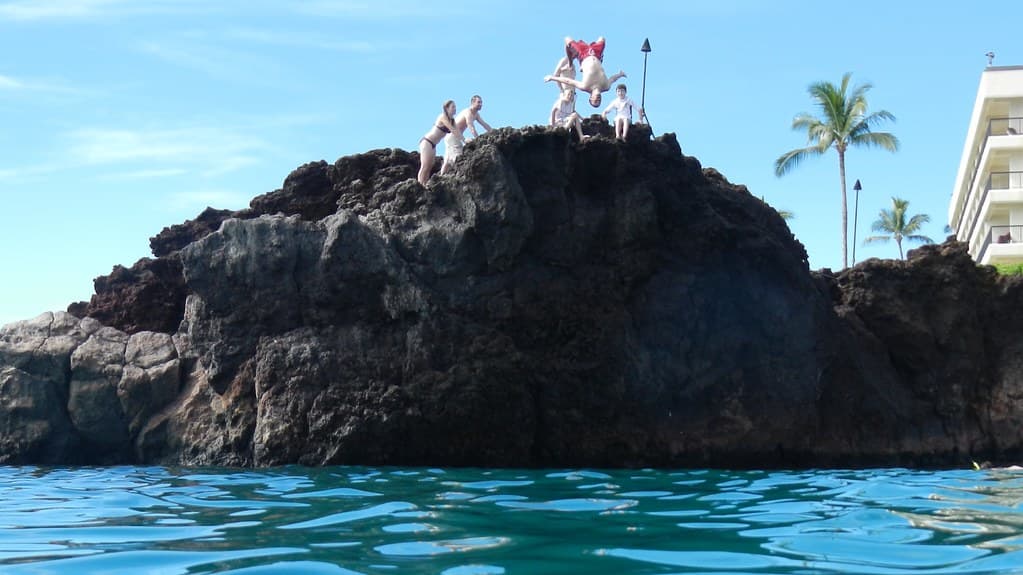
The shore curves north from Black Rock, a volcanic promontory where cliff divers launch at sunset, to Hanakao'o Point, where the sand finally relents to grass and ironwood trees. You'll walk the beachfront path past resort towers and open-air restaurants, but the width of the beach—sometimes a hundred yards from waterline to lawn—creates breathing room even when the parking lots fill. Mornings bring glassy conditions and sea turtles grazing on algae near the rocks.
“Black Rock's lava promontory creates a natural amphitheater where you can snorkel, cliff-dive, and watch the sun drop into the Pacific from the same thirty-yard stretch.”
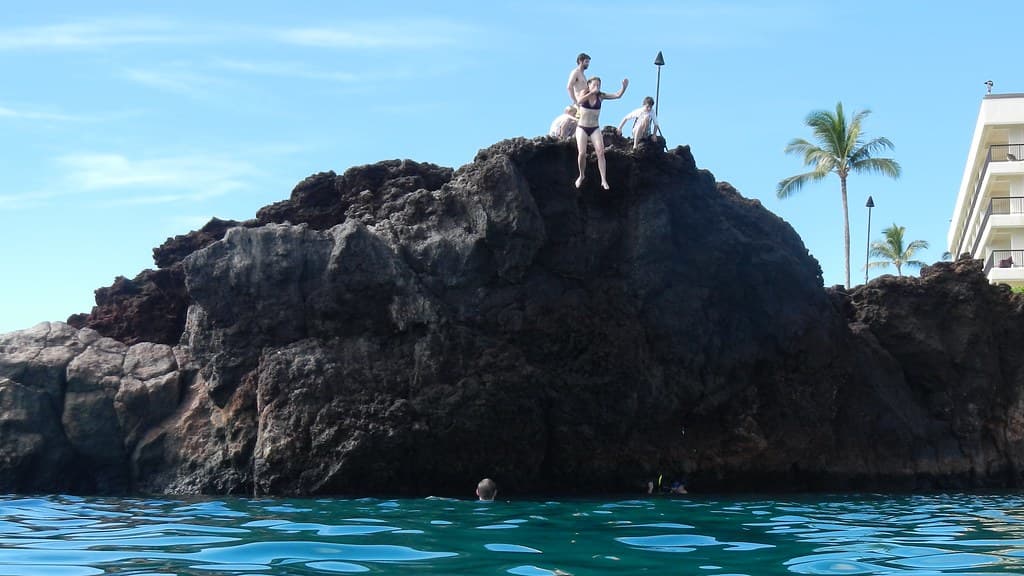 Credit: Flickr
Cliff jumping 1
The sand itself is crushed coral and shell, blindingly white under midday sun, cool enough to walk on by four in the afternoon. Trade winds typically arrive by noon, transforming the shore into a parade of boogie boarders and novice surfers testing their balance on long, forgiving waves. You can rent everything from stand-up paddleboards to snorkel sets at multiple beachside shacks, though the clearest water hides at Pu'u Keka'a—Black Rock—where the seabed drops sharply and reef fish school in the shadows.
Catamaran tours depart twice daily from the beach, sailing north toward Kapalua or south to Olowalu. Stay ashore and you'll watch them tack across the channel, white sails bright against the blue silhouette of Lana'i on the horizon. The beach empties slightly near the Hyatt and Marriott access points, where families claim the shade beneath monkeypod trees and locals set up for the afternoon.


