
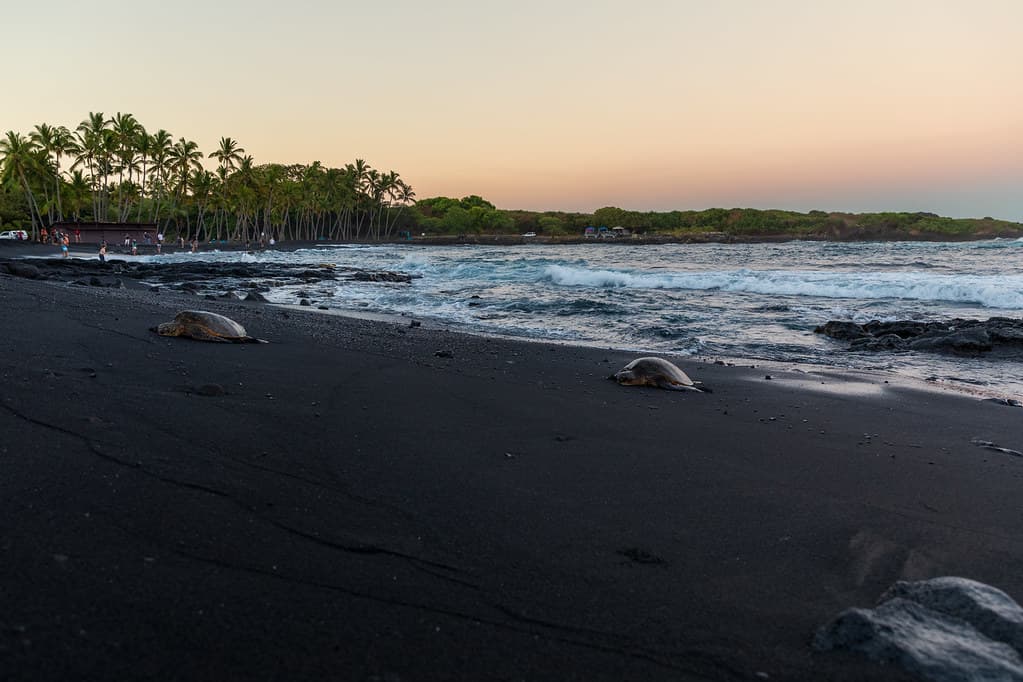
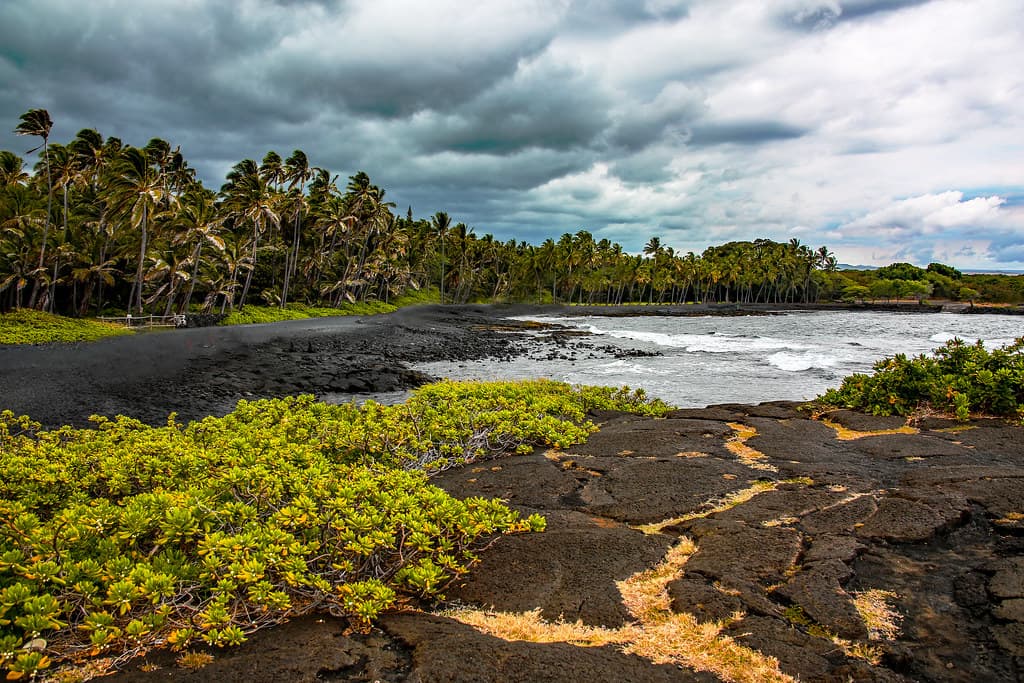
The beach stretches in a crescent of volcanic sand so dark it drinks the sunlight, warming quickly beneath your feet as you walk the tide line. Coconut groves planted generations ago lean over the northern edge, their fronds clicking in the trade winds, while the southern end opens to a rocky shelf where waves explode in white contrast against the black stone. This is the most accessible black-sand beach on the Big Island, a consequence of lava meeting ocean over millennia, each flow shattering into obsidian fragments that currents swept into this cove.
“This is the Big Island's most reliably turtle-populated black-sand beach, where ancient honu rest within arm's reach of human visitors.”
 Credit: Flickr
Punalu?u Black Sand Beach — photo by Rennett Stowe
Green sea turtles—honu in Hawaiian—haul out here with remarkable regularity, sometimes a half-dozen at once, resting on the warm sand between feeding runs. You'll need to keep ten feet back; federal law protects them, and volunteers in bright vests gently enforce the boundary. The turtles seem unbothered by the clicks of smartphone cameras, their prehistoric calm a strange counterpoint to the excitement they generate.
Swimming here demands caution. The shore drops off quickly, and rip currents thread through the bay when surf runs high. Locals wade in the protected southwest corner near the boat ramp, where a spring seeps fresh water into the salt. The beach park offers picnic pavilions, restrooms, and a landscape that feels both severe and tender—a study in contrasts rendered entirely in black, green, and blue.


