
Counting the waves…
Counting the waves…
A refined fusion of water purity, environmental stability, and communal vibrancy for Kawa?ele Beach.
View MethodologyAnalyzed via live sensors and environmental data.
Wave height, wind, and atmospheric stability.
Live footfall and crowd balance metrics.
Community reviews and curated sentiment.
“You cannot simply arrive at Kawa'ele Beach. Ni'ihau, Hawaii's privately owned "Forbidden Island," permits access only through costly helicopter tours or private invitation. Those who land find untouched sand, the scent…”
Limited recent visitor reports — live OBI telemetry is your best guide for current conditions.
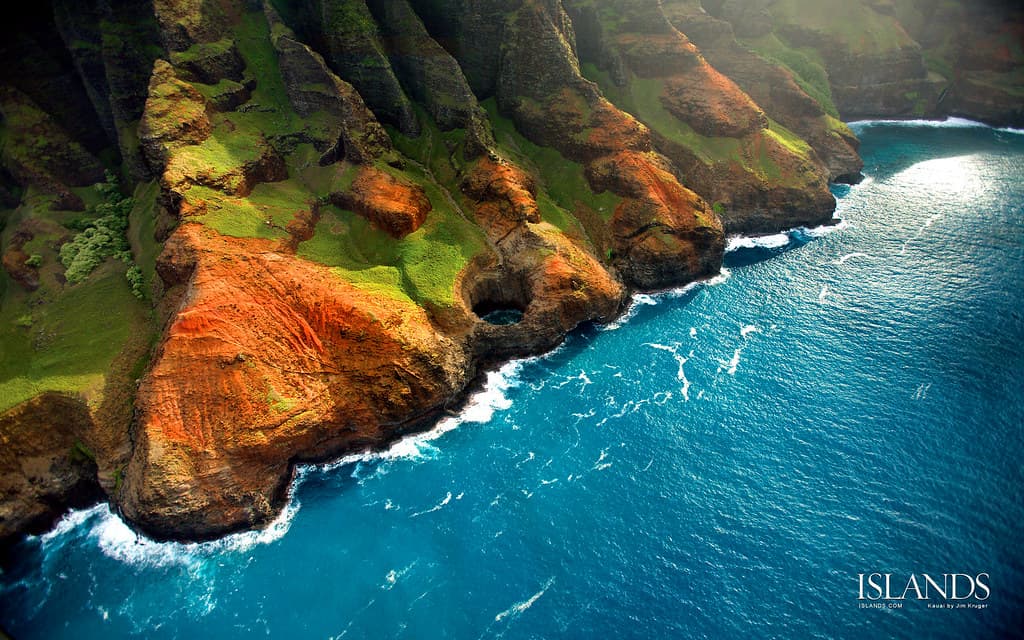
The helicopter banks low over Lehua Rock before setting down on a ribbon of sand so white it stings your eyes. Kawa'ele Beach stretches along Ni'ihau's northwestern shore, a place where the 21st century hasn't left tire tracks or beer bottles. The sand squeaks underfoot—pure crushed coral and shell fragments polished by centuries of trade-wind swells. To your left, basalt cliffs rise in dark pleats; to your right, the ocean runs cobalt to the horizon, unbroken by a single boat or jet ski.
Monk seals claim the upper beach, their bulk spread across the sand like褐色 boulders. You give them fifty feet, watching as one yawns, revealing ivory canines. The water is gin-clear in the shallows, then deepens to navy where the reef gives way to open ocean. Small waves collapse in rhythmic percussion. Native shrubs cling to the cliff base—naupaka with its half-flowers, 'ilima blooming yellow against gray stone.
Keep fifty feet minimum distance
No facilities; pack all supplies
Watch currents beyond shallow shelf
Where it is
Kawa?ele Beach
Ni?ihau (unincorporated), Hawaii, USA
21.893300°, -160.165800°
Weather
Loading…
Swell
—
Temp
Warm · Restorative
UV Index
Moderate
Wind
—
Tidal State
Last known
Max Sunlight
—
Ideal Shade
—
Jan - Dec (Peak)
May - Nov (Off-season)
Historical data suggests peak visibility and stable sea temperatures occur during the prime visitation window.
Select a category to load nearby places.
Unlock restaurants, luxury stays and curated maritime experiences within 2km
Kawaʻele Beach is generally not accessible to the public, as Niʻihau is a privately owned island with restricted access. If you're among the rare visitors granted permission, swimming conditions vary seasonally. Winter months typically bring larger surf and stronger currents, while summer offers calmer waters. The beach lacks lifeguards and emergency services, so extreme caution is necessary. Always assess ocean conditions before entering the water, watch for changing tides, and never swim alone given the island's isolation and limited resources.
While Niʻihau enjoys warm weather year-round, visiting Kawaʻele Beach depends entirely on securing permission to access this private island. The Robinson family, who owns Niʻihau, rarely grants visitor access except through expensive helicopter tours or family invitations. Summer months (May-September) generally offer calmer seas and better beach conditions. However, most travellers will never visit Kawaʻele Beach due to strict access restrictions that protect the island's native Hawaiian community and environment. Weather-wise, expect sunny, dry conditions most of the year.
Kawaʻele Beach is extremely difficult to reach because Niʻihau is privately owned and closed to the public. There are no regular transportation services, roads open to visitors, or parking facilities. Access is limited to invitation-only visits from the Robinson family, expensive half-day helicopter tours from Kauaʻi that don't typically land on beaches, or special arrangements. You cannot drive, ferry, or independently boat to the island. Most people view Niʻihau only from boat tours that circle offshore. The island's isolation is intentional to preserve traditional Hawaiian culture.
Kawaʻele Beach and Niʻihau have no tourist amenities whatsoever. There are no restaurants, hotels, shops, bathrooms, or services available to visitors. The island's approximately 170 residents live traditionally without most modern conveniences. If granted extremely rare access, you must bring all necessary supplies, food, and water. The nearest accommodations and facilities are on Kauaʻi, roughly 17 miles away. Helicopter tours from Kauaʻi are brief and return the same day. This lack of infrastructure is deliberate to maintain the island's cultural integrity and privacy.
Niʻihau earned the nickname 'Forbidden Island' because it has been privately owned since 1864 and remains closed to unauthorized visitors. The Robinson family restricts access to protect the island's native Hawaiian residents, who maintain traditional lifestyles and speak Hawaiian as their primary language. This isolation preserves cultural practices and prevents outside influences. Access to beaches like Kawaʻele requires explicit permission, rarely granted to outsiders. The policy protects both the community's way of life and the island's pristine environment from tourism impacts that have affected other Hawaiian islands.