
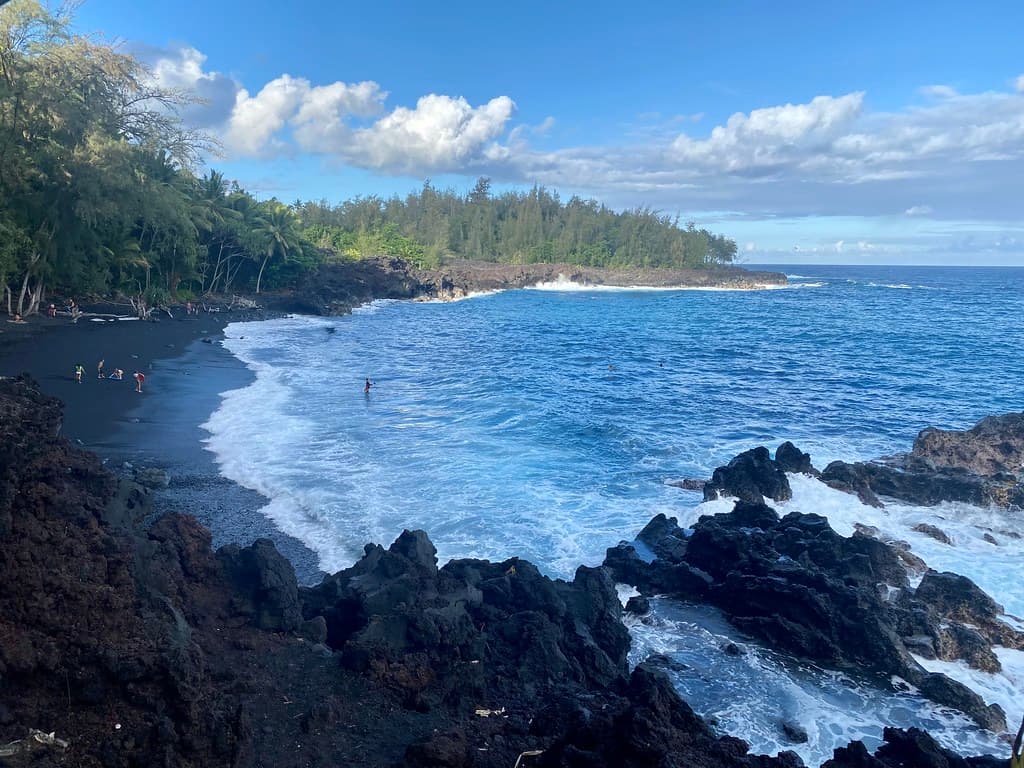
The trail down to Kehena cuts through a tangle of ironwood and hala trees, switchbacking steeply before depositing you onto a crescent of black sand that crunches underfoot—pulverized lava from Kīlauea, ground fine by centuries of surf. The beach sits in a natural amphitheater of lava rock, clothes-optional by tradition, where bodies bronze against dark sand and the ocean churns white foam just offshore. Dolphins appear most mornings, their backs slicing the surface in synchronized arcs while snorkelers wade in cautiously, aware of the shore break's punch.
“This is Big Island's only reliably clothing-optional beach where wild spinner dolphins regularly enter the cove to rest and socialize.”
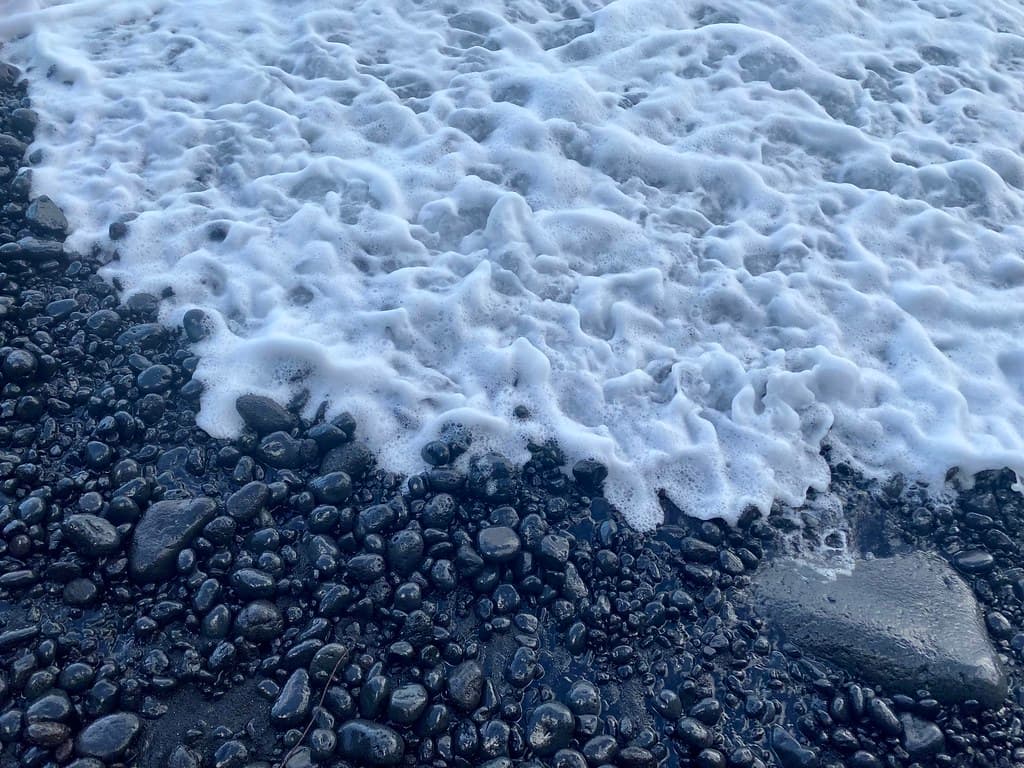 Credit: Flickr
Kehena Black Sand Beach
The sand radiates heat by midday, almost too hot for bare soles, and locals spread sarongs beneath the few coconut palms that lean toward the water. You'll hear drum circles on Sunday afternoons, rhythms competing with the constant percussion of waves collapsing onto the steep beach face. Rip currents carve invisible channels through the bay, and the ocean here demands respect—no lifeguards, no facilities, just raw coastline where Puna district meets the sea.
Bring your own water and shade. The nearest town, Pāhoa, sits ten minutes inland, a collection of wooden storefronts and lunch counters serving plate lunches heavy on the rice. You'll leave with black sand in your bag, your shoes, the seams of your towel—Kehena's signature, volcanic and indelible.


