Counting the wavesβ¦

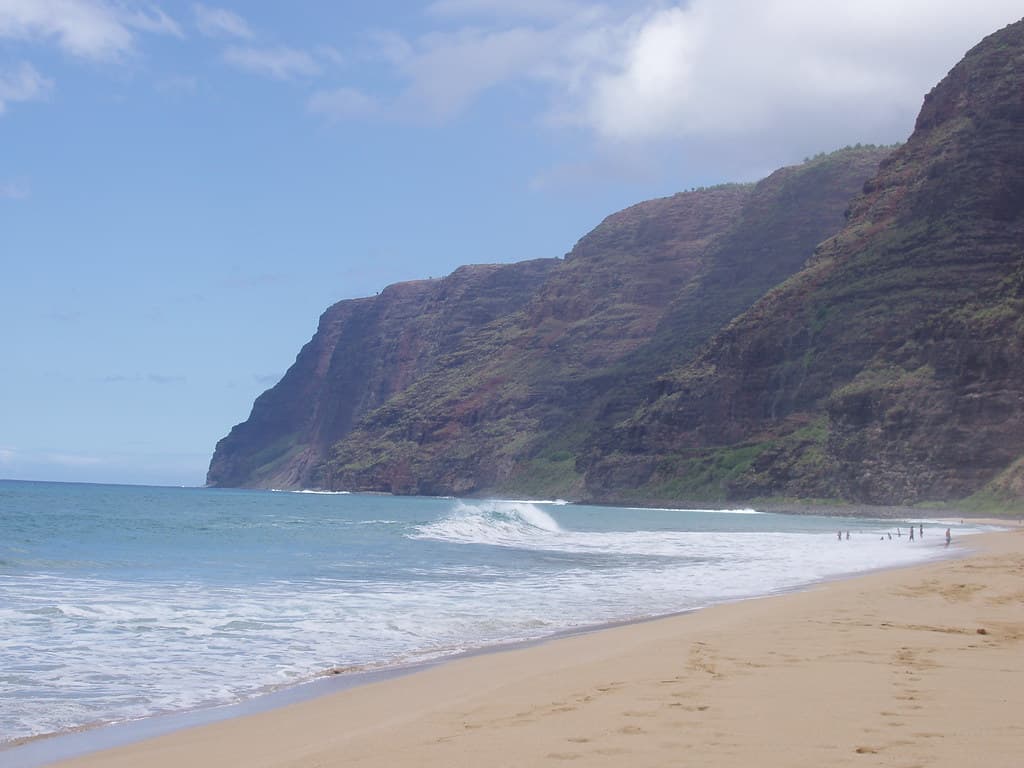
Kekaha Beach begins where the pavement ends and the coastline opens into a seemingly endless expanse of tawny sand, backed by the rust-colored cliffs of Waimea Canyon rising inland. You'll walk this seventeen-mile strand with only the occasional fisherman for company, your footprints erased by waves that march in from the open ocean with relentless energy. The shore faces west, catching every ounce of afternoon sun and turning bronze in the slanting light before dusk. The water here isn't gentle. Swells roll in unbroken across thousands of miles of Pacific, collapsing onto the beach with a force that commands respect. Swimming demands attention to conditions; the locals will tell you to watch the ocean for fifteen minutes before you enter. When the surf calms in summer, you'll find pockets of relative safety, though even then the current tugs insistently at your legs. What draws you back isn't comfort but scale. The horizon stretches uninterrupted to Ni'ihau, the forbidden island floating like a mirage offshore. Hawaiian monk seals haul out onto the sand to rest, unbothered by your presence if you keep your distance. As the sun drops toward the ocean, the entire western sky ignites, and you understand why this coast feels less like a destination than a place the island forgot to develop.
Places, rentals, tours and events within walking and driving distance of Kekaha Beach.
Photos
Swimming conditions at Kekaha Beach vary significantly by season and location along this long stretch of sand. Summer months generally offer calmer waters suitable for swimming, while winter brings powerful waves, strong currents, and dangerous shore breaks that make swimming hazardous. The beach lacks lifeguards, so extreme caution is essential. Always check current conditions before entering the water, avoid swimming alone, and stay close to shore. The western end near the Kekaha Beach Park pavilions tends to be slightly more protected than other sections.
Kekaha Beach is accessible year-round and enjoys Kauai's sunny, dry west side climate with minimal rainfall. Summer months (May-September) offer the calmest ocean conditions and are ideal for swimming and water activities. Winter (November-March) brings dramatic surf and stunning sunsets but rougher seas. The beach faces west, making it perfect for sunset viewing any time of year. Weekdays tend to be less crowded than weekends. Early morning and late afternoon provide the most comfortable temperatures and best lighting for photography of the scenic coastline.
Kekaha Beach is located along Kaumualii Highway (Route 50) on Kauai's west side, approximately 20 miles west of Lihue. The beach stretches for several miles, with multiple access points through Kekaha town. Kekaha Beach Park, near mile marker 27, offers the main access with a paved parking lot, though spaces can fill on weekends. Additional informal parking areas exist along the highway. There's no entrance fee. The beach is about 10 minutes north of Waimea town and 15 minutes south of Polihale State Park.
Kekaha Beach Park provides basic amenities including restrooms, outdoor showers, picnic tables, and pavilions. The small town of Kekaha, adjacent to the beach, has a few local eateries, convenience stores, and a gas station for supplies. More dining options are available in nearby Waimea, about 3 miles south. Lodging options on this side of Kauai are limited; most visitors stay in Poipu or Princeville and drive over. It's advisable to bring your own food, water, and beach supplies, as options are minimal compared to resort areas.
Kekaha Beach remains relatively uncrowded despite being one of Kauai's longest sandy beaches, stretching nearly 15 miles along the island's dry west side. Unlike heavily touristed beaches, it offers peaceful, wide-open spaces with stunning views of Niihau Island on clear days. The dramatic sunsets are spectacular, and the beach provides an authentic local experience away from resort development. Its remote location and powerful winter surf keep mass tourism at bay, while locals appreciate its expansive beauty and opportunities for fishing, beachcombing, and solitude that's increasingly rare in Hawaii.