

Counting the waves…
Counting the waves…

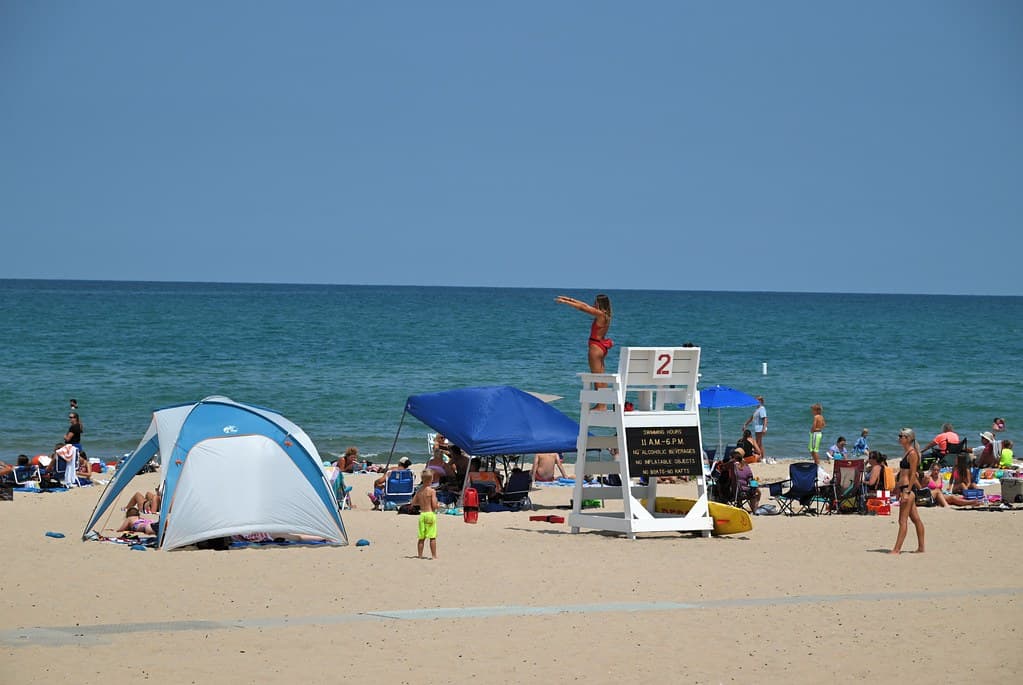
You arrive at the pavilion where the scent of sunscreen mingles with pine resin, then follow the boardwalk toward the shore. Lake Michigan stretches to the horizon, its surface rippling silver under wide Midwestern skies. The sand here is pale and fine, squeaking beneath your feet as you walk toward the waterline, where small waves break in rhythmic whispers. Behind you, the dunes rise in steep, grass-tufted slopes, their contours sculpted by wind into smooth ridges and bowls. The park's trail system threads through ecosystems that shift with elevation—black oak forests give way to marram grass, then open beach. You'll pass families building driftwood forts, runners tackling the stair-climb to the dune crests, and birdwatchers scanning the shallows for piping plovers. In summer, the water temperature creeps into the sixties, cold enough to make you gasp but swimmable by midday. Autumn paints the beech-maple woods in rust and gold, while winter transforms the shoreline into a gallery of ice formations. This is Lake Michigan's southern arc, where steel mills and shoreline coexist, where you can watch ore freighters slide past the Indiana Harbor Ship Canal in the distance. The juxtaposition feels honest, industrial heritage framing natural beauty without apology. You leave with sand in your shoes and the lake's mineral smell on your skin.
Places, rentals, tours and events within walking and driving distance of Indiana Dunes State Park Beach.
Photos
Swimming is generally allowed at Indiana Dunes State Park Beach when lifeguards are on duty, typically from late May through Labor Day. However, conditions can be hazardous due to rip currents, high waves, and sudden drop-offs in Lake Michigan. Always check the beach flag warning system before entering the water: green means safe, yellow indicates caution, and red means no swimming. Cold water temperatures, even in summer, can cause hypothermia. Never swim alone and stay within designated swimming areas when lifeguards are present.
Summer (June through August) offers the warmest weather and Lake Michigan water temperatures, making it ideal for swimming and sunbathing. However, weekends can be extremely crowded. Late spring (May) and early fall (September) provide pleasant temperatures with fewer visitors, perfect for hiking the scenic dunes and birdwatching. Winter visits offer solitude and striking landscapes but require preparation for cold, windy conditions. The park is open year-round, though swimming is only supervised seasonally. Weekdays generally offer a more peaceful experience regardless of season.
Indiana Dunes State Park is located off Interstate 94, approximately 50 miles east of Chicago. Take exit 26B and follow State Road 49 north for about three miles to the park entrance. There are multiple parking lots throughout the park, with the main beach parking area located near the pavilion and bathhouse. An Indiana state park entrance fee is required ($7 for Indiana residents, $12 for out-of-state visitors as of 2024). Parking lots fill quickly on summer weekends, so arrive early or visit on weekdays.
The park features a concession stand near the beach pavilion operating seasonally, offering snacks, ice cream, and basic food items. Modern restrooms and changing facilities are available at the bathhouse. For full-service restaurants and lodging, the nearby towns of Chesterton (3 miles south) and Beverly Shores offer various dining options and accommodations. The park has a campground with over 140 campsites for those wanting to stay overnight. Picnic areas with grills are scattered throughout the park for visitors bringing their own food.
Yes, climbing the dunes is one of the park's signature activities. The most popular climb is Mount Tom, a 192-foot dune accessible via Trail 8, offering panoramic views of Lake Michigan and the Chicago skyline on clear days. The park has 16.5 miles of hiking trails that traverse various dune landscapes. However, stay on marked trails to prevent erosion and protect fragile dune ecosystems. The sandy climbs can be strenuous, so wear appropriate footwear, bring water, and pace yourself, especially in hot weather.