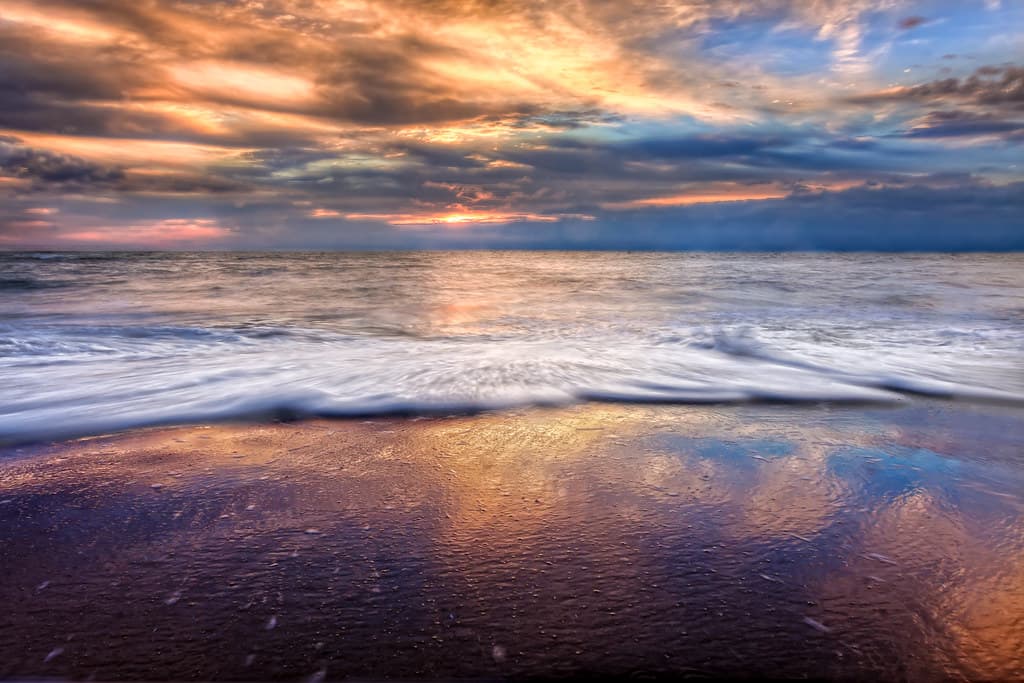
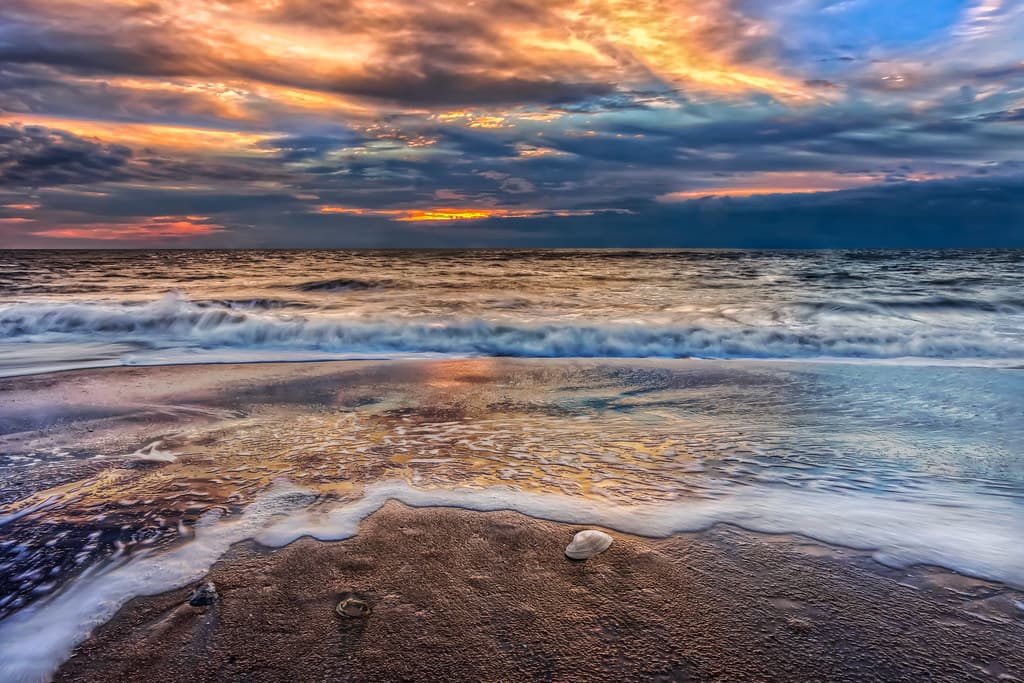
Counting the waves…
Counting the waves…
The Over-Sand Vehicle zone at Assateague transforms your beach visit into something closer to overlanding. You'll drive directly onto the sand—after deflating your tires to 15-20 PSI at the wooden platform near the entrance—and stake your claim anywhere along the twelve-mile corridor. No lifeguards, no concession stands, no neighbors unless you want them. Just dunes humped with beach grass, the persistent wind off the Atlantic, and the occasional band of feral horses wandering through like they own the place. The Chincoteague ponies are smaller than you expect, shaggy-coated and salt-stained, descendants of shipwreck survivors or colonial livestock depending on which story you believe. They ignore your presence with magnificent indifference, cropping dune vegetation while you set up camp chairs beside your truck bed. The beach itself runs wide and flat at low tide, hard-packed enough for cycling if you're not towing gear. Fishing rods outnumber umbrellas here. Surf casters work the troughs for striped bass and bluefish while sanderlings sprint between the foam. At night, permitted campers kill their headlights to watch stars thicken over the dark Atlantic. You'll leave with sand embedded in every crevice of your vehicle and the particular satisfaction of having reached a place that doesn't make it easy.
Places, rentals, tours and events within walking and driving distance of OSV Beach (Assateague MD).
Photos
Swimming conditions at OSV (Over-Sand Vehicle) Beach vary significantly with weather and tides. The Atlantic Ocean here has no lifeguards, strong currents, and unpredictable rip tides, so exercise extreme caution. Check surf conditions before entering the water and never swim alone. The beach is remote with limited emergency access, so most visitors prefer wading or beachcombing. Always monitor children closely near the water. During summer, ocean temperatures reach the mid-70s Fahrenheit, but water quality can be affected by storms. If conditions look questionable, stay onshore and enjoy the pristine scenery instead.
OSV Beach is accessible year-round with a valid permit, and each season offers distinct advantages. Summer (June-August) brings warm weather and calmer seas but also crowds and high permit demand. Fall (September-November) is ideal for fishing, cooler temperatures, and stunning sunrises with fewer visitors. Winter offers solitude and excellent bird watching, though weather can be harsh. Spring brings wildflowers and migrating birds. Midweek visits in shoulder seasons typically provide the best combination of pleasant weather and peaceful isolation. Always check tide schedules and weather forecasts before your trip, regardless of season.
OSV Beach is only accessible by driving on the sand with a 4WD vehicle and valid permit from the National Park Service. Enter through the main Assateague Island National Seashore entrance near Berlin, Maryland, then proceed to the OSV zone at the end of the paved road. You'll need to lower tire pressure to 15-20 PSI before driving onto the beach. There's no traditional parking lot—you drive and park directly on the beach. Permits cost approximately $110 annually or $50 for seven days. Two-wheel drive vehicles cannot access this area.
OSV Beach has zero amenities—no food, water, restrooms, or lodging on-site. You must bring everything you need, including water, food, shade, and portable bathrooms. The nearest restaurants and shops are in Ocean City (12 miles south) or Berlin (8 miles west), which offers charming dining options and hotels. The developed area of Assateague has campgrounds with facilities, but OSV is primitive. Many visitors bring camping gear and stay overnight on the beach with their permit. Stock up on supplies before entering the park, as there are no services once you're past the entrance station.
Yes, encountering wild horses is likely at OSV Beach, as they roam freely throughout Assateague Island. These feral horses often graze near the dunes and beach areas where OSV permit holders camp. While magical to observe, maintain at least 40 feet distance—they can bite and kick. Never feed or touch them, as it's illegal and dangerous. The horses may approach your campsite seeking food; secure all items and never leave food accessible. Their presence is unpredictable, so sightings aren't guaranteed, but OSV's remote location increases your chances compared to busier beach areas.