
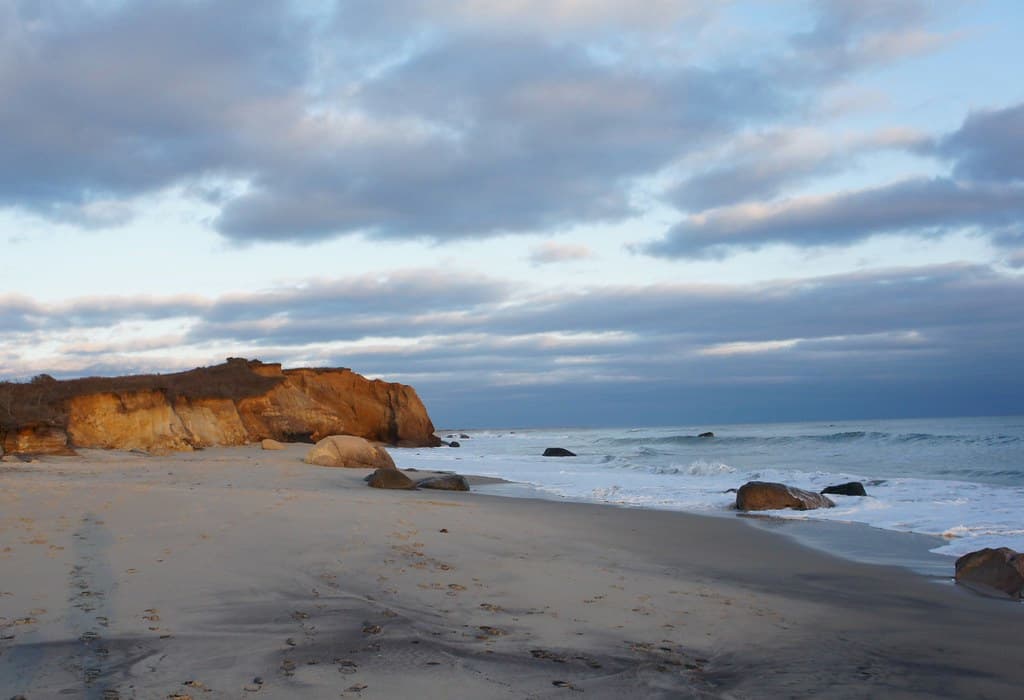
Lucy Vincent Beach belongs to a wilder Martha's Vineyard—one where clay cliffs streaked with iron oxide rise fifty feet above a shoreline littered with wave-smoothed boulders. You'll walk barefoot over warm pebbles before reaching the softer sand near the waterline, where the surf delivers a steady percussion that drowns out everything but the gulls. The western end has long drawn a clothing-optional crowd; the eastern stretch remains the domain of families and beachcombers hunting for stones striped like agate.
“Those rust-streaked clay cliffs create a constantly evolving canvas as erosion reveals layers deposited when this island sat beneath a shallow Cretaceous sea.”
 Credit: Flickr
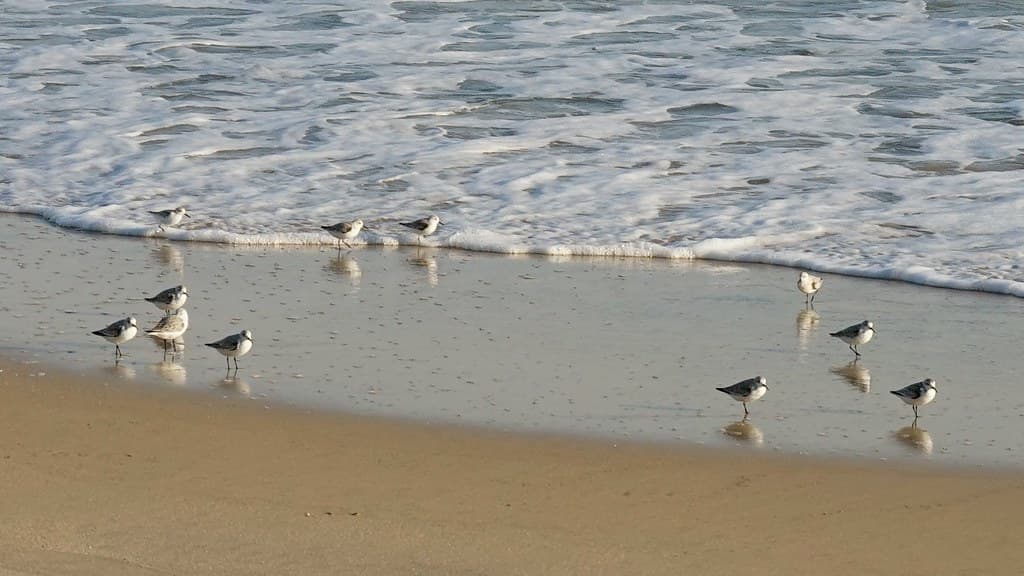
Semipalmated Sandpiper reflections
Access is restricted to Chilmark residents and renters from late spring through early fall, lending the beach an insider's mystique that keeps summer crowds thinner than you'd expect for scenery this dramatic. The bluffs shift color with the light—burnt sienna at noon, nearly purple as the sun drops—and after storms, fresh clay slumps reveal new fossil beds and the occasional shark tooth embedded in compressed sediment.
You'll need to time low tide if you want to explore the full length without scrambling over rock piles. Bring water shoes for the stone beach, a wide-brimmed hat for shade-free hours, and a healthy respect for the undertow that makes this stretch better for strong swimmers than tentative waders. The setting feels primordial, less postcard than geologic lesson in how coasts reshape themselves season after season.


