Counting the waves…
Counting the waves…
A refined fusion of water purity, environmental stability, and communal vibrancy for Rockport Beach.
View MethodologyAnalyzed via live sensors and environmental data.
Wave height, wind, and atmospheric stability.
Live footfall and crowd balance metrics.
Community reviews and curated sentiment.
“You'll find Rockport Beach tucked along Michigan's northeastern shore, where flat limestone shelves slope into Lake Huron's cool, gin-clear shallows. The scent of wet stone and pine mingles as you explore tide pools and…”
Limited recent visitor reports — live OBI telemetry is your best guide for current conditions.
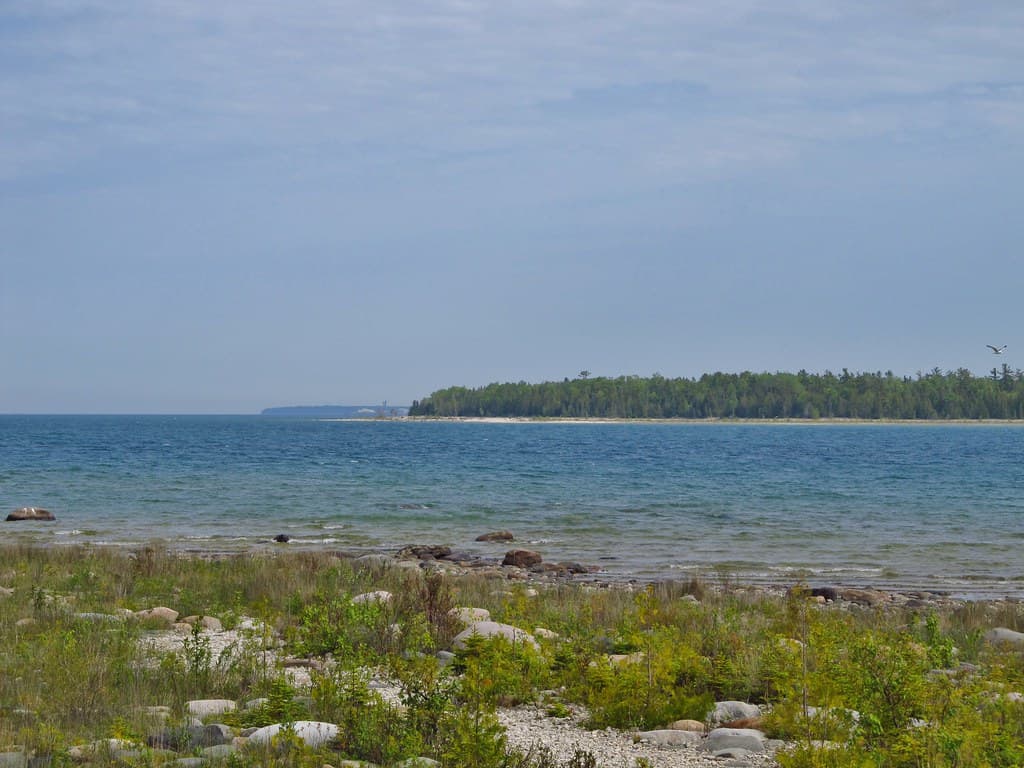
Rockport Beach unfolds along a curve of Lake Huron shoreline that feels more Nordic fjord than Great Lakes getaway. Smooth limestone pavement extends into the water like nature's own boat ramp, worn glossy by centuries of wave action. You'll wade over ankle-deep shelves where minnows dart between rock crevices, the water so transparent you can count pebbles six feet down. Stands of white pine and birch frame the beach, their roots gripping the Devonian bedrock that defines this stretch of coast.
The beach draws rockhounds and history seekers in equal measure. Offshore lie the remains of wooden schooners that foundered in Lake Huron gales—some visible as dark shapes beneath the surface on calm days. You'll share the shore with locals combing for fossils embedded in the ancient seabed, evidence of the warm tropical ocean that covered Michigan 350 million years ago. A small pavilion and picnic tables offer shade, but most visitors spread towels directly on the smooth stone slabs.
 Credit: Unsplash
brown grass field near body of water during daytime
 Credit: Unsplash
a log on a beach
Gradual entry over smooth bedrock
Unobstructed eastern Lake Huron horizon
Devonian coral in shoreline rock
Where it is
Rockport Beach
Alpena, Michigan, USA
45.195600°, -83.498400°
Weather
Loading…
Swell
—
Temp
Warm · Restorative
UV Index
Moderate
Wind
—
Tidal State
Last known
Max Sunlight
—
Ideal Shade
—
May - Sep (Peak)
Jan - Dec (Off-season)
Historical data suggests peak visibility and stable sea temperatures occur during the prime visitation window.
Select a category to load nearby places.
Unlock restaurants, luxury stays and curated maritime experiences within 2km
Rockport Beach on Lake Huron offers generally calm swimming conditions during summer months, though water temperatures remain cool even in July and August. The beach has a gradual slope with a sandy bottom, making it suitable for families. However, there are no lifeguards on duty, so swim at your own risk. Lake Huron can develop strong currents and waves during storms or high winds, particularly in fall and spring. Always check local weather conditions before entering the water and supervise children closely.
The most popular time to visit Rockport Beach is late June through August when temperatures reach the 70s-80s°F and the water is warmest (though still brisk at 65-70°F). However, this scenic beach offers year-round appeal. Spring and fall provide excellent opportunities for fossil hunting and beachcombing with fewer crowds. Winter transforms the area into a dramatic landscape with ice formations, though dress warmly as temperatures drop below freezing. Sunrise and sunset viewing are spectacular during any season.
Rockport Beach is located about 12 miles north of downtown Alpena via US-23 North. Turn east onto Rockport Road and follow signs to the beach area. Free parking is available in a small gravel lot near the beach access point. The lot can accommodate approximately 15-20 vehicles and rarely fills except on peak summer weekends. The beach is part of a former quarry area, so watch for directional signage as the turnoff can be easy to miss.
Rockport Beach is in a relatively remote area with limited immediate amenities. The closest restaurants and accommodations are in Alpena, about 12 miles south, which offers various hotels, motels, and dining options ranging from casual to fine dining. There are no facilities directly at the beach—no restrooms, concessions, or food vendors—so pack everything you'll need. Bring your own food, water, and supplies. Some visitors choose to picnic on the beach while enjoying the scenic Lake Huron views.
Rockport Beach sits adjacent to abandoned limestone quarries that expose 400-million-year-old Devonian fossils, making it a premier fossil-hunting destination. The beach stones and quarry walls contain ancient coral, crinoids, brachiopods, and other marine fossils from when Michigan was covered by a tropical sea. The best hunting is after storms when waves expose new specimens. While you can collect loose specimens from the beach, removing fossils from quarry walls or protected areas is prohibited. Bring a field guide to identify your finds.
Photos