Counting the waves…
Counting the waves…
A refined fusion of water purity, environmental stability, and communal vibrancy for Hoffmaster State Park Beach.
View MethodologyAnalyzed via live sensors and environmental data.
Wave height, wind, and atmospheric stability.
Live footfall and crowd balance metrics.
Community reviews and curated sentiment.
“You'll smell the pines before you see the water—a forested ridge gives way to wild shoreline where wave-smoothed driftwood piles against sand the color of raw sugar. The dune grass bends inland with the prevailing…”
Limited recent visitor reports — live OBI telemetry is your best guide for current conditions.
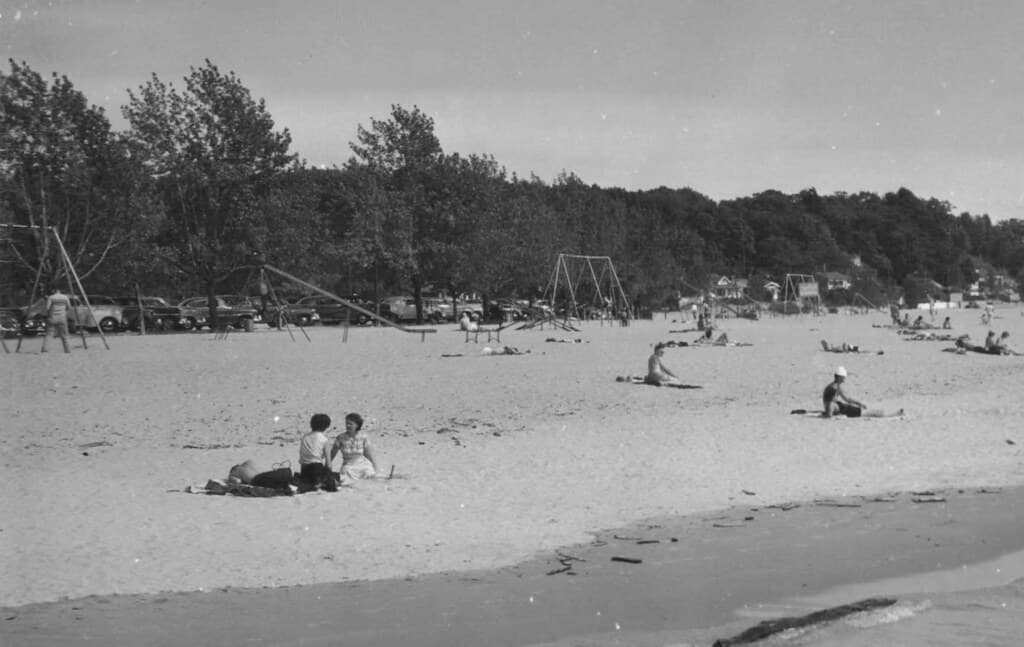
The wooden boardwalk descends through oak and beech forest, then opens onto a beach where most Michigan tourists never think to look. Norton Shores sits just south of Muskegon, overshadowed by that city's public stretches, which means you'll share this mile-long strand with sanderlings and the occasional Great Lakes freighter ghosting along the horizon. The sand here runs fine and pale, deposited over millennia by glacial melt, and the water stays bracingly cold even in August—mid-sixties if you're lucky, low fifties in June.
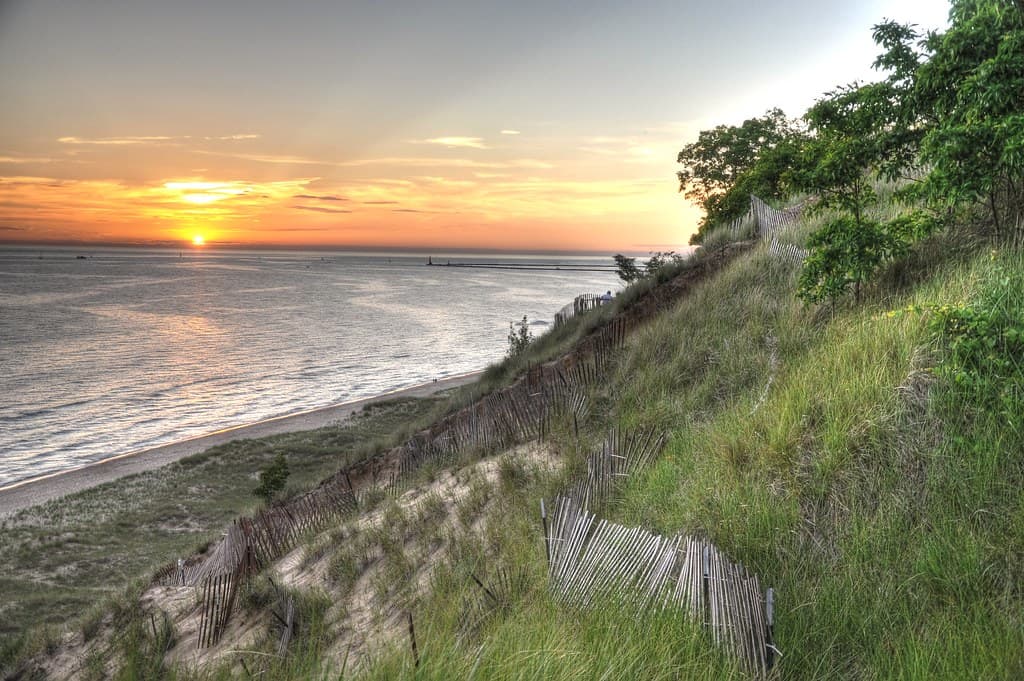
The real draw isn't the swimming but the dune system rising behind you. Hoffmaster protects 1,100 acres of coastal woodland and some of the tallest perched dunes on Lake Michigan's eastern shore. Climb the Dune Climb Stairway—296 steps through whispering cottonwoods—and you'll earn views across open water that looks more like ocean than inland sea. In autumn, when the maples turn arterial red and the beach empties, you can walk for twenty minutes without seeing another soul.
 Credit: Unsplash
brown grass field near body of water during daytime
 Credit: Unsplash
a log on a beach
296 steps through forest canopy
Great Lakes vessels at horizon
Lake temps stay below seventy
Where it is
Hoffmaster State Park Beach
Norton Shores, Michigan, USA
43.153600°, -86.259800°
Weather
Loading…
Swell
—
Temp
Warm · Restorative
UV Index
Moderate
Wind
—
Tidal State
Last known
Max Sunlight
—
Ideal Shade
—
May - Sep (Peak)
Jan - Dec (Off-season)
Historical data suggests peak visibility and stable sea temperatures occur during the prime visitation window.
Select a category to load nearby places.
Unlock restaurants, luxury stays and curated maritime experiences within 2km
Swimming is generally safe at Hoffmaster State Park Beach during summer months when lifeguards are on duty. Lake Michigan can have unpredictable currents and rip tides, so always check flag warnings before entering the water. The beach posts daily updates on swimming conditions. Water temperatures are typically swimmest from late June through August. Strong winds can create rough waves and dangerous undertows, particularly in spring and fall. Never swim alone, stay within designated swimming areas, and supervise children closely. Winter swimming is not recommended due to cold temperatures and lack of lifeguard services.
Summer (June-August) offers the warmest weather and best swimming conditions, with temperatures reaching 70-80°F and water temps around 65-70°F. However, this beach truly shines in fall (September-October) when crowds disappear and the surrounding dune forests display spectacular autumn colors. Spring brings migrating birds and wildflowers along the dune trails. Winter visits reward hardy travelers with stunning frozen shorelines and peaceful solitude, though facilities are limited. Weekdays are less crowded than weekends during peak summer season. Sunset viewing is excellent year-round, with the beach facing west across Lake Michigan.
From Muskegon, take Pontaluna Road west for about 6 miles to the park entrance on South Lake Harbor Road. The beach is approximately 30 minutes from downtown Muskegon and 45 minutes from Grand Rapids. A Michigan Recreation Passport is required for entry ($12 daily or $34 annual for residents, $9/$34 for non-residents). The main parking lot accommodates several hundred vehicles and is located near the beach entrance and visitor center. Parking fills quickly on hot summer weekends, so arrive before 11am during peak season. Overflow parking is available but requires a longer walk to the beach.
The park offers modern campgrounds with 293 sites, some with electric hookups, making overnight stays convenient. No food concessions exist within the park, so bring your own provisions or cooler. Norton Shores, about 10 minutes away, has grocery stores, restaurants, and fast food along Pontaluna Road and Harvey Street. For more dining variety, Muskegon (15 minutes) offers numerous restaurants and cafes. Hotels and motels cluster around Muskegon and nearby Grand Haven (20 minutes south). Beach Haven Resort and several vacation rentals are located within a few miles of the park entrance for those preferring proximity.
The E. Genevieve Gillette Visitor Center is Michigan's only interpretive center dedicated exclusively to sand dune formation and ecology. It features excellent exhibits explaining how Lake Michigan's massive dunes formed and evolved over thousands of years. Interactive displays cover dune plants, animals, and conservation efforts. The center serves as the trailhead for the 2.5-mile Dune Climb Stairway, which leads to spectacular overlooks 190 feet above Lake Michigan. Educational programs and guided nature walks are offered seasonally. The center provides valuable context that enhances understanding of the unique coastal dune ecosystem surrounding the beach.
Photos