
Counting the waves…
Counting the waves…

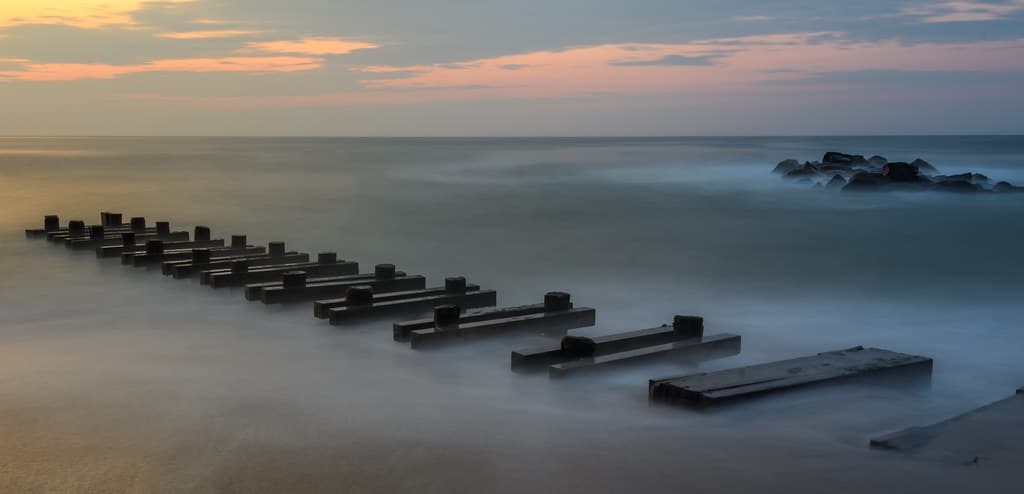
The granite boulders lining the north jetty radiate stored heat even in October, and you'll watch surfcasters wedge rod holders between the rocks, waiting for striped bass to ride the incoming current. The inlet's engineered flow creates a perpetual rip that sweeps south along the Manasquan side, carving a steep beach face where waves jack up fast and hollow out over the sandbar. Lifeguard stands mark the designated swim zone well north of the jetty, but most visitors come for the kinetic theatre of water funneling between the jetties—freighters heading to the Shark River, weekend sailboats tacking against the wind, and the steady parade of charter fishing boats trailing diesel exhaust and the promise of bluefish offshore. The beach itself is narrow, especially at high tide when waves lap within feet of the stone revetment. You'll find more elbow room in the shoulder seasons, when the summer badge-checkers disappear and parking opens up along Beach Front and Riverside Drive. Gulls wheel over the jetty tips, and the sound of water rushing through the inlet drowns out everything but the occasional foghorn from the Coast Guard station across the channel. This isn't a place for laying out a blanket and dozing; the inlet demands attention. You feel the pull of the current even standing ankle-deep, and the rhythmic surge against the jetties becomes a kind of metronome. It's a working waterway disguised as a beach—functional, dynamic, and never quite still.
Places, rentals, tours and events within walking and driving distance of Manasquan Inlet Beach.
Photos
Swimming conditions at Manasquan Inlet Beach require caution due to strong currents, especially near the inlet jetties. Lifeguards are on duty during summer months (typically late June through Labor Day), and swimming is safest in designated areas away from the inlet itself. The jetties create unpredictable rip currents and undertows that can be dangerous even for experienced swimmers. Always check daily beach conditions, swim near lifeguard stands, and avoid the rocks. The beach is more popular with surfers than swimmers due to these challenging water conditions.
Summer (June-August) offers warm weather and full amenities with lifeguards on duty, though it's the most crowded period. Fall (September-November) brings excellent surfing conditions with smaller crowds and comfortable temperatures. Spring and winter attract dedicated surfers and anglers seeking solitude. Early mornings year-round provide peaceful beach walks and optimal fishing opportunities. For surfing, fall and winter produce the best swells. Weather varies significantly by season, with summer temperatures reaching 75-85°F and winter averaging 30-45°F. Consider weekdays to avoid weekend crowds during peak season.
Limited metered parking is available along Ocean Avenue and side streets near the inlet, with rates varying by season (free in winter, paid Memorial Day through Labor Day). A small municipal parking lot exists at the beach entrance, but spaces fill quickly on summer weekends. Additional parking can be found several blocks inland on residential streets, requiring a short walk. Beach badges are required for beach access during summer. Some visitors park in nearby Point Pleasant Beach and walk across the inlet. Arrive early morning for best parking availability, especially during peak season and good surf conditions.
The immediate beach area has limited facilities—restrooms and outdoor showers are available seasonally. For food and lodging, downtown Manasquan (about one mile away) offers various restaurants, cafes, and small hotels. The nearby Manasquan boardwalk area features casual eateries and ice cream shops. Point Pleasant Beach, just across the inlet, provides extensive dining options, beach supply shops, and accommodations. The famous Squan Tavern and other seafood restaurants are within a short drive. No boardwalk concessions exist directly at the inlet beach, so bring supplies or plan to travel for meals.
Manasquan Inlet is considered one of New Jersey's premier surf spots due to the jetties that create consistent, well-formed waves year-round. The inlet's structure produces both right and left breaks, with the north jetty offering particularly favorable conditions. Wave quality improves during fall and winter nor'easters and hurricane swells. The beach attracts experienced surfers because currents and rocky jetties demand skill and local knowledge. Surf etiquette is important here, as regulars are protective of peak spots. Check surf reports before going, and beginners should consider lessons or calmer nearby beaches.