Counting the waves…
Counting the waves…

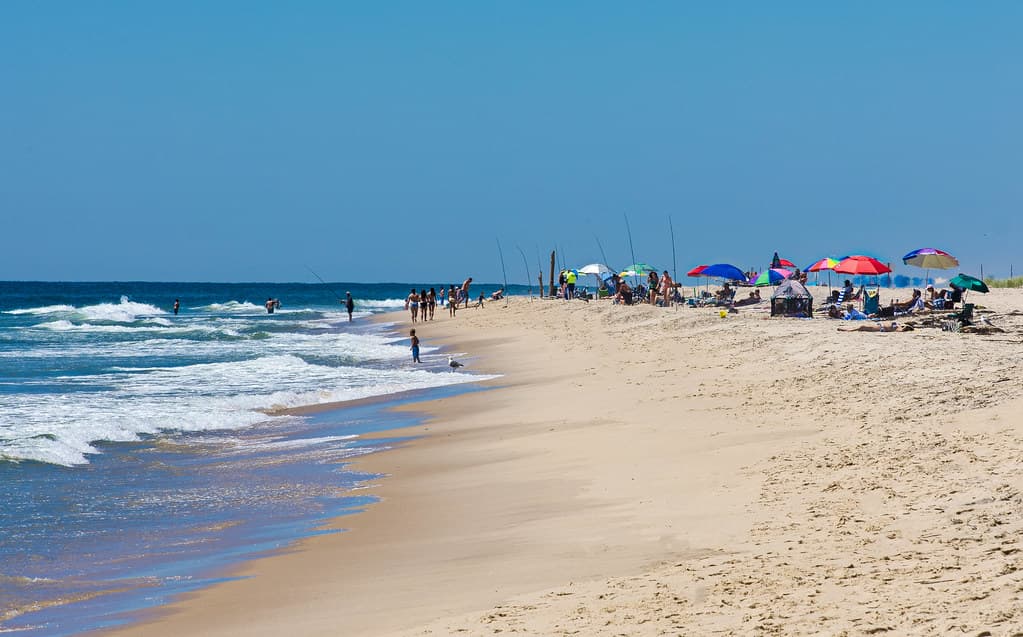
Napeague stretches for miles along the narrow isthmus linking the manicured lawns of Amagansett to Montauk's fishing-village grit. You won't find lifeguard chairs or boardwalks here—just dunes stippled with beach plum and rosa rugosa, a generous expanse of tan sand, and waves that arrive straight from the open Atlantic. The shoreline feels elemental, shaped more by nor'easters than by human intervention, and on weekday mornings in shoulder season you might walk a half-mile without passing another soul. The beach rewards those willing to forego amenities. Pack everything—water, shade, snacks—because the nearest provisions are back on the highway. But that austerity is precisely the appeal: you get unfiltered ocean, serious surf when the swell cooperates, and sunsets that paint the sky in gradients of tangerine and violet as the light drops behind the dunes. Anglers wade into the shorebreak casting for striped bass; surfers paddle out near the jetties when hurricane swells march up the coast. Come in September, after the summer crowds disperse, and you'll understand why locals guard this stretch fiercely. The water holds summer's warmth a few weeks longer, the light slants golden across the sand, and the Atlantic feels less like a backdrop than a presence—rhythmic, relentless, and utterly indifferent to the resort towns flanking either end.
Places, rentals, tours and events within walking and driving distance of Napeague Beach.
Photos
Napeague Beach is generally safe for swimming, but conditions vary. The Atlantic Ocean here can have strong currents and moderate surf, so swimmers should exercise caution and stay aware of wave conditions. There are no lifeguards on duty at most sections of this beach, so swim at your own risk. Check local surf reports before entering the water, especially during storm season or winter months. The beach is also popular with surfers due to consistent wave action. Always supervise children closely and avoid swimming alone.
Napeague Beach is accessible year-round, with each season offering something different. Summer (June-August) provides warm water and beach weather, though it's busiest then. Fall (September-October) brings fewer crowds, comfortable temperatures, and excellent surf conditions. Spring offers solitude and bird-watching opportunities along the dunes. Winter attracts hardy beachcombers and offers dramatic storm-watching. Sunset viewing is spectacular any time of year. For the best balance of weather and fewer visitors, consider late May, early June, or September.
Napeague Beach is located along Montauk Highway (Route 27) between Amagansett and Montauk. Several parking areas exist along this stretch, including Napeague State Park parking lots. Some areas offer free roadside parking along the highway shoulder, while state park lots may require parking fees during summer season. The beach is easily accessible from these parking areas via short walking paths over the dunes. During peak summer months, arrive early as parking fills quickly. The area is about two hours from New York City via the Long Island Expressway.
Napeague Beach itself has no facilities, so plan accordingly. The nearby hamlet of Amagansett (to the west) and Montauk (to the east) offer numerous dining options, from casual seafood shacks to upscale restaurants. Lodging ranges from motels and inns to vacation rentals in both towns. Montauk has more extensive amenities including supermarkets and shops. Bring food, water, and supplies with you to the beach, as there are no concessions or restrooms at most access points. The nearest facilities are typically a short drive away.
Napeague Beach is part of the Napeague stretch, which includes the famous Walking Dunes to the north in Napeague Harbor. This area features unique parabolic dunes that literally migrate across the landscape due to wind patterns, slowly moving and engulfing vegetation in their path. The beach itself sits on a narrow barrier strip between the Atlantic Ocean and Napeague Bay. This geographical feature makes the area ecologically significant and scenically distinctive, with dramatic dune landscapes that have captivated visitors for generations.