Counting the waves…
Counting the waves…

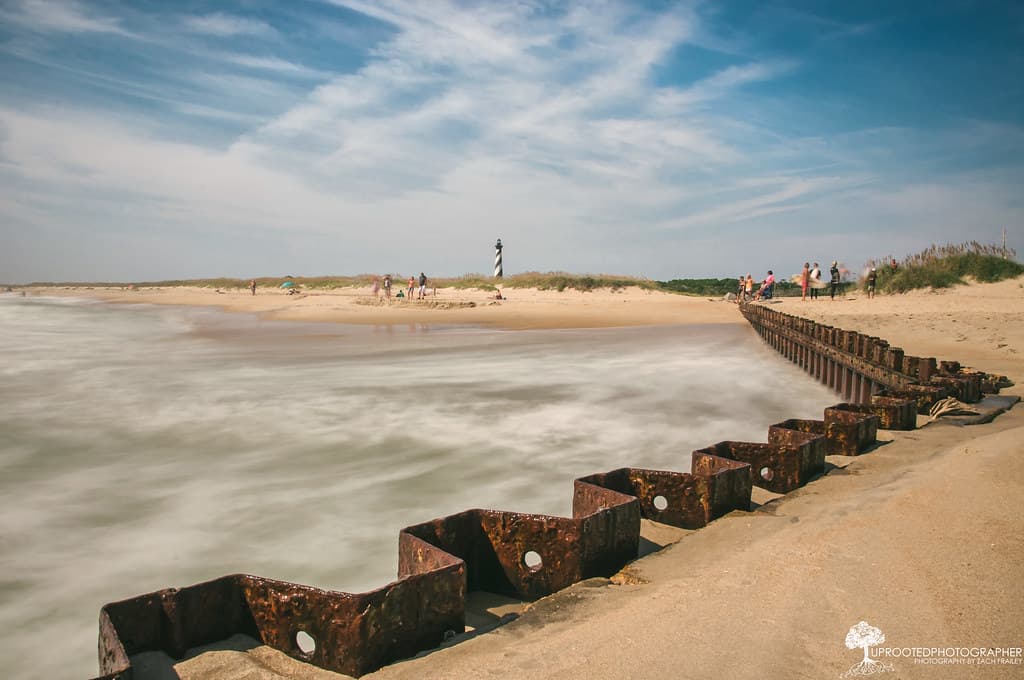
The Cape Hatteras Lighthouse looms 200 feet above you as you cross the boardwalk, its spiral painted stark against salt-bleached sky. Below, Old Lighthouse Beach sprawls in both directions—a ribbon of coarse sand where the Gulf Stream collides with the Labrador Current, creating the treacherous Diamond Shoals that have claimed more than 600 ships. You feel the difference immediately: the water here is colder on your shins than beaches twenty miles north, the undertow insistent. Surfers dot the break even in January, their wetsuits slick as seals, reading swells that roll in from storms a thousand miles offshore. The beach itself changes shape with the seasons—Hurricane Season carves it narrow and steep, while summer calms let sandbars build offshore. Shorebirds work the wrack line at dawn, stabbing for coquinas, and by afternoon the anglers arrive with sand spikes and coolers, casting into the troughs. You won't find cabanas or beach bars here. What you get instead: miles of National Seashore solitude, the lighthouse keeper's quarters turned museum, and that particular Outer Banks light—flat and enormous, turning the ocean pewter at dusk. The park service moved the lighthouse 2,900 feet inland in 1999, but the beach it guards remains as raw and shifty as when the first lightkeeper climbed those 257 steps.
Places, rentals, tours and events within walking and driving distance of Old Lighthouse Beach.
Photos
Old Lighthouse Beach has strong currents and powerful surf, making swimming conditions challenging. The beach is known for excellent surfing but can be dangerous for casual swimmers, especially near the Cape Point area where the Gulf Stream and Labrador Current meet. There are no lifeguards on duty at most access points. Check ocean conditions before entering the water, watch for rip current warnings, and never swim alone. The area's shifting sandbars and unpredictable waves require caution even for experienced swimmers.
Old Lighthouse Beach is accessible year-round, with each season offering different experiences. Summer (June-August) brings warm weather and calmer seas, ideal for families, though crowds peak. Spring and fall offer pleasant temperatures, excellent fishing, and fewer visitors. Winter provides dramatic wave-watching and bird-watching opportunities. For surfing, fall through spring produces the best swells, particularly during nor'easters. Sunrise visits are spectacular year-round, with the iconic Cape Hatteras Lighthouse providing stunning photo opportunities regardless of season.
The main parking area is at the Cape Hatteras Lighthouse parking lot off Lighthouse Road in Buxton, with paved spaces and beach access within walking distance. Beach access ramps 43 and 44 also offer parking near Old Lighthouse Beach. Parking is free at National Park Service lots. During peak summer season, lots fill early morning, so arrive before 10am. Four-wheel-drive vehicles can access certain beach areas with proper permits from the Cape Hatteras National Seashore, though regulations vary seasonally.
Buxton village, less than two miles from the beach, offers several dining options including seafood restaurants, casual cafes, and breakfast spots. Popular choices include Diamond Shoals Restaurant and Orange Blossom Bakery. Accommodation ranges from oceanfront motels and vacation rental homes to the Cape Hatteras Motel and numerous cottage rentals. The Lighthouse View Oceanfront Lodging is nearby. For groceries and supplies, visit Conner's Supermarket in Buxton. More extensive dining and lodging options are available in Avon (7 miles north) and Hatteras village (10 miles south).
Yes, the Cape Hatteras Lighthouse is open for climbing seasonally, typically from mid-April through mid-October. Visitors can climb 257 steps to the top for panoramic views of the Outer Banks and Atlantic Ocean. Tickets cost approximately $10 for adults and must be purchased on-site; they're not available in advance. Climbs are self-paced with park staff stationed throughout. Hours are generally 9am-4:30pm during season, but confirm current schedules with the National Park Service. Children must be at least 42 inches tall to climb.