Counting the waves…
Counting the waves…

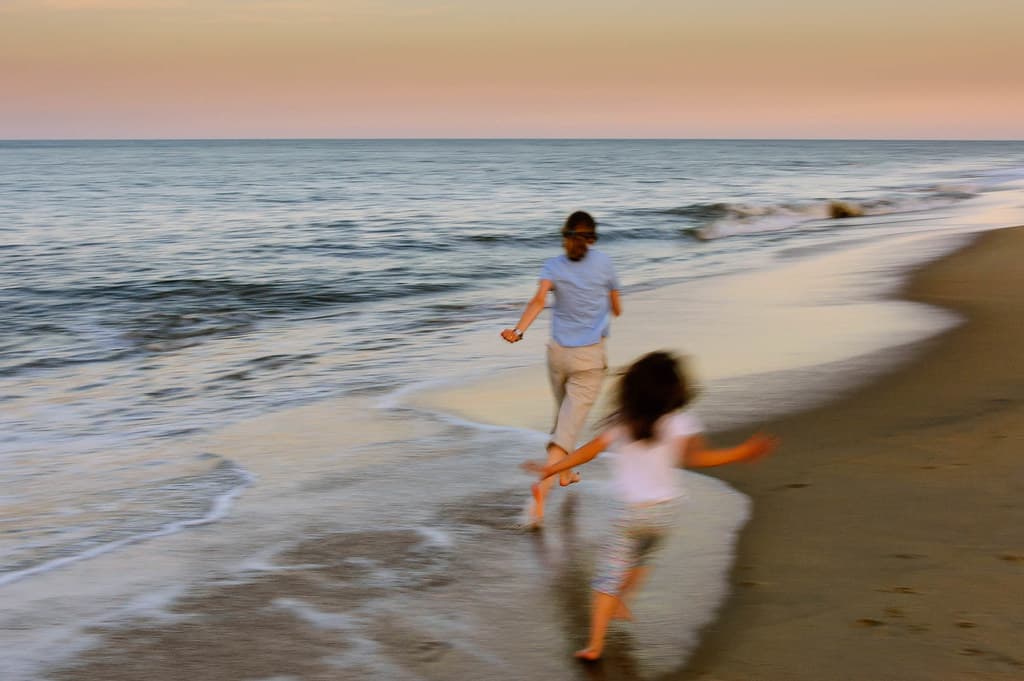
The beach unfurls north and south in an unbroken ribbon of tawny sand, backed by dune grass that hisses in the perpetual breeze. You'll notice families spreading blankets near the public access points, coolers anchored against the wind, toddlers shrieking as foam rushes over their toes. The water temperature hovers around seventy-two degrees by late June, and the gradual slope means you can wade out fifty yards before the Atlantic reaches your chest. Mid-morning brings kiteboarders who harness the northeaster gusts, their sails snapping like laundry on a line. By afternoon, the scent of sunscreen mingles with the briny tang of seaweed drying in the sun. You'll share the strand with surf fishers casting into the troughs and joggers whose footprints vanish behind them with each incoming tide. The beach empties at dusk, save for a handful of couples walking the firm sand near the waterline. Overhead, gulls wheel and cry, silhouetted against a sky that fades from salmon to violet. It's the same expanse the Wright Brothers studied more than a century ago, and the wind hasn't changed—still steady, still relentless, still shaping everything it touches.
Places, rentals, tours and events within walking and driving distance of Kitty Hawk Beach.
Photos
Kitty Hawk Beach is generally safe for families, with calmer waters than beaches farther south on the Outer Banks. The beach lacks lifeguards at most access points, so supervise children closely. Waves are typically moderate, making it suitable for beginner swimmers and wading. Check local surf reports before visiting, as conditions vary with weather and season. Rip currents can occur, so stay near shore if you're unfamiliar with ocean swimming. The gradual slope and sandy bottom make it popular with families seeking a more relaxed beach experience.
Late May through September offers the warmest ocean temperatures (70-80°F) and best swimming conditions. Summer months bring peak crowds and higher lodging rates. Shoulder seasons of May and September provide pleasant weather with fewer visitors and better value. Fall (October-November) features mild temperatures ideal for beachcombing and walking, though ocean swimming becomes chilly. Winter and early spring are quiet with cooler conditions, appealing to those seeking solitude. Weather is year-round accessible, but hurricane season runs June through November, with peak risk in August and September.
Kitty Hawk Beach offers numerous public access points along State Route 12 with limited free parking spaces, typically 5-15 spots per access. Parking fills quickly during summer, especially weekends. Arrive early morning for best availability. Some access points include Hayman Boulevard, Byrd Street, and Sea Scape access. Street parking along residential areas is often restricted to residents. No parking fees exist for public accesses. Alternatively, rent accommodations with private beach access. Four-wheel-drive vehicles can access certain beach areas with proper permits available through the National Park Service.
Kitty Hawk offers diverse dining from casual seafood shacks to upscale restaurants. Nearby options include Rundown Cafe, Black Pelican Oceanfront Cafe, and Art's Place for seafood. The beach town features vacation rentals, hotels, and motels along the oceanfront and highway. Major chains and local properties like Hilton Garden Inn and Beach Haven Motel provide varied budgets. Grocery stores like Food Lion and Walmart are available for self-catering. Kill Devil Hills and Nags Head, minutes away, offer additional dining and shopping. Most amenities cluster along US Route 158 (Bypass).
Yes, the Wright Brothers National Memorial is located just 3 miles from Kitty Hawk Beach in Kill Devil Hills, commemorating the first powered flight in 1903. The memorial sits atop Kill Devil Hill where Orville and wilbur Wright made history. It's a 5-10 minute drive and features a visitor center, reconstructed hangar, monuments, and flight markers. Open daily with admission fees ($10 per person or $15 per vehicle). The site provides educational exhibits and ranger programs. Most beach visitors incorporate this historic attraction into their Outer Banks itinerary.