Counting the waves…
Counting the waves…

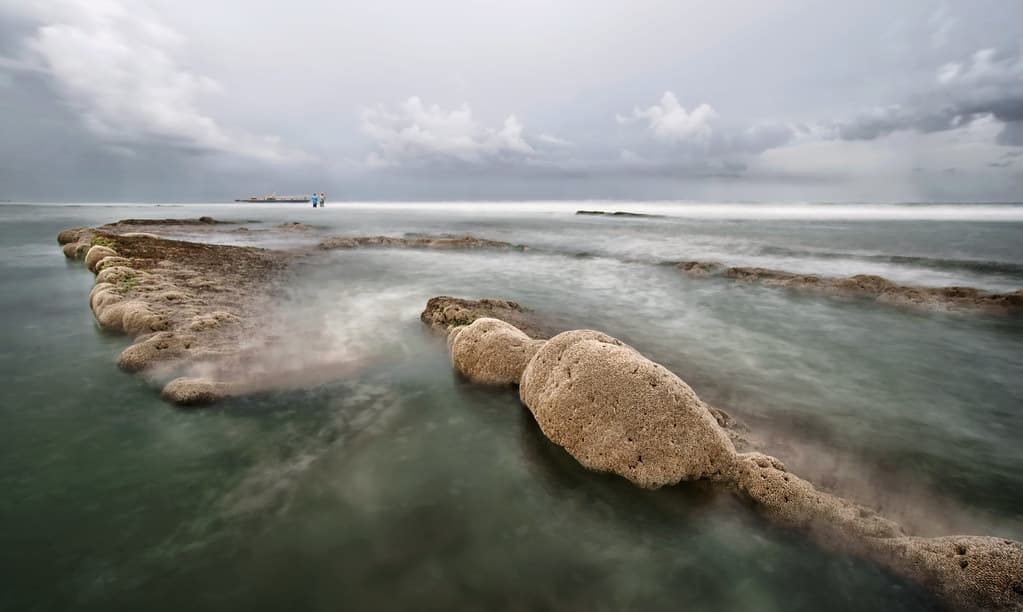
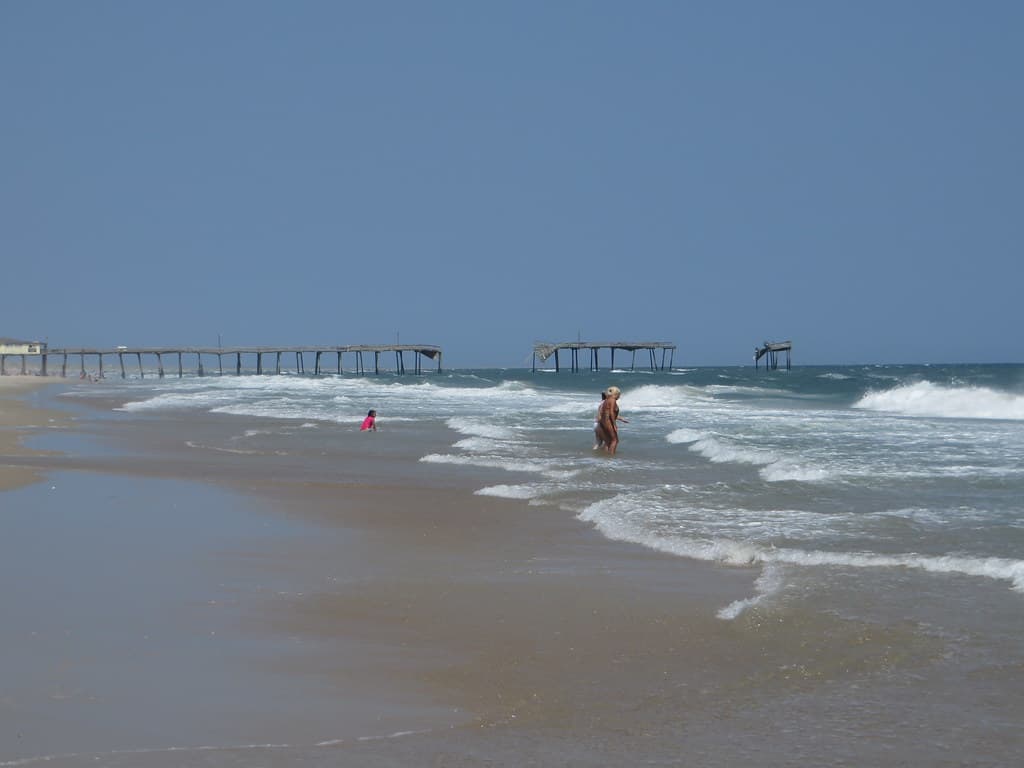
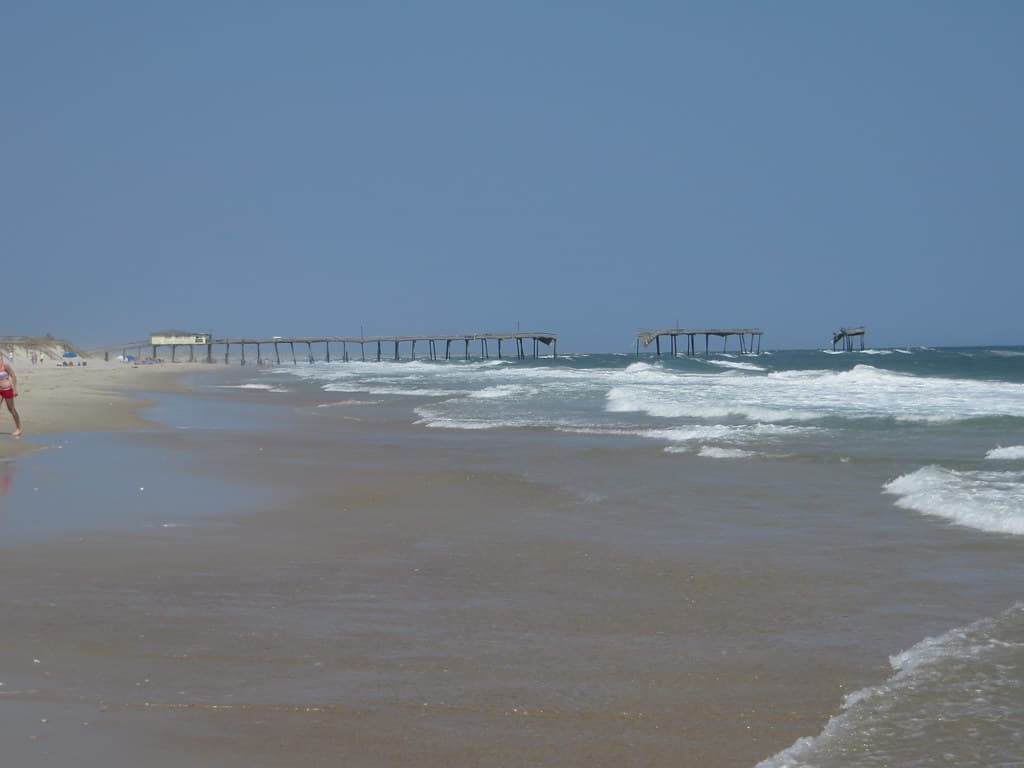
South Nags Head Beach begins where the commercial strip exhales and the barrier island narrows to its essential form. Here, the dunes climb higher—some topping forty feet—their flanks carved by nor'easters into ridges that cast long shadows at dawn. The beach itself stretches wide at low tide, revealing tide pools dimpled with coquina shells that open and close like purple fans. Shorebirds work the wrack line: sanderlings, willets, the occasional piping plover in spring. The water comes in green-gray, its temperature moderated by the Labrador Current until July turns it swimmable. Swells arrive with more punch here than on the sheltered northern beaches; bodyboarders find the inside bar forgiving, surfers eye the outer break on south swells. Between sets, you'll notice the quiet—no pier pilings, no lifeguard whistles after Labor Day, just the hiss of foam and the occasional passing pelican skimming inches above the chop. Behind the dunes, the old Nags Head cottages—unpainted cedar shingles, screened porches, outdoor showers—sit on pilings like patient herons. They were built in the 1930s and '40s, before zoning tightened, and they're set back just far enough to survive most storms. Walk south toward the Bonner Bridge approach and the crowds thin to near-solitude, even in August. The sand here holds your footprints until the tide or wind erases them.
Places, rentals, tours and events within walking and driving distance of South Nags Head Beach.
Photos
South Nags Head Beach generally offers safe swimming conditions during summer months, with lifeguards stationed at certain access points from Memorial Day through Labor Day. However, the Outer Banks are known for strong rip currents, especially during storms or high surf. Always check daily beach condition flags before entering the water, swim near lifeguarded areas when possible, and never swim alone. If caught in a rip current, swim parallel to shore until free, then angle back to land. Ocean conditions can change rapidly along this stretch of coastline.
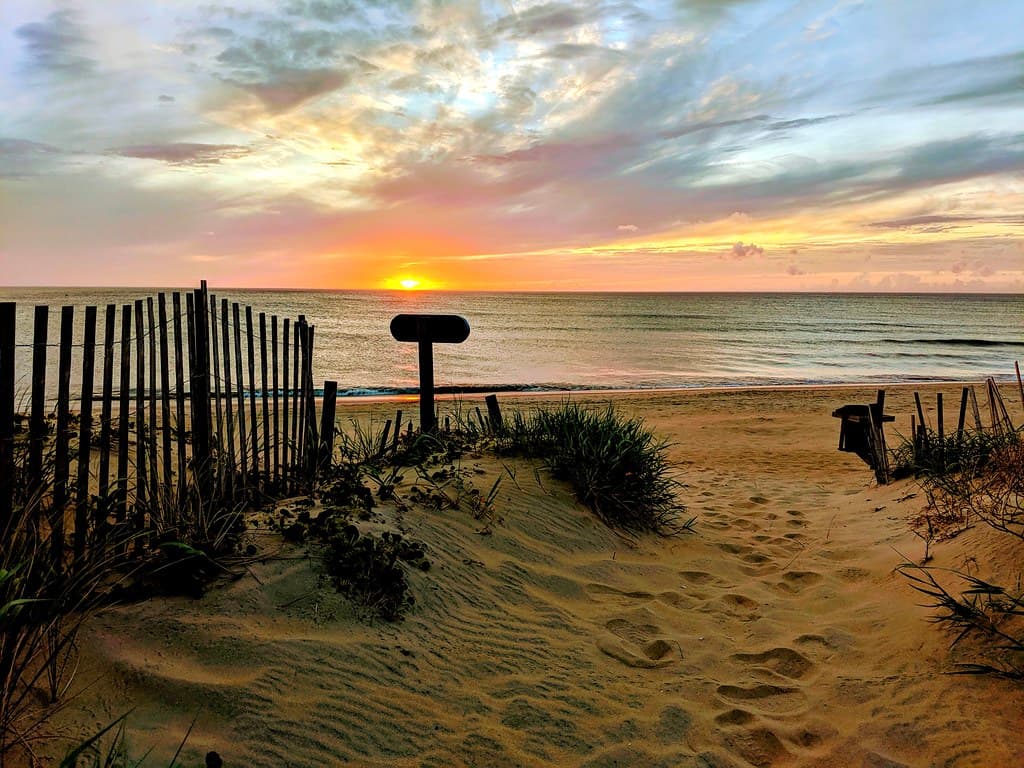
South Nags Head Beach is accessible year-round, with each season offering different experiences. Summer (June-August) brings warm water and full amenities but larger crowds. Late spring (May) and early fall (September-October) offer pleasant weather, fewer visitors, and comfortable water temperatures. Winter provides solitude and excellent beachcombing, though swimming is cold and most services close. For the quietest experience while still enjoying warm weather, visit shoulder seasons. The beach faces east, making it ideal for spectacular sunrise viewing any time of year.
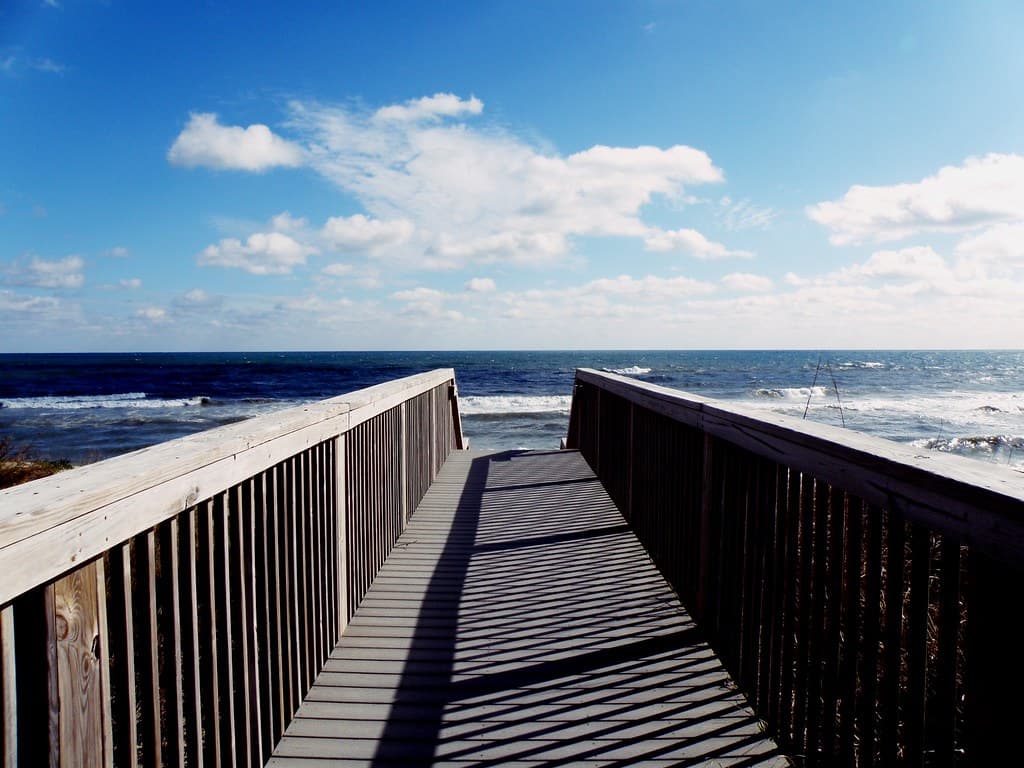
South Nags Head Beach offers free public parking at numerous access points along NC Highway 12 (Beach Road). Look for numbered beach access signs with small parking areas—some accommodate only 5-10 vehicles while others are larger. Most accesses require short walks over dunes via wooden walkways. During peak summer season, parking fills quickly by mid-morning, especially on weekends. Four-wheel-drive vehicles with proper permits can access certain sections of beach for driving. Street parking is available along residential areas, but respect private property and posted restrictions.
South Nags Head is primarily a residential area with vacation rental homes being the dominant accommodation option rather than hotels. The nearby commercial district along the Beach Road and Bypass (US 158) offers restaurants, grocery stores, and shops within a short drive. You'll find casual seafood restaurants, pizza places, and convenience stores nearby. For more dining variety, central Nags Head is minutes north. Most visitors staying in South Nags Head rent weekly beach houses, many oceanfront. Pack provisions as you won't find beachfront vendors or facilities at most access points.
South Nags Head Beach maintains a quieter, less commercial atmosphere because it's predominantly lined with residential properties rather than hotels, shops, or restaurants. This southern section of Nags Head has fewer public facilities and amenities, attracting visitors seeking a more natural beach experience. The area transitions toward the undeveloped stretches leading to Oregon Inlet, offering wider beaches and fewer crowds than central Nags Head. Beach access points are smaller and more spread out, naturally limiting visitor density and creating a more peaceful, scenic environment popular with locals.