
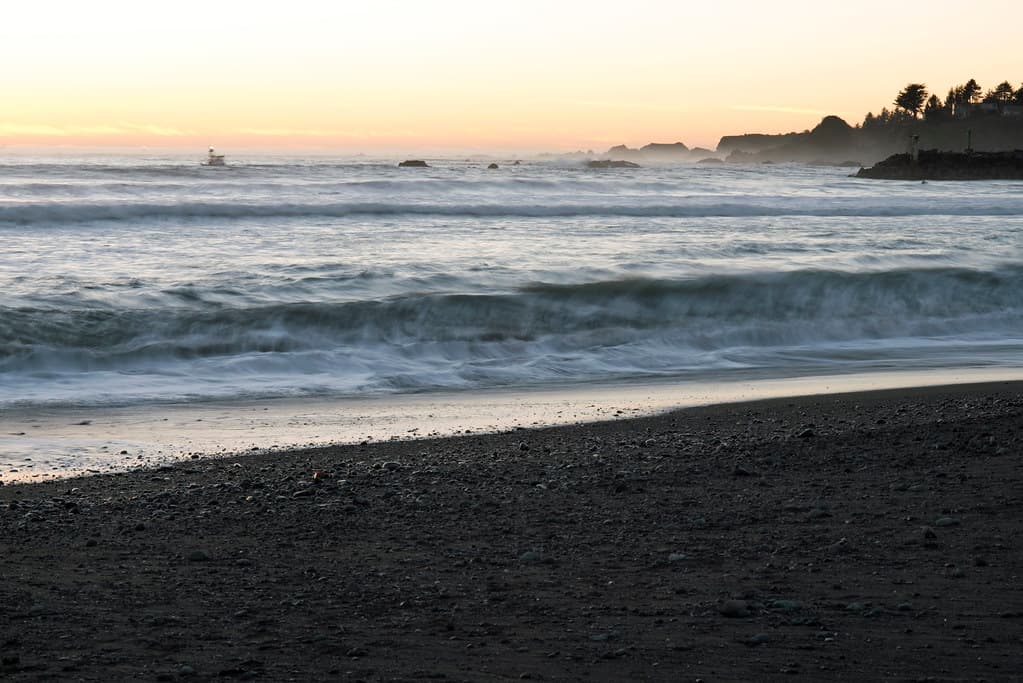
Bandon's shoreline refuses to behave like postcards. The beach runs for miles, interrupted by monoliths with names—Face Rock, Elephant Rock, Wizard Hat—that reveal themselves slowly as you walk south from the public parking pullouts along Beach Loop Drive. Gulls wheel around their tops. At low tide, tide pools collect starfish the color of burnt orange and anemones that pulse when you hover your hand above them. The sand isn't white; it's iron-dark, flecked with garnet dust that glitters when the rare sun breaks through.
“Nowhere else on the Pacific coast do so many named sea stacks crowd a single accessible beach, turning every low tide into a geological sculpture garden.”
 Credit: Flickr
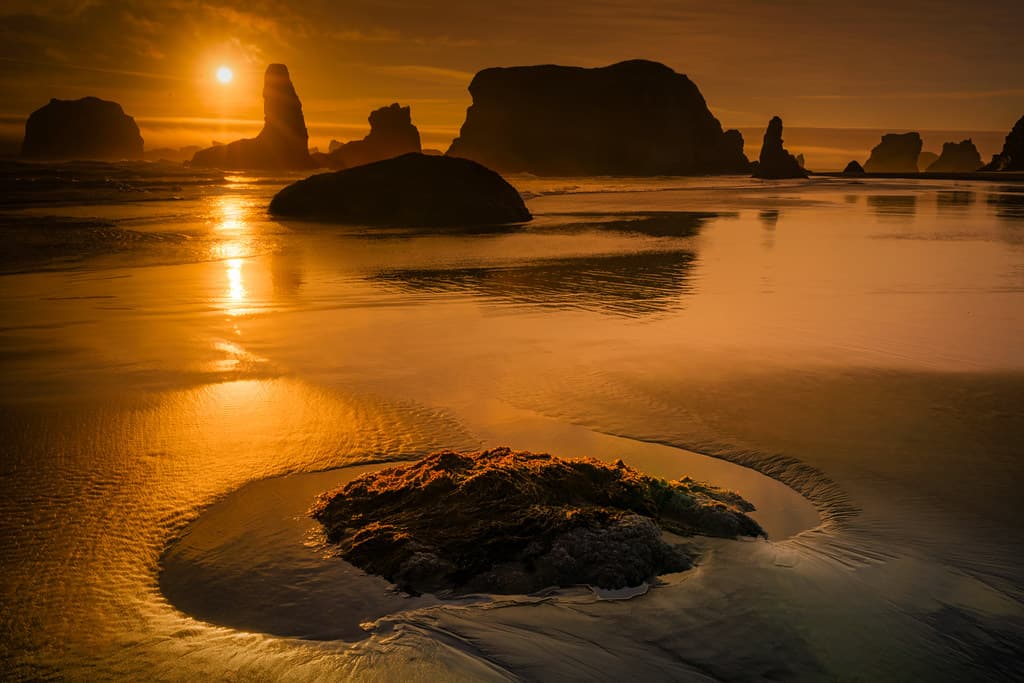
Sea stacks at Bandon Beach at sunset, Oregon Coast
You come in January and the wind slaps your cheeks numb. You return in August and the fog still hasn't burned off by noon. That's the point. Bandon delivers drama in every season—king tides that swallow driftwood forts, January storms that redraw the beach overnight, September evenings when the light turns the rocks to bronze and the Pacific goes pink. Photographers camp out at Face Rock Viewpoint for sunrise, tripods sinking into wet sand, waiting for the split second when the offshore stones ignite.
The town itself, a mile inland, keeps things small: chowder counters, a single grocery, galleries selling agates polished smooth by tide. You don't come to Bandon for nightlife. You come because the beach makes you feel appropriately tiny, because the rocks have been here longer than your language has words for them, and because no amount of scrolling past images online prepares you for standing beneath them while surf detonates into mist at your boots.


