
The name hints at the geology: a sharp basalt promontory that forced Oregon's earliest coastal travelers to hug tight against the cliff face, waiting for retreating tides to expose a brief window of passage. Today, you follow that same route, shoes crunching over pebbles and kelp, the rock face cold and damp under your fingertips when you steady yourself against the narrowest section.
“The only Oregon beach where a historic stagecoach route, accessible solely at low tide, leads directly to caves and a waterfall on sand.”
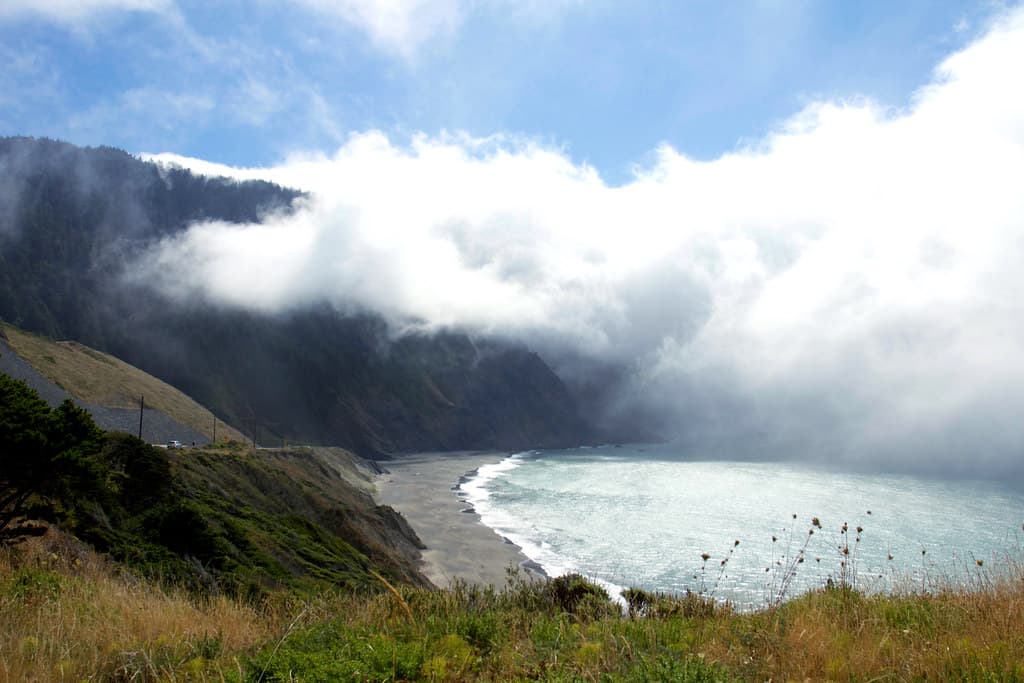 Credit: Flickr
Fog on the coast, Oregon
Once past the point, the beach opens into a crescent of dark sand where a waterfall drops from the bluff above, its flow modest in summer, robust after winter storms. Sea caves puncture the headland—shallow chambers filled with the echo of surf and the briny smell of trapped seawater. Anemones cling to the interior walls, their tentacles swaying in tidal pools that remain even when the ocean pulls back.
The schedule here is nonnegotiable. Tide charts dictate everything. Arrive two hours either side of low tide or you'll find nothing but impassable surf crashing against stone. In fog, the beach takes on a noir quality—monochrome, secretive, the kind of place where you half-expect to find a message in a bottle wedged between the rocks. Even in high summer, the water temperature hovers in the fifties, the wind sharp enough to require layers.


