
Counting the waves…
Counting the waves…

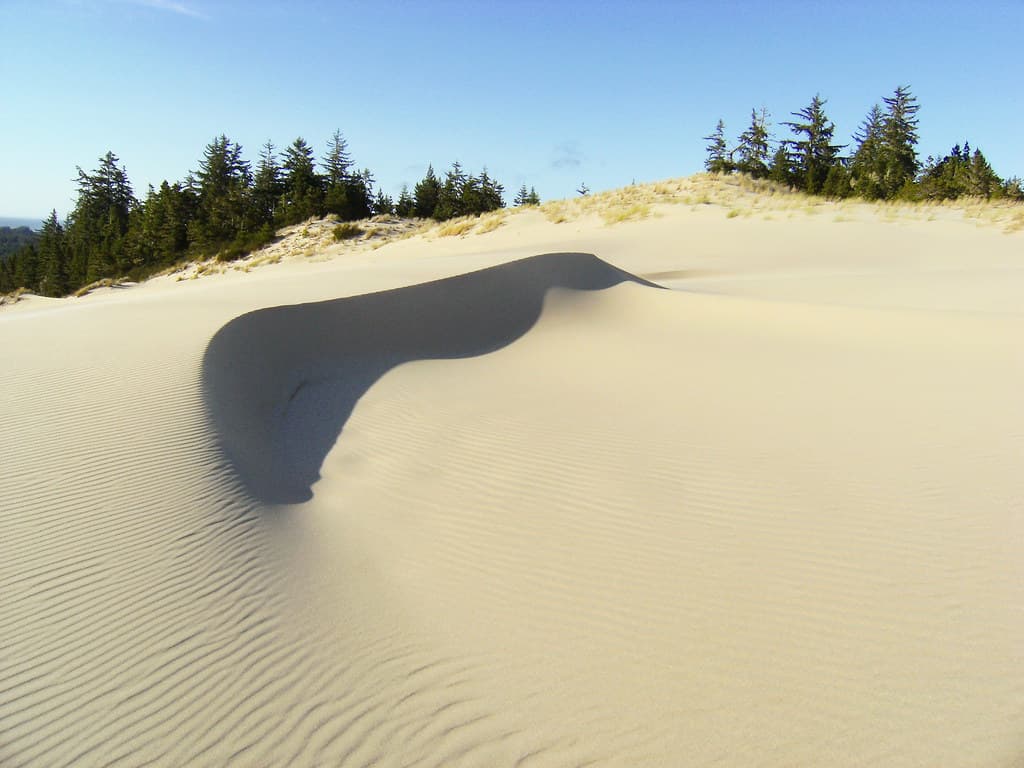
The dunes announce themselves long before you see them—a fine grit coats your dashboard, your hiking boots, the picnic blanket. Pull off Highway 101 at any of the signed overlooks and you're stepping into what feels like coastal science fiction: sand peaks rise five hundred feet, their windward faces rippled like corduroy, their leeward slopes dropping at angles that beg to be tumbled down. Marram grass clings in defiant tufts. Beyond, the Pacific churns gray-green under Oregon's famously moody skies. Families haul sleds and sandboards to the open dune sheets near South Jetty Road, where toddlers practice their first descents on gentle slopes while teenagers carve S-turns down the steeper faces. The sand here isn't the white sugar of tropical postcards—it's golden-tan, heavy with silica, and it squeaks underfoot when dry. After the climb back up (harder than it looks), you'll brush it from every pocket and shoe tread for days. Walk west through the dune valleys and you'll emerge at a broad, driftwood-strewn beach where sneaker waves keep everyone honest. The Forest Service maintains several trail access points; the John Dellenback Trail threads through shore pine and wax myrtle before opening onto sand. Pack water—there's none out here except the undrinkable kind crashing at your feet.
Places, rentals, tours and events within walking and driving distance of Oregon Dunes Beach.
Photos
Swimming at Oregon Dunes Beach is generally not recommended due to strong currents, cold water temperatures (typically 50-60°F year-round), and dangerous sneaker waves that can appear without warning. The beach is better suited for beachcombing, sandboarding on the dunes, and wading in shallow areas while keeping a safe distance from the surf. Always supervise children closely, never turn your back on the ocean, and be aware that rip currents are common along the Oregon coast.
Oregon Dunes Beach is accessible year-round, with each season offering different experiences. Summer (June-September) brings the warmest and driest weather, ideal for families and dune exploration. Spring and fall offer fewer crowds and dramatic scenery, though expect occasional rain. Winter can be stormy but spectacular for storm watching. Temperatures range from 45-65°F year-round. For sandboarding and ATV activities on the dunes, late spring through early fall provides the best conditions with firmer, more compact sand.
Oregon Dunes Beach is located near Florence, accessible via Highway 101. Multiple access points exist along the 40-mile stretch, including popular spots at South Jetty Road, Umpqua Dunes Trailhead, and Oregon Dunes Day Use Area. Most parking areas require a Northwest Forest Pass ($5 daily or $30 annual). Parking is generally available at designated trailheads and beach access points. From Florence, head south on Highway 101 and follow signs to specific dune access areas. Some lots fill quickly during summer weekends.
Florence, just minutes from the dunes, offers numerous dining options from seafood restaurants to cafes along historic Old Town. Nearby lodging includes hotels, motels, vacation rentals, and several campgrounds within the Oregon Dunes National Recreation Area, such as Jessie M. Honeyman Memorial State Park. Reedsport to the south also provides additional accommodation choices. Several beach access points have basic amenities like restrooms and picnic areas, but bring your own food and water for extended dune exploration as facilities are limited within the recreation area itself.
Yes, Oregon Dunes is one of the few places on the Oregon coast where off-highway vehicles (OHVs) and ATVs are permitted in designated areas. Several rental companies in Florence and nearby towns offer ATV rentals and guided tours. Sandboarding is also popular on the towering dunes. However, some areas are designated for non-motorized use only to protect wildlife and provide quiet recreation. Always check current regulations and maps at visitor centers, stay on designated trails, and respect closure areas to protect sensitive habitats and nesting sites.