

Wecoma Beach stretches along a quiet residential corridor between Lincoln City's busier tourist strips, tucked behind beach houses and accessible through numbered public pathways that locals know by heart. The sand here runs firm and gray, darkening where the tide recedes to reveal shelves of basalt fractured into natural staircases. Agates catch the light when the sun breaks through the marine layer, and harbor seals sometimes haul out on offshore rocks during pupping season.
“The basalt tide pool shelves create miniature marine worlds that reset with every tidal cycle, turning each low tide into a different expedition.”
 Credit: Pexels
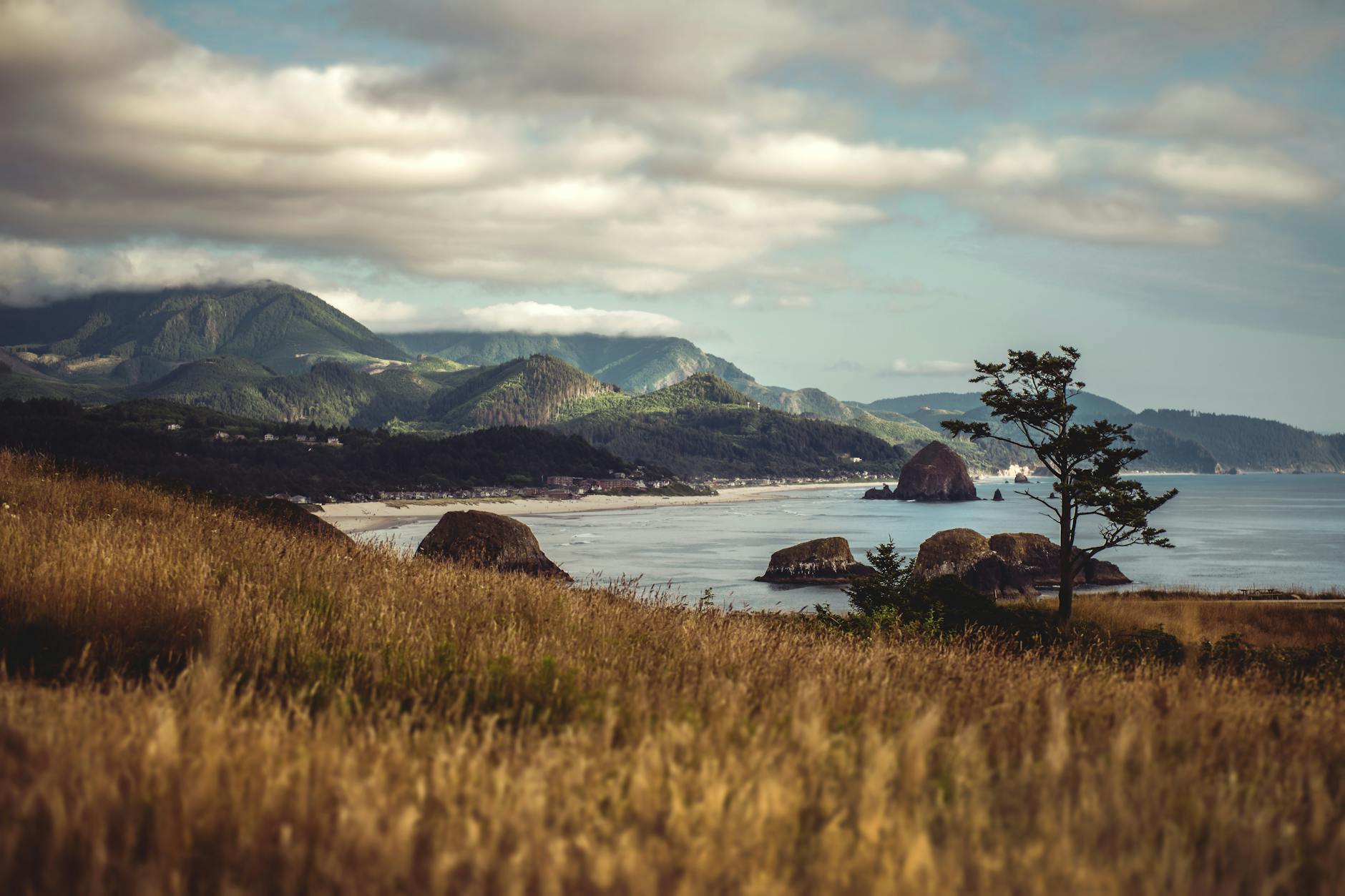
Beautiful view of Cannon Beach, Oregon, featuring Haystack Rock with coastal mountains in the background.
Low tide transforms the beach into an intertidal classroom. Purple and orange ochre stars cling to rock walls, green anemones pulse in shallow depressions, and hermit crabs shuffle between pools. Families spread out beach blankets on the upper sand while children crouch over tidal ecosystems, plastic buckets in hand, learning to look without touching. The beach faces west without obstruction, so winter storm-watching draws regulars who park along the shoulder and watch waves slam into the headlands.
You won't find restrooms or food vendors here—just a long, uninterrupted stretch of Oregon coast where driftwood logs pile against the dunes and the rhythm of the day follows the tide chart instead of the tourist season. Bring your own water, respect the access easements that thread between private homes, and plan your visit around the minus tides posted at the local tackle shops.


