
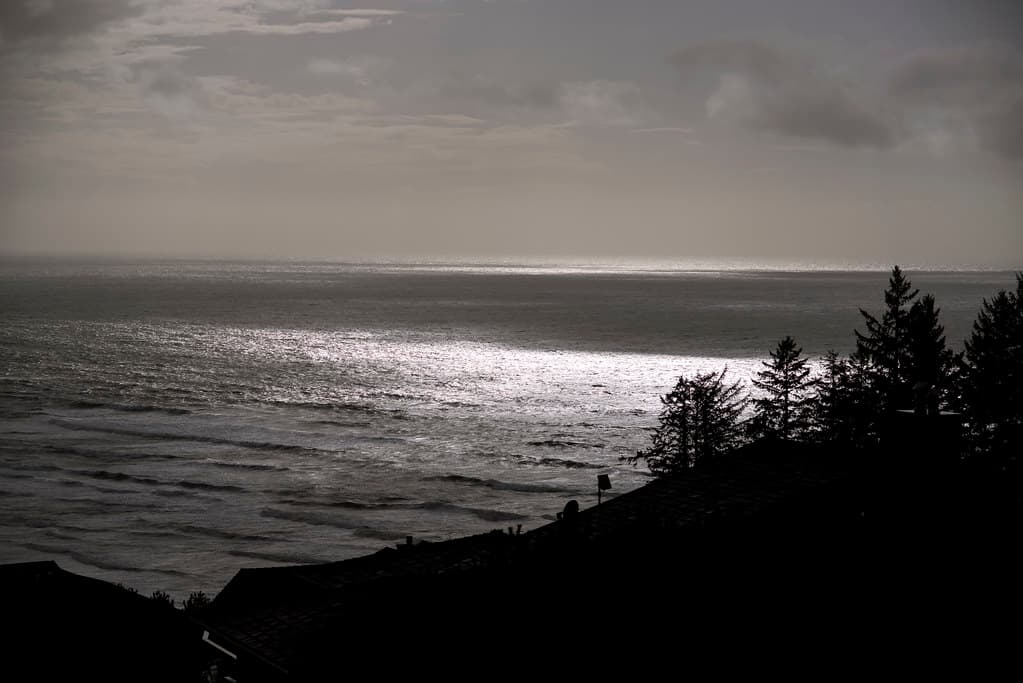
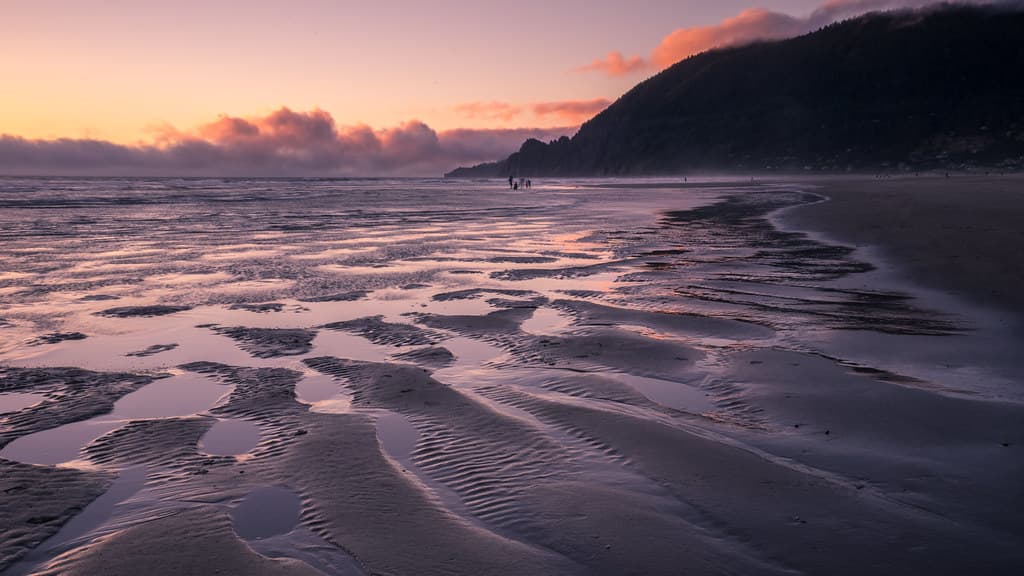
The beach begins where Laneda Avenue dead-ends into dunes, and from there it runs north for seven unbroken miles, bordered by shore pine and the dark massif of Neahkahnie Mountain. You can walk the entire length at low tide without encountering a single rock outcrop, just an endless ribbon of sand that shifts from beige to pewter depending on how recently the waves have retreated. Gulls wheel overhead, their cries mixing with the steady percussion of surf.
“One of Oregon's longest uninterrupted stretches of sand, bookended by mountain and headland but never crowded.”
 Credit: Flickr
Low tide
Families stake out territory near the access points, where driftwood logs create natural windbreaks and toddlers dig moats with plastic shovels. The water stays cold year-round—mid-fifties in summer—but that doesn't stop wetsuited surfers from paddling out or children from shrieking through ankle-deep foam. In winter, storms roll in with theatrical force, sending spindrift horizontally across the beach while observers watch from inside parked cars, thermoses of coffee in hand.
The town itself barely interrupts the natural rhythm. A few blocks of cafés and rental cottages sit tucked behind the dunes, quiet even in July. You'll find kites tangling overhead, bonfires smoking in designated pits at dusk, and that particular satisfaction that comes from a beach where the only agenda is to walk until your legs tire, then turn around and walk back.


