
The descent to Paradise Point Beach feels like slipping through a fold in the coast. You leave Highway 101 behind and follow a faint path through shore pine and coastal scrub, the roar of surf growing louder with each step. When the sand opens before you, it's a study in contrasts: bleached logs stacked like spillikins against charcoal cliffs, foam-white breakers meeting gunmetal skies, patches of rust-orange sea stars clinging to tidal shelves.
“One of Curry County's few accessible pocket beaches where you can explore tide pools and photograph sea stacks without sharing the sand.”
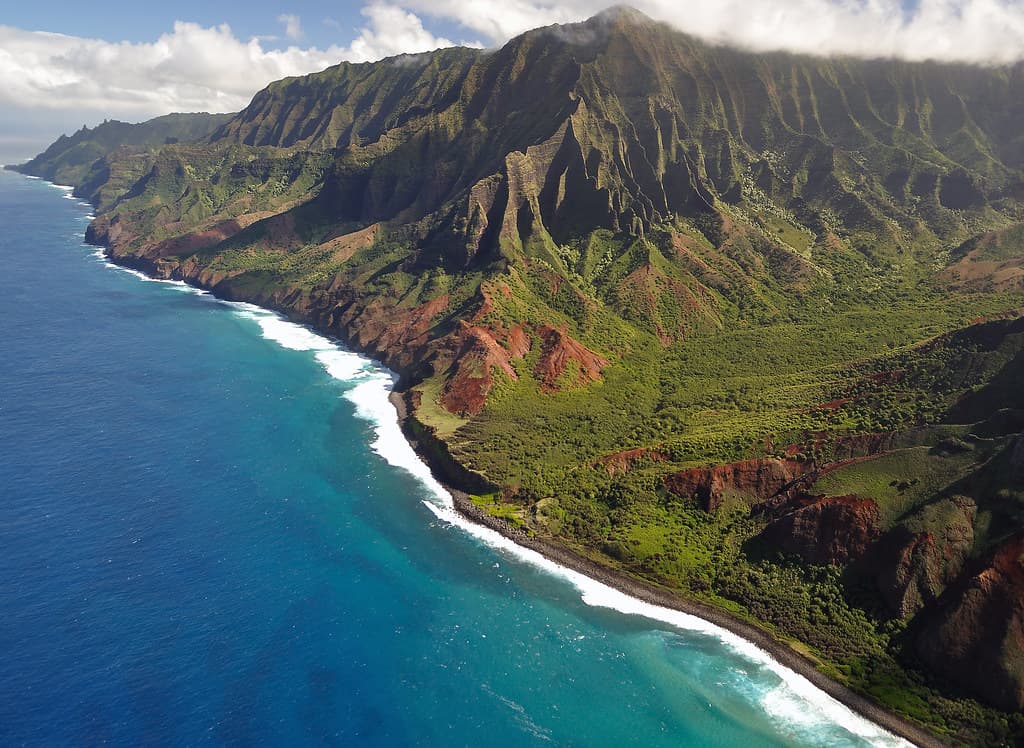 Credit: Flickr
Nāpali Coast State Wilderness Park. Kauai, Hawaii. Na Pali Coast, Kalalau Valley, Ke'e Beach. Kalalau Trail Aerial. North Shore.
This isn't a beach for spreading towels or building sandcastles. The wind here has bite, even in summer, and the water stays frigid year-round. Instead, you come for the raw theater of Oregon's southern coast—to watch winter storms hurl themselves against offshore rocks, to comb tide pools for purple urchins and crimson anemones, to stand alone at the continent's edge while cormorants dry their wings on guano-streaked stones.
The anonymity is part of the appeal. While tourists queue at Samuel H. Boardman's famous viewpoints ten miles south, Paradise Point remains largely ignored, known mainly to Port Orford fishermen checking conditions and photographers chasing the diffuse light that turns ordinary driftwood into sculpture. Bring layers, a thermos, and no agenda beyond witnessing the Pacific in one of its less-polished moods.


