Counting the waves…
Counting the waves…
A refined fusion of water purity, environmental stability, and communal vibrancy for Botany Bay Beach.
View MethodologyAnalyzed via live sensors and environmental data.
Wave height, wind, and atmospheric stability.
Live footfall and crowd balance metrics.
Community reviews and curated sentiment.
“At the southern tip of Edisto Island, the Atlantic quietly devours a maritime forest. You'll walk among fallen oaks and palmettos, their silvered trunks scattered across dark sand like driftwood sculptures. The only…”
Limited recent visitor reports — live OBI telemetry is your best guide for current conditions.
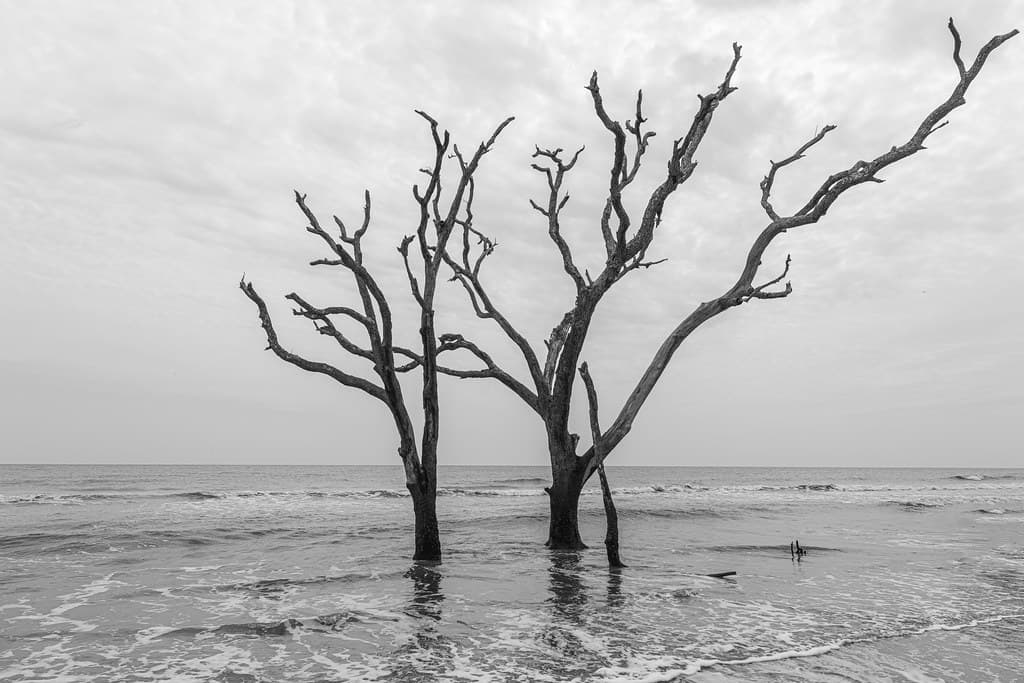
Botany Bay Beach sprawls along a 4,630-acre wildlife preserve where the island is losing its battle with the sea. Storms and tides have toppled decades-old trees, leaving their sun-bleached skeletons half-buried in the sand—a phenomenon locals call a boneyard beach. The effect is otherworldly: gnarled roots twist skyward, bark worn smooth as bone, while intact trunks lie horizontal across the shore like fallen columns from some coastal temple.
You'll find the sand here darker than the sugary strands farther north, flecked with crushed shells and mica that catches afternoon light. At low tide, tide pools form among the roots where hermit crabs scuttle and shore birds probe for sand fleas. The beach faces southeast, absorbing the Atlantic's long swells, and on clear mornings the light turns the dead timber into silhouettes worthy of a Wyeth painting.
Long-tail boats moored in clear water
Golden hour through oak skeletons
Low tide reveals crab highways
Gentle waves, dark packed sand
Where it is
Botany Bay Beach
Edisto Island, South Carolina, USA
32.547100°, -80.245500°
Weather
Loading…
Swell
—
Temp
Warm · Restorative
UV Index
Moderate
Wind
—
Tidal State
Last known
Max Sunlight
—
Ideal Shade
—
May - Sep (Peak)
Jan - Dec (Off-season)
Historical data suggests peak visibility and stable sea temperatures occur during the prime visitation window.
Select a category to load nearby places.
Unlock restaurants, luxury stays and curated maritime experiences within 2km
Swimming at Botany Bay Beach is generally not recommended. The beach is known for strong currents, unpredictable tides, and an uneven ocean floor with submerged tree stumps and debris from erosion. There are no lifeguards on duty. The beach is primarily visited for its stunning scenery, photography opportunities, and beachcombing rather than swimming. If you enter the water, exercise extreme caution, stay close to shore, and never swim alone. Check tide conditions before visiting.
Botany Bay Beach is beautiful year-round, but spring and fall offer the most comfortable temperatures for exploring. Early morning and late afternoon provide the best light for photographing the iconic driftwood trees, especially the famous boneyard beach. Low tide is ideal for walking among the exposed tree stumps and finding shells. Summer brings heat and humidity but fewer crowds. Winter offers solitude and dramatic scenery, though water temperatures are cold. The beach is particularly photogenic during golden hour at sunset.
Botany Bay Beach is located within Botany Bay Plantation Heritage Preserve on Edisto Island, about 50 miles south of Charleston. From Highway 174, turn onto Botany Bay Road and follow it approximately two miles to the preserve entrance. Free parking is available at the small lot near the beach access. The preserve is open daily from dawn to dusk. It's a short walk from the parking area to the beach through maritime forest. No entrance fee is required.
Botany Bay Beach has no facilities—no restrooms, showers, or food vendors. It's a pristine, undeveloped preserve. Plan accordingly by bringing water, snacks, and using facilities before arrival. The nearby town of Edisto Beach, about 4 miles away, offers restaurants, vacation rentals, small hotels, and grocery stores. Popular dining spots include SeaCow Eatery and Pressley's at the Marina. Most visitors stay in Edisto Beach and make Botany Bay a day trip or sunset photography excursion.
The dramatic dead trees at Botany Bay Beach, often called a "boneyard beach," result from natural coastal erosion. As the shoreline recedes, salt water kills maritime forest trees that once stood inland. The bleached, skeletal remains create the beach's iconic, hauntingly beautiful landscape that attracts photographers worldwide. This erosion process continues today, constantly reshaping the beach. The preserved driftwood and standing dead trees make Botany Bay one of the most photographed beaches in South Carolina.
Photos