
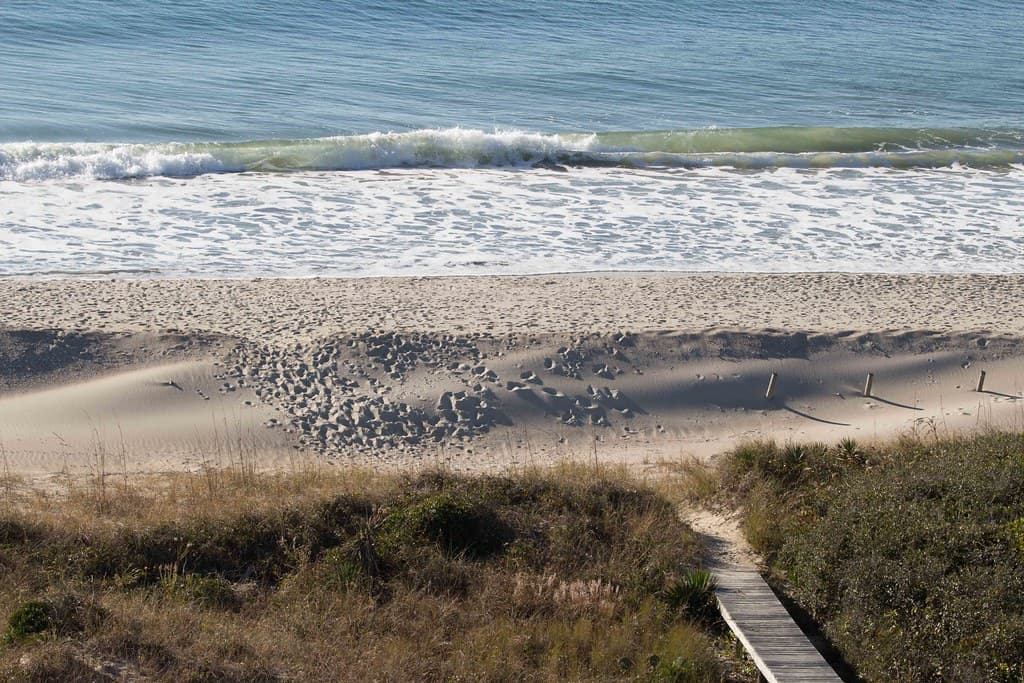
The sand here isn't the powdered-sugar kind you'll find elsewhere along the Carolina coast. It's packed firm, darkened by heavy mineral deposits, and strewn with crushed shell fragments that crunch under your bare soles. You drive onto this six-mile barrier island over a marshland causeway, passing shrimp boats and tidal creeks, until the Atlantic opens up before you in a broad, muscular sweep.
“This is the only beach on the Carolina coast where you can surf beside a century-old pier while a lighthouse stands sentinel offshore.”
 Credit: Flickr
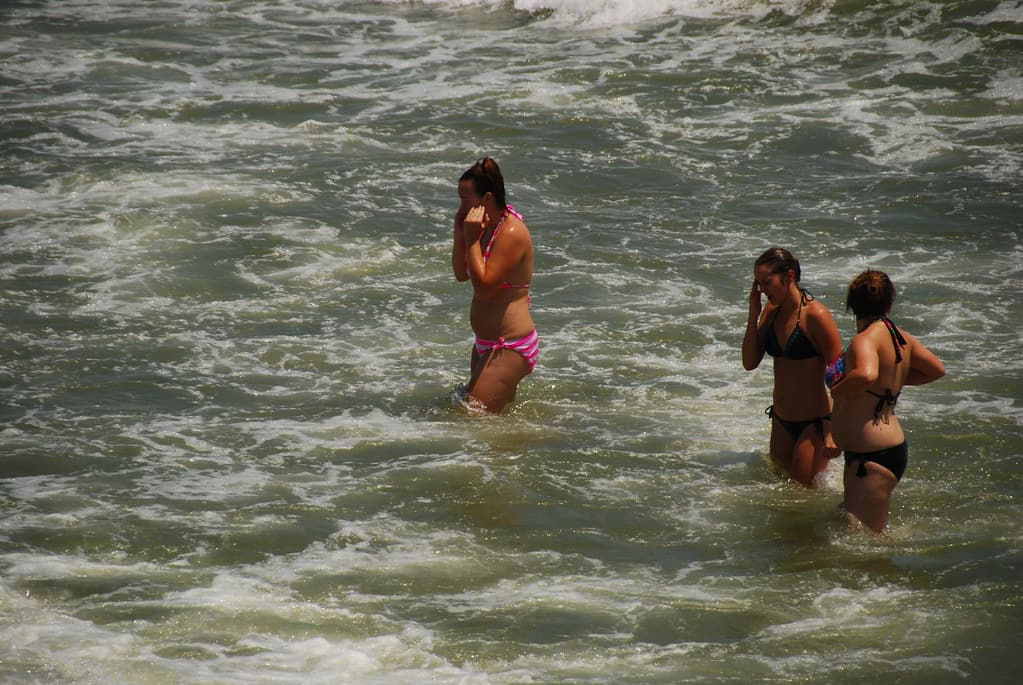
Chubbies in the waves
The 1,045-foot Edwin S. Taylor Fishing Pier anchors the town center, its weathered boards groaning under the footsteps of anglers hauling in whiting and drum. Surfers paddle out on either side, reading the sandbars that shift with every storm. You'll spot the Morris Island Lighthouse offshore to the south, its brick tower now marooned 1,600 feet from land by decades of erosion—a reminder that this coastline is restless, constantly rewriting itself.
Center Street feels deliberately unpretentious: surf shops displaying ding-repair kits in sun-faded windows, taco stands with vinyl booths, beach bars where regulars nurse cold beer in damp board shorts. The island earned its nickname—"the Edge of America"—not just from geography but from attitude. This is where Charleston comes to shake off the historic-district formality, where you trade cobblestones for salt air and waves that roll in reliably, season after season.


