Counting the waves…
Counting the waves…
A refined fusion of water purity, environmental stability, and communal vibrancy for Lighthouse Inlet Heritage Preserve Beach.
View MethodologyAnalyzed via live sensors and environmental data.
Wave height, wind, and atmospheric stability.
Live footfall and crowd balance metrics.
Community reviews and curated sentiment.
“You'll walk past the last clapboard surf shop, cross a weathered boardwalk, and step into a maritime preserve where sandpipers scatter ahead of your feet. Salt wind pushes through spartina grass while the Morris Island…”
Limited recent visitor reports — live OBI telemetry is your best guide for current conditions.
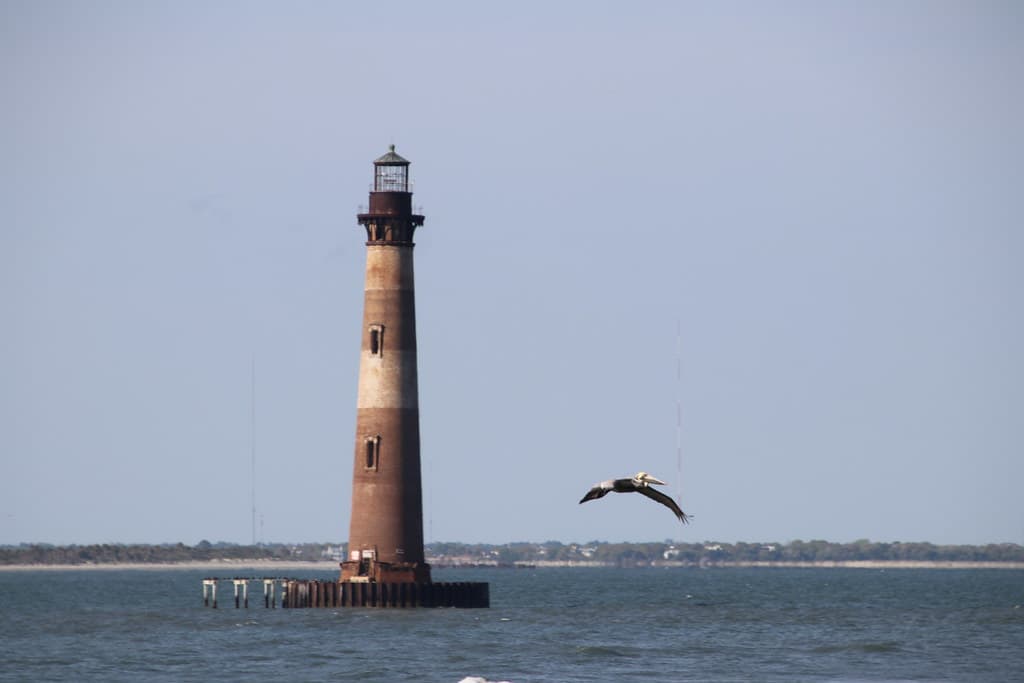
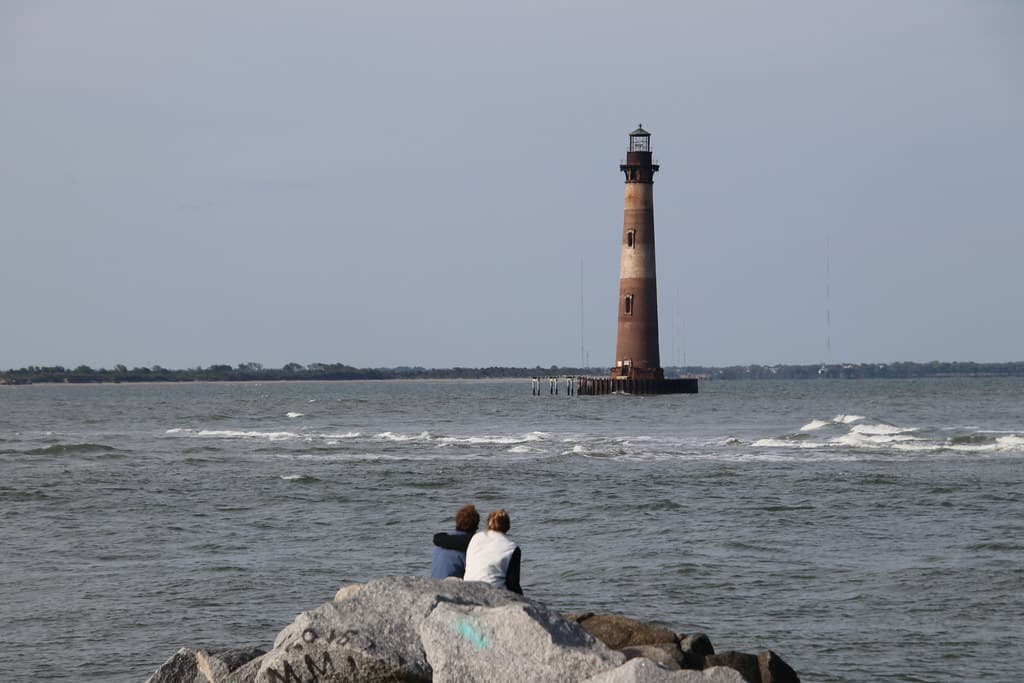
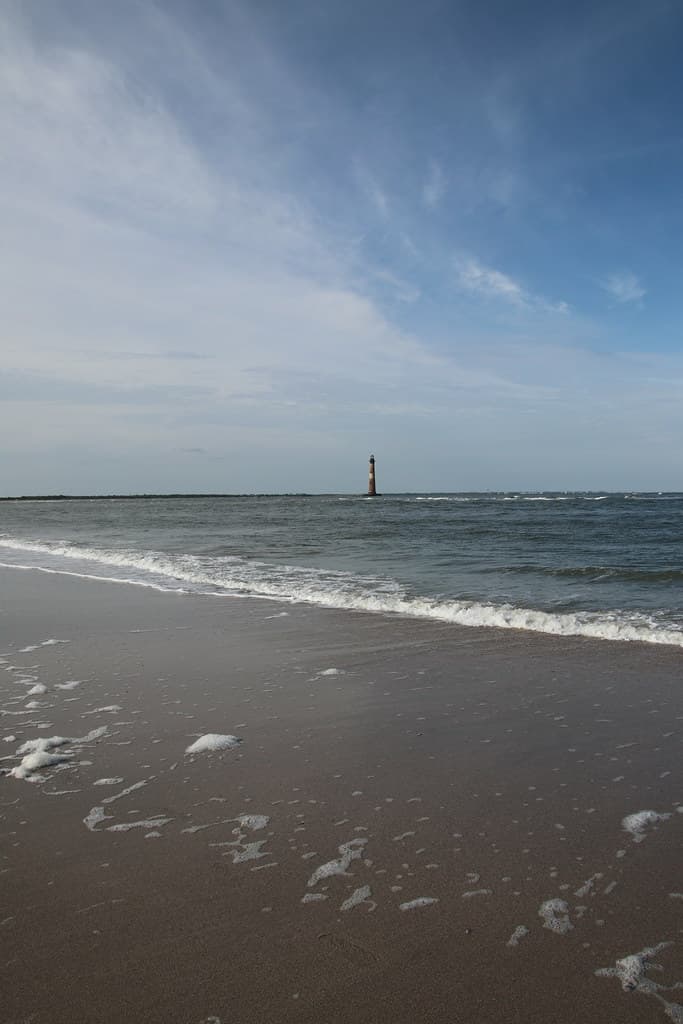
The asphalt ends where Ashley Avenue meets the eastern tip of Folly Beach, and a narrow boardwalk ushers you into Lighthouse Inlet Heritage Preserve. This isn't the crowded tourist strand a mile west; it's a tidal estuary where sandbars shift with the moon and oystercatchers probe the mud. The Morris Island Lighthouse rises 161 feet offshore, marooned by decades of erosion, its brick tower striped black-and-white against cumulus skies. Depending on the tide, you'll wade ankle-deep or walk dry sand to reach the surf line.
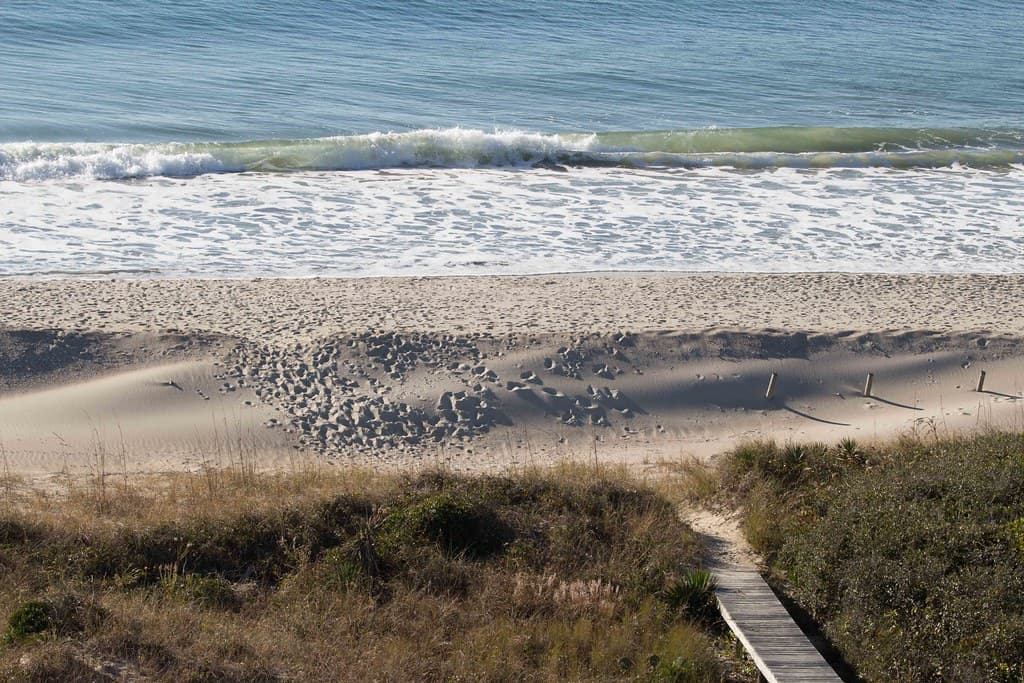
Shorebirds own this place—willets, red knots, and piping plovers work the wrack line during spring and fall migrations. Dolphin fins slice the inlet where Folly River meets the Atlantic, and pelicans dive-bomb schools of mullet in the shallows. The beach itself is narrow, edged by dunes and sea oats that rustle in the onshore breeze. Driftwood logs the size of dock pilings litter the high-tide mark, bleached gray by sun and salt.

Credit: FlickrLighthouse Portraits
Credit: FlickrTidal Flat Wander
Low tide reveals best angles
Sandbars shift with lunar cycles
Peak migrations April and September
Where it is
Lighthouse Inlet Heritage Preserve Beach
Folly Beach, South Carolina, USA
32.639500°, -79.957500°
Weather
Loading…
Swell
—
Temp
Warm · Restorative
UV Index
Moderate
Wind
—
Tidal State
Last known
Max Sunlight
—
Ideal Shade
—
May - Sep (Peak)
Jan - Dec (Off-season)
Historical data suggests peak visibility and stable sea temperatures occur during the prime visitation window.
Select a category to load nearby places.
Unlock restaurants, luxury stays and curated maritime experiences within 2km
Swimming at Lighthouse Inlet is generally not recommended due to strong currents, changing tides, and the inlet's unpredictable water conditions where the Folly River meets the ocean. There are no lifeguards on duty at this preserve. The beach is better suited for birdwatching, nature photography, and beachcombing. If you want supervised swimming, head to the main Folly Beach area a few miles away, where lifeguards are stationed during peak season and conditions are more predictable.
The preserve offers year-round access, but spring and fall provide the most comfortable temperatures and excellent birdwatching opportunities during migration seasons. Early morning visits offer the best light for photography and wildlife viewing, plus smaller crowds. Summer can be hot and humid with more visitors, while winter provides solitude and cooler temperatures ideal for hiking. Low tide exposes more beach area and tide pools. Check tide charts before visiting to maximize your experience exploring the shoreline.
The preserve is located at the eastern end of Folly Beach. Drive to the end of East Ashley Avenue; parking is available in a small unpaved lot near the trailhead. Space is limited, so arrive early during weekends and peak season. From the parking area, it's approximately a half-mile walk through maritime forest on sandy trails to reach the beach. The paths can be uneven, so wear sturdy shoes. No parking fees are required at the preserve itself.
The preserve itself has no facilities, restrooms, or food services. However, downtown Folly Beach, just a few miles away, offers numerous restaurants, cafes, bars, and shops along Center Street and East Ashley Avenue. Accommodations range from beachfront hotels and vacation rentals to bed-and-breakfasts throughout Folly Beach. Plan to bring your own water, snacks, and supplies when visiting the preserve, and use facilities in town before your visit, as this is an undeveloped natural area.
Yes, the historic Morris Island Lighthouse is one of the preserve's main attractions and visible from the beach. Built in 1876, it now stands in the water due to erosion, approximately 1,600 feet offshore. It's an iconic photo opportunity, especially during sunrise or sunset. The lighthouse is not accessible to the public and cannot be reached on foot. The view is best at low tide when you can walk farther out on the exposed sand. Bring binoculars for a closer look.
Photos