Counting the waves…
Counting the waves…

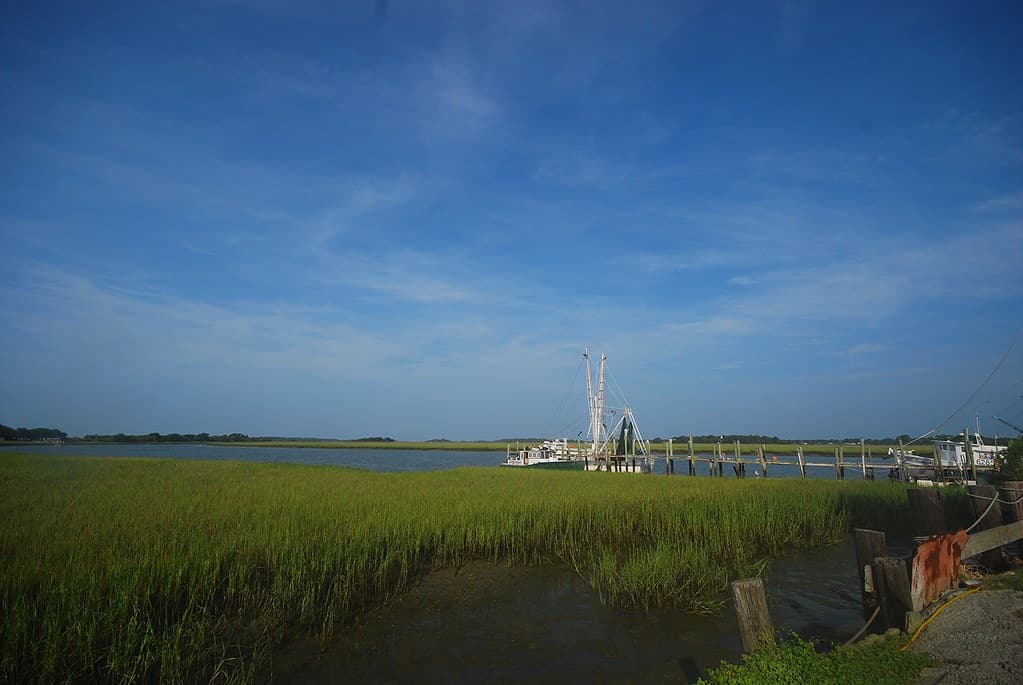
Fish Haul Beach belongs to the Hilton Head you didn't know existed. While resort enclaves dominate the island's southern crescent, this northern strand remains defiantly scruffy, bordered by maritime forest and a tidal creek that cuts silvery channels through the sand at low tide. The beach takes its name from the days when fishermen hauled their catches ashore here, and that working-coast spirit persists in the driftwood jumbles and the unhurried rhythm of the waves. You'll walk across a narrow wooden bridge over Skull Creek, then follow a sandy path through a tunnel of wind-pruned myrtles and cedars. The forest opens suddenly onto a wide beach where the sand bears the signatures of ghost crabs and shorebirds. At low tide, the exposed flats reveal oyster beds and tidal pools; at high water, the ocean laps within feet of the tree line. Dolphins work the creek mouth most mornings, their dorsals slicing the surface as they corral mullet. The light here shifts constantly—pewter at dawn, honeyed at dusk—filtered through the salt haze that softens Daufuskie Island's silhouette across the sound. You might spend an entire afternoon watching the tide rearrange the driftwood or searching for whelk shells among the wrack line. There are no cabanas, no attendants, no rental stations. Just you, the birds, and the patient work of water on sand.
Places, rentals, tours and events within walking and driving distance of Fish Haul Beach.
Photos
Fish Haul Beach is generally safe for swimming, with calm waters typical of Hilton Head's Atlantic coast. The beach has gentle slopes and moderate waves, making it suitable for families. However, no lifeguards are stationed here, so swim at your own risk and supervise children closely. Be aware of occasional strong currents and jellyfish, particularly in summer months. Check local beach condition reports before visiting. The beach's quieter nature means fewer people are around in emergencies, so exercise appropriate caution.
Fish Haul Beach is enjoyable year-round, but May through September offers the warmest ocean temperatures (75-82°F) ideal for swimming. Spring (April-May) and fall (September-October) provide pleasant weather with fewer crowds and comfortable temperatures in the 70s-80s. Summer brings peak tourist season with hot, humid conditions. Winter months are quieter with cooler temperatures (50s-60s), perfect for beachcombing and dolphin watching. Early morning visits any season offer the best chance for spotting wildlife and enjoying peaceful beach walks.
Fish Haul Beach is located on the northern end of Hilton Head Island. Access is via Fish Haul Creek Park at 124 Mitchelville Road. Free parking is available in a small lot that accommodates approximately 20-30 vehicles, which fills quickly during peak season and summer weekends. Arrive early morning for best parking availability. The beach access includes a short boardwalk from the parking area. No beach vehicle access is permitted. The location is less developed than other Hilton Head beaches, contributing to its hidden-gem appeal.
Fish Haul Beach has minimal on-site amenities—just restrooms and a small picnic area—so bring your own food, drinks, and beach gear. The nearest restaurants and shops are in the Palmetto Dunes and Shelter Cove areas, approximately 10-15 minutes away. Major grocery stores and dining options are located mid-island along Highway 278. For lodging, numerous hotels, vacation rentals, and resorts are available throughout Hilton Head Island, though none directly at Fish Haul Beach. The closest accommodations are typically vacation rentals in nearby residential communities.
Fish Haul Beach stands out for its undeveloped, natural character and relative seclusion compared to Hilton Head's busier beaches like Coligny. It offers excellent opportunities for spotting dolphins, shorebirds, and other wildlife due to its proximity to Fish Haul Creek. The beach provides stunning views of the marsh and Calibogue Sound, creating unique scenic backdrops. Its location on the northern tip means fewer crowds and a more peaceful atmosphere. The area also holds historical significance as part of the former Mitchelville community, one of the first self-governed African American towns.