
Springmaid sits where the Grand Strand starts to shed its carnival skin. You park along South Ocean Boulevard, cross a low dune line threaded with sea oats, and step onto a beach that feels refreshingly unadorned. The sand here is pale tan, firm near the waterline, soft higher up where families plant umbrellas. The shoreline stretches in both directions without interruption, and the horizon meets a working ocean—waves steady, color shifting from jade to pewter depending on the light.
“One of the last un-commercialized stretches of Myrtle Beach's 60-mile strand, anchored by a workhorse pier that hasn't been boutiqued.”
 Credit: Flickr
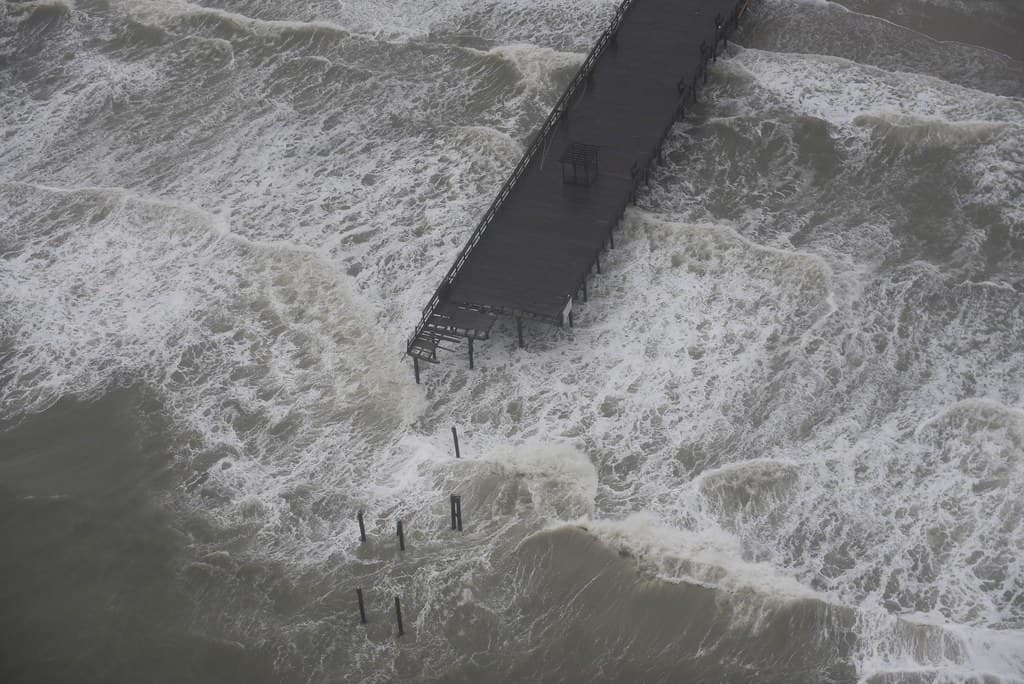
Coast Guard air crews assess Hurricane Florence damage near Myrtle Beach, South Carolina
The pier is the landmark. Built in 1973, it's functional rather than ornate, its pilings thick enough to withstand decades of hurricanes. Locals walk it at dawn, rods in hand, coolers at their feet, while couples linger near the end at dusk when the sky turns apricot and the pelicans dive in tight formations. Below, the surf breaks predictably, with enough punch to body-surf and enough forgiveness for novices.
You won't find tiki bars or jet-ski rentals crowding the access points. What you will find is breathing room—space to run a dog before the summer ban kicks in, to hunt sand dollars after a storm, to let the salt air do its work. The beach belongs to a Springmaid Resort that's seen better decades, but the shoreline itself remains stubbornly unhurried, a stretch that remembers when Myrtle Beach was more dune than boardwalk.


