
Harbor Island Beach stretches along a barrier spit where the ACE Basin wilderness meets Port Royal Sound, offering you a rare Lowcountry shoreline experience unmarred by resort development. The sand here is darker, compacted by tides that rewrite the beach twice daily, depositing oyster shells and marsh debris in serpentine lines. You'll notice families spreading blankets near the wooden beach access, where live oaks draped in Spanish moss frame the dunes and provide afternoon shade.
“One of the few publicly accessible beaches where pristine ACE Basin marshland extends right to the sand, creating an ecosystem playground rather than a resort strip.”
 Credit: Flickr
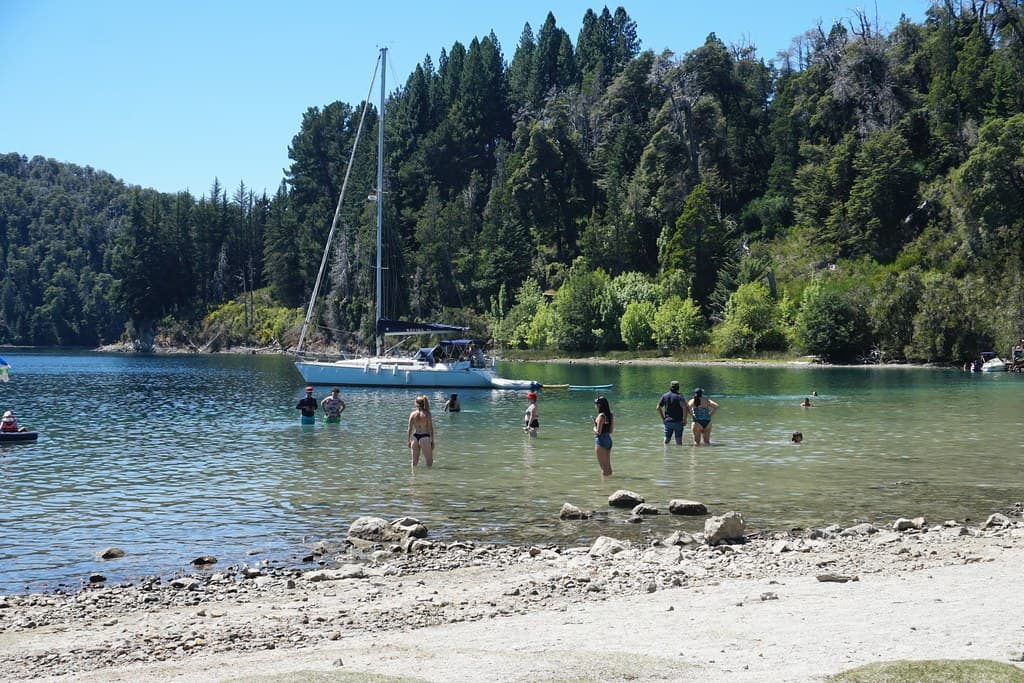
Playa del Toro (Bull Beach) at 770 m (2,526 ft) MSL, Victoria Island, Nahuel Huapi lake, San Carlos de Bariloche, Argentina.
The water temperature hovers in the mid-seventies through summer, climbing warmer than the open Atlantic thanks to the surrounding marshland. At low tide, sandbars emerge hundreds of feet offshore, creating shallow lagoons where toddlers splash while older kids hunt for blue crabs in tidal channels. Egrets stalk the flats alongside beachcombers, and pelicans dive into deeper cuts where the current quickens.
This is not a beach for sunbathing marathons or beach volleyball tournaments. You come here for the salt marsh ecosystem in full display—the smell of low tide, the chorus of marsh wrens at dusk, the way light filters golden through humid air at five o'clock. Pack a cooler, bring sand toys for the kids, and settle into the slower rhythm that defines South Carolina's Sea Islands, where the beach is less destination than meeting point between land and labyrinthine waterways.


