
The beach announces itself not with signage but with a gradual transition: pavement turns to compacted sand, pickups park nose-to-surf, and the air takes on the briny weight of open water. This is drive-on territory, where four-wheel drive isn't mandatory but earns respect when the sand softens near the dunes. Gulls work the wrack line while brown pelicans glide low over the breakers, indifferent to the handful of anglers casting into the surf.
“One of Texas's few drive-on beaches where the sunset unfolds over water instead of behind you, thanks to the coastline's rare westward curve.”
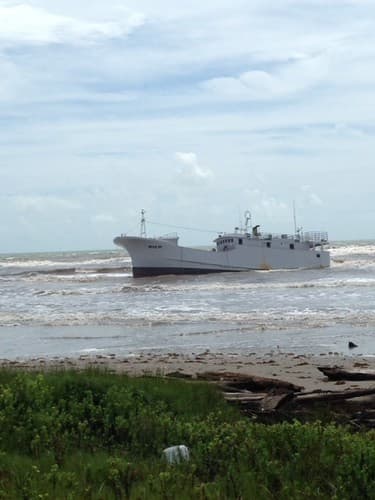 Credit: Flickr
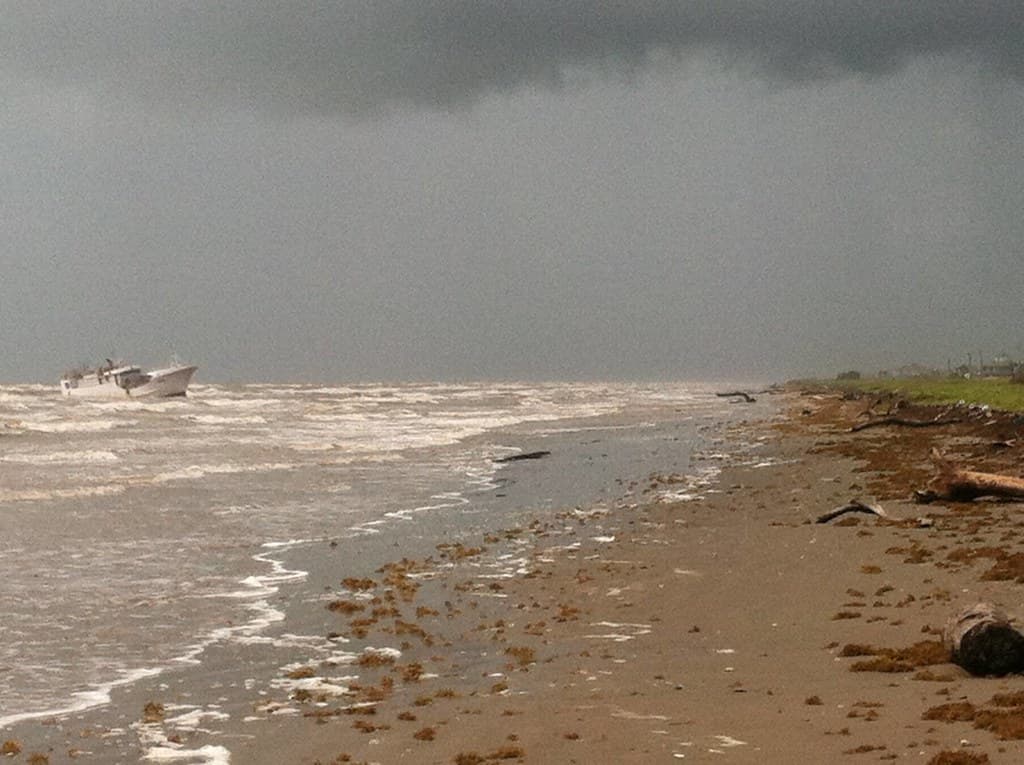
Coast Guard tracks derelict vessel off Freeport, Texas
By mid-afternoon, the light begins its slow golden descent, and the beach reveals its true character. The western exposure means sunsets paint the sky in layers—burnt orange bleeding into violet, clouds catching fire above the flat horizon where water meets emptiness. Locals time their visits to this hour, backing their tailgates toward the water, cracking cold beer, letting the day's heat drain away with the receding tide.
There's no boardwalk, no rental umbrellas, no volleyball nets staked into the sand. What you get instead is space—long, uninterrupted stretches where your footprints might be the only ones for a quarter-mile. The shells here tell stories: lightning whelks, angel wings, sand dollars worn thin by the Gulf's patient grinding. You collect them not because they're perfect, but because they survived the journey to your feet.


