
The granite jetty runs perpendicular to the shoreline, a man-made reef that calms the surf on its leeward side and creates a natural divide: anglers to the north, sunbathers to the south. You'll notice the water clarity changes with the tide—incoming pushes green Gulf water against brown bay outflow, creating visible seams where speckled trout hunt baitfish. By late afternoon, the jetty's shadow stretches across the sand, and the tourists who drove down from Houston have packed their coolers.
“A breakwater jetty creates two distinct beach experiences on either side—one for anglers, one for swimmers—neither overcrowded.”
 Credit: Flickr
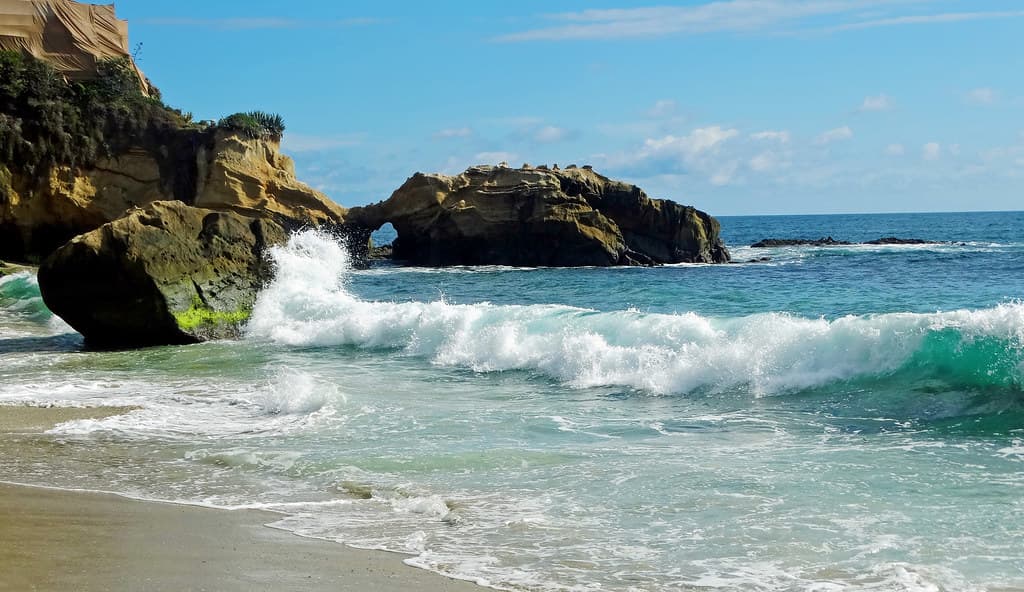
Breaking Waves at Natural Arches, Laguna, CA 2016
This is Surfside without the condo towers, a stretch of public beach where the county maintains bare-bones access and locals guard their soft-shell crab spots. The beachfront here refuses gentrification—no boardwalk, no surf shop, just a gravel lot and a path through the dunes. Shorebirds work the wrack line at dawn, stabbing for sand crabs while brown pelicans dive beyond the breakers.
Sunset turns the jetty rocks amber, then violet. You'll watch shrimp boats motor toward Freeport, their outriggers silhouetted against pink cumulus. The families have gone. What remains: the rhythmic clang of a fishing rod holder against granite, the hiss of foam on sand, the particular quiet of a Texas beach that hasn't sold itself yet.


