
Counting the waves…
Counting the waves…

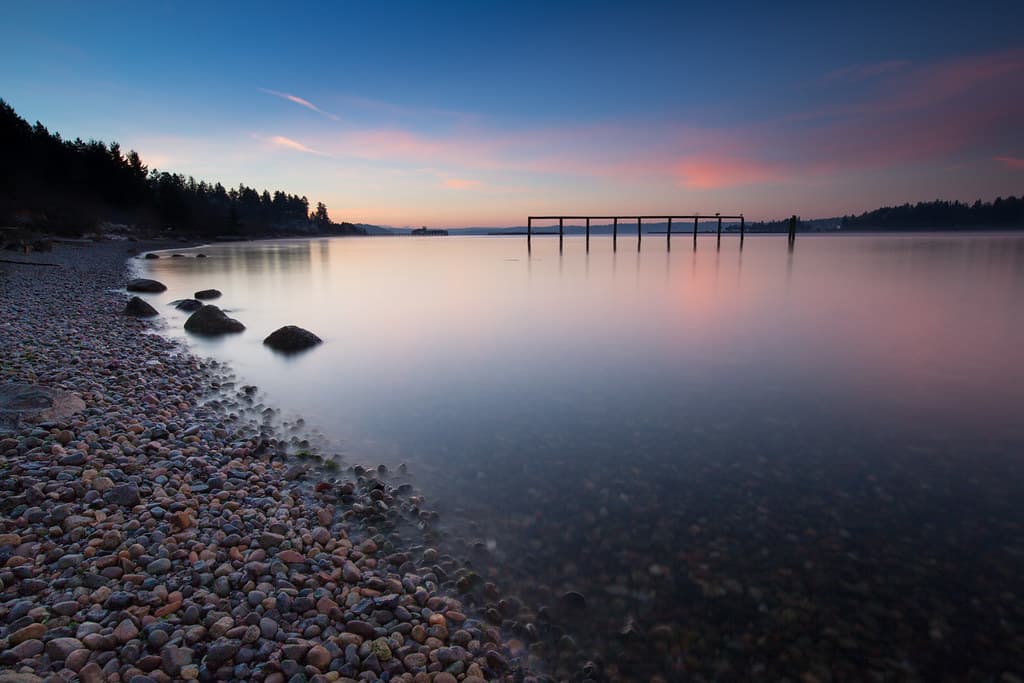
Fort Ward Beach unfolds along the southwest shore of Bainbridge Island, where naval fortifications once guarded the entrance to Puget Sound. Today, families spread picnic blankets on the grassy bluff above or descend the short slope to a rocky beach that reveals barnacle-studded boulders and pocket tide pools at low tide. The water stays relatively calm thanks to the protected passage, and on clear days Mount Rainier anchors the view to the south while ferries glide silently across the middle distance. You'll find children crouched over tide pools, inspecting purple sea stars and hermit crabs, while their parents skip stones across the glassy surface during summer evenings. The beach favors sturdy water shoes over bare feet—the rounded cobbles range from marble-sized to melon-sized—but that geological jumble is precisely what keeps the crowds thin and the experience unhurried. Driftwood logs, bleached silver by salt and sun, create natural seating along the high-tide line. The 137-acre park behind the beach offers wooded trails that weave through second-growth forest and remnants of the old military installation. Pack a thermos and arrive in the late afternoon when the light turns everything golden and the Cascade peaks sharpen against the eastern sky. The rhythm here is gentle, tidal, measured in the patient accumulation of beach glass rather than adrenaline.
Places, rentals, tours and events within walking and driving distance of Fort Ward Beach.
Photos
Fort Ward Beach is generally safe for families, but swimming conditions require caution. The water is cold year-round (typically 45-55°F), so wetsuits are recommended. The beach has calm waters since it faces Rich Passage, making it suitable for wading and playing, though few people actually swim due to temperature. There are no lifeguards on duty. The rocky shoreline can be slippery, so water shoes are helpful. Currents are typically mild, but always supervise children closely near the water.
Fort Ward Beach is accessible year-round, with each season offering different experiences. Summer (June-September) brings the warmest weather and lowest tides, ideal for beachcombing and picnics, though water remains cold. Spring and fall offer fewer crowds and beautiful sunsets. Winter visits can be rewarding for storm watching and wildlife viewing. Low tide periods are best for exploring tide pools and the expansive beach. Check tide charts before visiting, as high tide significantly reduces beach access and rocky areas become submerged.
Fort Ward Beach is located within Fort Ward Park on the southwest side of Bainbridge Island. From Seattle, take the Bainbridge Island ferry (35-minute ride), then drive about 15 minutes south. Follow Highway 305 to Day Road, turn onto Pleasant Beach Drive, then Fort Ward Hill Road into the park. Free parking is available at the beach lot, though spaces are limited (approximately 20-30 spots). Arrive early on summer weekends as the lot fills quickly. There's no public transportation directly to the beach.
Fort Ward Beach has basic amenities including vault toilets (no running water) and picnic tables near the parking area. There are no food vendors, restaurants, or lodging at the beach itself, so bring your own provisions and water. The nearest dining and grocery options are in Winslow, about 4 miles away near the ferry terminal, offering restaurants, cafes, and markets. The park has no RV hookups or overnight camping. Cell phone coverage is generally good for emergencies.
Yes, Fort Ward Beach is part of a former U.S. Army coastal defense installation dating to the early 1900s. While many structures were removed, visitors can explore remnants of the military past, including some bunkers and fortification foundations scattered around the park. Interpretive signs provide historical context about the fort's role in protecting Puget Sound. The beach itself offers excellent views of Rich Passage, a strategic waterway the fort once guarded. Photography of naval vessels passing through is popular among visitors.