
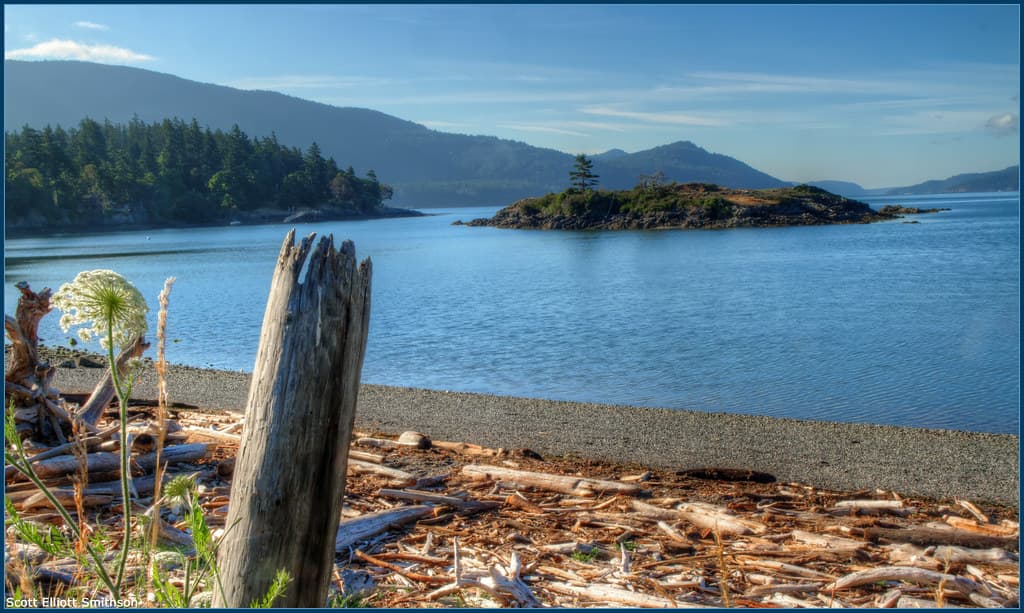
You'll find North Beach at the end of a quiet residential lane, where the pavement gives way to a public access corridor framed by arbutus trees with peeling cinnamon bark. The beach itself is a study in Pacific Northwest restraint—no white sand, no palm trees, just honest stones ranging from marble-sized to melon, polished smooth by centuries of tidal work. Families arrive with buckets and towels, spreading blankets on sun-warmed driftwood logs that serve as natural benches.
“Protected Eastsound waters and dramatic mountain vistas create a rare beach where children explore tide pools safely while eagles fish overhead.”
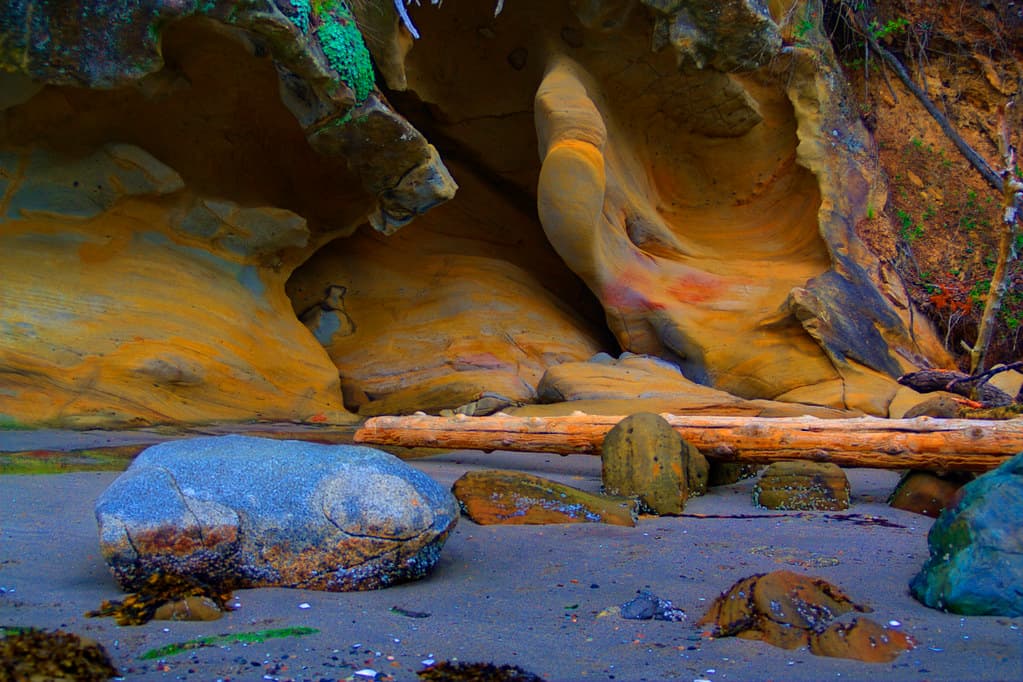 Credit: Flickr
North Beach (Orcas Island) — photo by FlyingColors (i) Contact
The water here is Salish Sea calm, protected by the archipelago that encircles it. Your children will wade in rubber boots, flipping rocks to reveal scuttling crabs and lime-green anemones that close like fists when touched. Bald eagles perch in the Douglas firs behind you, occasionally swooping low enough that you hear the whistle of wind through primary feathers. Across the sound, other islands stack up in layers of blue—Lummi, Sucia, Matia—each ridge softer than the last.
Come prepared for the reality of Northwest beaches: the water hovers around fifty-five degrees even in August, and the stones require sturdy footwear unless you've toughened your soles on similar terrain. But what North Beach offers in exchange is a kind of quiet abundance—seals that surface unexpectedly, herons stalking the shallows at dusk, and the particular satisfaction of a beach that asks you to slow down and notice.


