
The beach unfurls in a crescent along the Columbia's mouth, where centuries of maritime disasters earned this stretch the nickname "Graveyard of the Pacific." You'll walk past bleached logs the size of station wagons, deposited by winter storms that reshape the shoreline annually. On clear days, the North Head Lighthouse punctuates the headland to your north, while container ships inch past the south jetty, their horns echoing off basalt cliffs.
“You're standing at the most dangerous river bar in the Western Hemisphere, where the Columbia's current meets Pacific swells in perpetual conflict.”
 Credit: Flickr
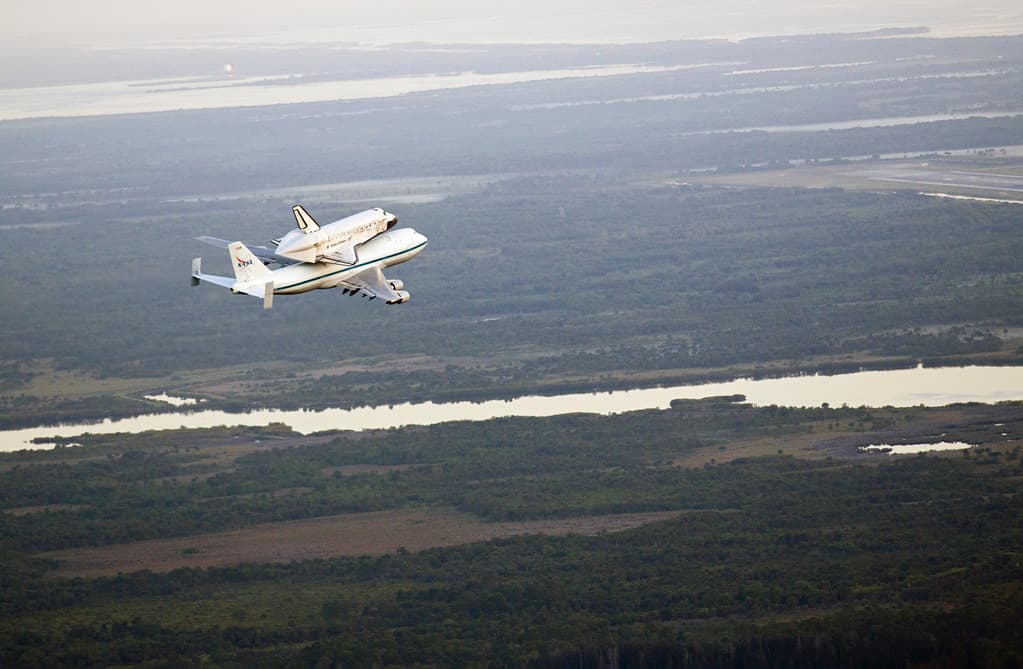
SCA Carrying Discovery Departs KSC (KSC-2012-2373)
The sand itself tells stories—black magnetite veins streak through it, remnants of volcanic eruptions that built the Cascades. You'll find Japanese glass fishing floats after winter gales, kelp bulbs thick as your forearm, and agates polished smooth by the river's relentless current. Seals bob in the surf break, their heads appearing like dark buoys before vanishing beneath green water.
Cape Disappointment State Park frames the northern end, where Lewis and Clark first glimpsed the Pacific in November 1805. The wind here doesn't quit—it sculpts shore pines into twisted bonsai and sends sand devils spiraling across the flats at low tide. Bring layers. The marine air bites even in July, and fog can roll in within minutes, transforming the entire coast into a muted watercolor of grays and silvers.


