Counting the waves…
Counting the waves…

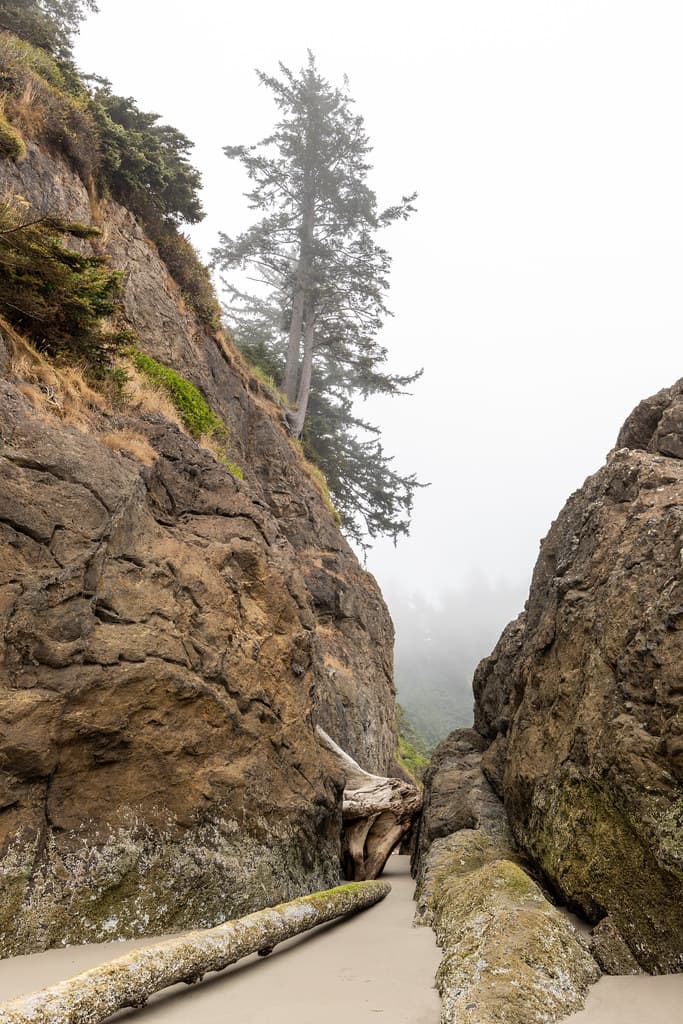
The name deceives. Cape Disappointment offers anything but letdown, though British fur trader John Meares thought otherwise when storms blocked his 1788 attempt to enter the Columbia. Today you'll stand where river current wrestles ocean tide in a perpetual hydraulic drama known to mariners as the Graveyard of the Pacific. The beach extends in a two-mile arc of slate-gray sand, anchored by the cape's twin lighthouses—one dating to 1856—that blink warnings across the whitecaps. You'll find the shoreline littered with sculptural driftwood, bleached bone-white by sun and surf. Behind you, Sitka spruce and shore pine bend eastward, permanently shaped by relentless Pacific gales. Arrive during winter and you might spot gray whales spouting offshore during their annual migration; come summer and the fog rolls in thick as wool, muffling everything except the foghorn's moan and the endless percussion of waves. The water stays frigid year-round—rarely above 55 degrees—and rip currents make swimming treacherous. But the drama overhead compensates: bald eagles ride thermals above the cliffs, brown pelicans skim wave crests, and storm systems build on the horizon like distant mountain ranges. The lighthouse trail winds through coastal forest to jaw-dropping overlooks where you can watch container ships navigate the Columbia bar, guided by the same beacons that have marked this convergence for more than a century.
Places, rentals, tours and events within walking and driving distance of Cape Disappointment State Park Beach.
Photos
Swimming is generally not recommended at Cape Disappointment due to extremely dangerous conditions. The beach sits at the confluence of the Columbia River and Pacific Ocean, creating unpredictable currents, sneaker waves, and strong undertows. The area is known as the "Graveyard of the Pacific" due to treacherous waters that have caused numerous shipwrecks. Visitors should stay well back from the water's edge, never turn their back on the ocean, and keep children and pets closely supervised. Wading and swimming are strongly discouraged even on calm days.
Cape Disappointment is worth visiting year-round, with each season offering distinct experiences. Summer (June-September) provides the most stable weather and best visibility for scenic views and hiking. Spring and fall offer dramatic storm-watching opportunities and fewer crowds. Winter brings powerful waves and moody coastal landscapes, ideal for photography and whale watching (December-May). Fog is common in summer mornings but typically clears by afternoon. For lighthouse tours and optimal hiking conditions, visit between late spring and early fall when trails are driest and facilities fully operational.
Cape Disappointment State Park is located 3 miles southwest of Ilwaco, Washington, off Highway 101. From Seattle, it's approximately a 3-hour drive via I-5 South and Highway 4 West. The park has multiple parking areas near Waikiki Beach, North Head Lighthouse, and the Lewis and Clark Interpretive Center. A Washington State Discover Pass ($10 daily or $30 annual) is required for parking. Lots can fill quickly during summer weekends and holidays. No public transportation serves the park, so a personal vehicle is necessary.
The park itself offers 220 campsites including tent sites, RV hookups, and yurts, plus cabins for rent. No restaurants operate within the park. The nearby town of Ilwaco (3 miles away) has several restaurants, cafés, and grocery stores. Long Beach, 10 miles north, offers more extensive dining and lodging options including hotels, vacation rentals, and seafood restaurants. Astoria, Oregon, 15 miles across the Columbia River bridge, provides additional choices. Pack snacks and water for beach visits as amenities are limited within the park.
Cape Disappointment earned the nickname "Graveyard of the Pacific" because the treacherous Columbia River Bar has caused over 2,000 shipwrecks and claimed approximately 700 lives since the early 1800s. The dangerous confluence of river currents, ocean tides, storms, and shifting sandbars creates notoriously hazardous navigation conditions. The Lewis and Clark Interpretive Center within the park features exhibits about the area's maritime history and shipwrecks. Two historic lighthouses—Cape Disappointment Lighthouse (1856) and North Head Lighthouse (1898)—were built to help guide ships safely through these perilous waters.