
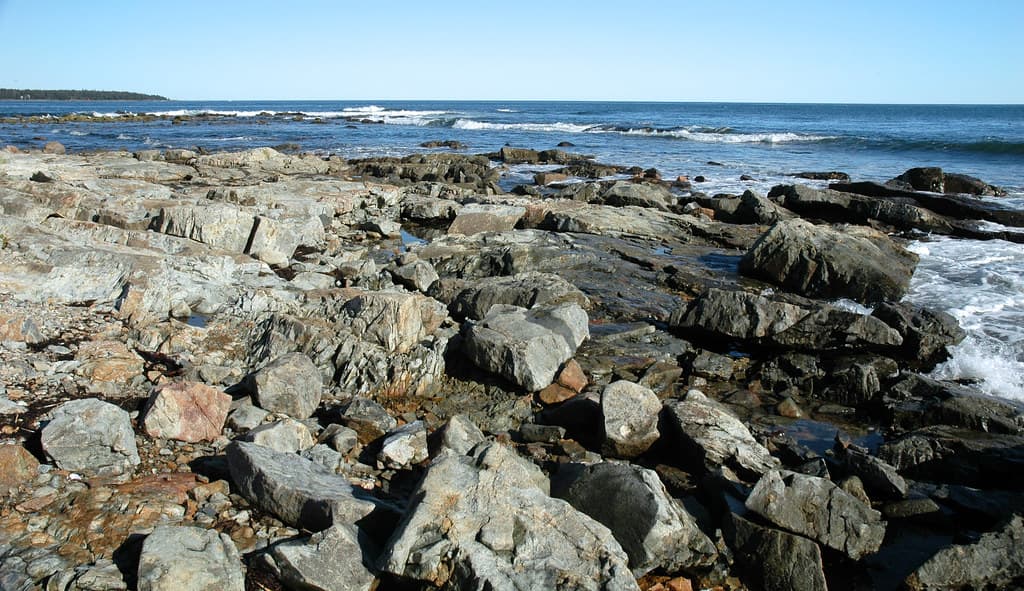
Cranberry Beach occupies a liminal zone where river meets ocean, creating a tidal theater most visitors miss on their rush to the peninsula's boardwalk attractions. The shore here is a chaos of bleached driftwood—mammoth timbers tumbled smooth by currents, stacked in silver piles that shift with every winter storm. Mudflats emerge at low tide, revealing clam beds and the tracks of shorebirds working the exposed sand.
“It sits at the exact confluence where one of North America's mightiest rivers surrenders to the ocean, creating a dynamic ecosystem found nowhere else on the Washington coast.”
 Credit: Flickr
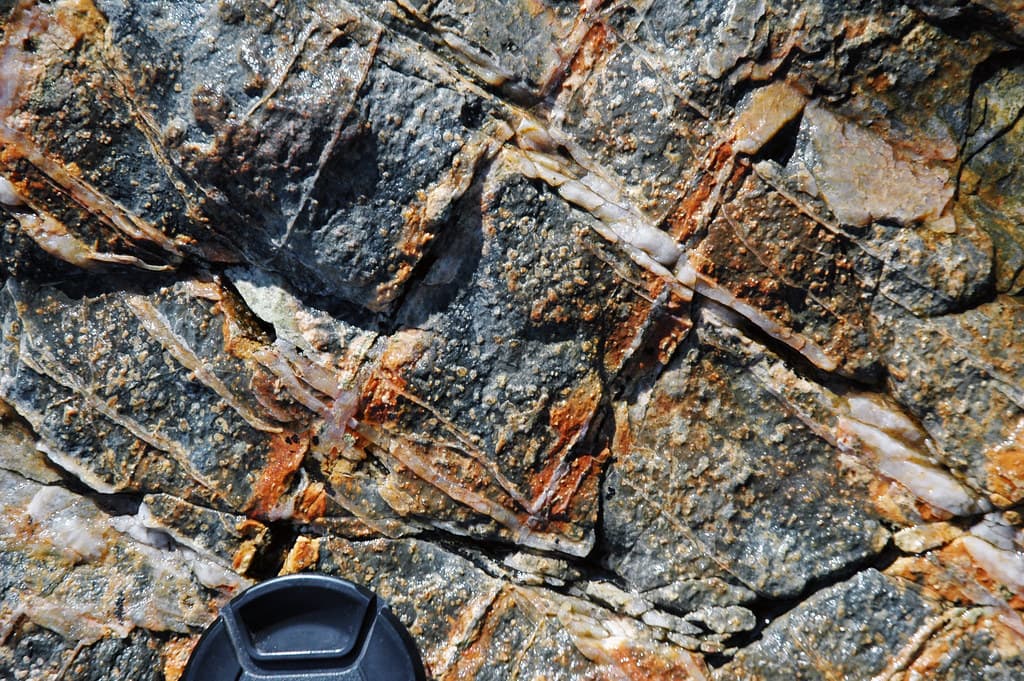
Boxwork veining in metatuffs (Cranberry Island Series, Upper Silurian, 424 Ma; Seawall Beach, Mt. Desert Island, Maine, USA) 2
The wind rarely stops. It carries the briny scent of kelp and the faint diesel note of fishing boats navigating the Columbia's mouth, a reminder that this isn't a sheltered cove but a working waterway. On clear mornings, you'll see the hills of Astoria across the river, while brown pelicans skim the chop in tight formation. The beach takes its name from the coastal bogs that once flourished here, though cranberries have long given way to beach grass and Scotch broom.
Come prepared for weather that changes by the hour. The same conditions that keep crowds thin—gusting wind, spitting rain, temperatures that hover in the fifties even in July—are exactly what make this stretch compelling. You're here to witness the Pacific Northwest coast as it actually is: moody, untamed, and utterly indifferent to comfort.


