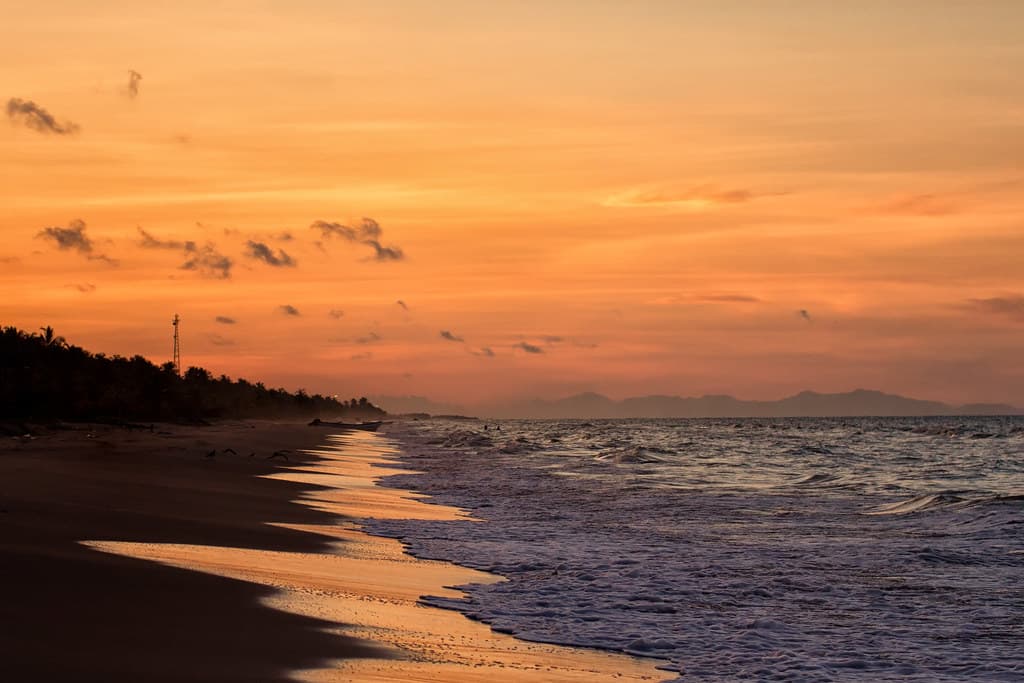
Counting the waves…
Counting the waves…
The road ends where the fishing skiffs are hauled onto bleached planks, and a footpath curves past a clump of buttonwood trees toward the cove's entrance. Your feet sink into sand that shifts from coarse coral fragments near the waterline to finer grains higher up, littered with driftwood polished smooth by currents. The water here is a murky jade, tinged with sediment from the nearby mangrove channels, and the air smells of brine and sun-baked seaweed. A handful of painted pirogues rest on their sides beneath almond trees, their hulls scarred from years of hauling in snapper and grouper. You'll hear the slap of waves against the rocks that frame the cove, and the occasional shout from a fisherman checking his lines offshore. The sand slopes gently, warm under your soles, and small schools of silversides dart through the shallows when you wade in. By late afternoon, the western headland casts a wedge of shadow across half the beach, and the breeze picks up, carrying the sound of wind chimes from a nearby house. Pelicans patrol the cove's mouth, folding their wings and plunging with barely a splash. You'll leave with salt crystals drying on your skin and sand caught in the seams of your bag.
Places, rentals, tours and events within walking and driving distance of Playa Boca Chica de Uchire.
Photos
As a small cove beach, Playa Boca Chica de Uchire typically offers more sheltered swimming conditions than exposed coastlines, with waves generally reduced by the cove's protected geography. However, always assess current conditions upon arrival, as wind and tide can still create currents. The intimate size means fewer people for assistance in emergencies, so swim cautiously and never alone. Check with local residents about any seasonal hazards. General Venezuela travel safety precautions apply—visit during daylight hours and remain aware of your surroundings beyond just water conditions.
For budget-conscious travelers seeking fewer crowds, the shoulder seasons of May-June and October-November offer good value, though some rain is possible. The dry season (December-April) provides optimal weather but may see slightly more visitors, though this hidden cove rarely feels crowded. Weekdays are ideal for couples seeking privacy and romantic scenery. Early mornings offer the most tranquil atmosphere for enjoying the cove's intimate setting. As a lesser-known beach, it maintains a peaceful character year-round, making any time suitable for those prioritizing solitude over perfect weather guarantees.
Playa Boca Chica de Uchire is located within or very near the fishing village of Boca de Uchire in Anzoátegui state. From regional hubs like Barcelona or Puerto La Cruz, travel east along the coastal highway toward Píritu, then follow signs to Boca de Uchire. Within the village, ask locals for directions to this small cove, as it may not be prominently marked. A private vehicle offers the most flexibility, though some público (shared taxi) services may run to Boca de Uchire village. The final approach might involve short walks or rough roads typical of small coastal communities.
Boca de Uchire is a small fishing village with basic services. You may find simple local restaurants serving fresh seafood and traditional Venezuelan dishes, but options are limited and hours can be irregular. Bring snacks and beverages for the beach. Accommodation consists primarily of modest guesthouses or rooms in local homes rather than hotels. Facilities are budget-friendly but basic—confirm availability before arrival. For more dining and lodging choices, larger towns along the coast offer better infrastructure. Many visitors bring picnic supplies and make this a day trip from more developed areas.
This small cove beach offers an intimate, romantic setting rarely found at larger, more developed beaches. Its hidden nature and compact size create a sense of discovery and privacy, making it particularly appealing for couples seeking seclusion. The cove's scenic beauty is enhanced by its undeveloped character—no commercial infrastructure disrupts the natural coastline. The surrounding fishing village atmosphere provides authentic cultural context without tourist commercialization. Being manually curated rather than appearing in standard beach databases means it remains genuinely off the beaten path, offering tranquil experiences for those willing to seek it out.