
Counting the waves…
Counting the waves…

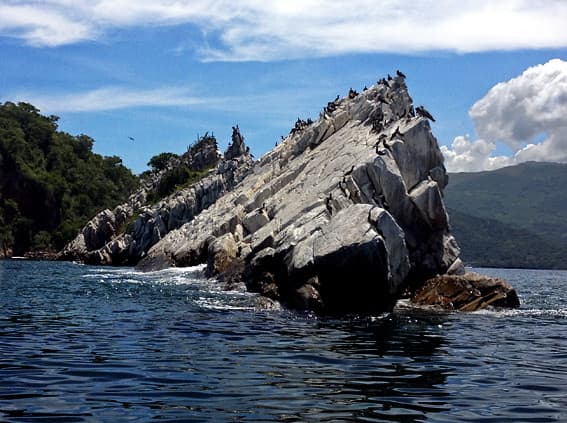
You'll pick your way across barnacle-crusted volcanic rock, the salt spray cooling your face as the lighthouse tower rises white against the sky. This isn't a swimming beach—the shoreline drops sharply into churning water where currents squeeze between rocks the size of sedans. Local fishermen cast lines from the outer boulders, their coolers wedged into crevices, rods bent against the pull of snapper and grouper. The real draw arrives late afternoon when the western sun turns the industrial port of Guanta into a silhouette and the lighthouse—still operational—begins its nightly rotation. You'll hear the mechanism click and whir inside the tower, a rhythmic companion to the crash of surf. Frigatebirds ride the updrafts along the point, their forked tails black against amber clouds. The rocks hold the day's heat long after sunset, warm beneath your palms as you sit and watch tankers slide past on their way to Puerto La Cruz. Bring sturdy shoes with grip; flip-flops will send you sliding on algae-slick stone. The few visitors who make the trip are Venezuelan photographers chasing that perfect backlit shot of the lighthouse, or couples seeking a dramatic backdrop away from the family beaches farther west. No vendors, no umbrellas, no soft places to land—just you, the rocks, and the relentless Caribbean doing what it does best.
Places, rentals, tours and events within walking and driving distance of Playa El Faro de Guanta.
Photos
Swimming conditions at Playa El Faro de Guanta can be challenging due to its rocky shoreline. The area features exposed rocks and uneven terrain both on shore and underwater, making it less suitable for traditional swimming compared to sandy beaches. Waves can crash against the rocks, creating currents and turbulence. This beach is better suited for experienced swimmers who are comfortable navigating rocky coastlines. Always check local conditions before entering the water, wear protective water shoes, and be cautious of sharp rocks and sea urchins.
The best time to visit Playa El Faro de Guanta is during Venezuela's dry season, typically December through April, when you'll encounter less rainfall and calmer seas. However, this beach is particularly appealing during shoulder seasons and weekdays when crowds are minimal, making it ideal for budget travelers seeking solitude. The late afternoon offers spectacular sunset views over the rocky coastline. If you're visiting for photography, early morning or golden hour provides the best natural lighting for capturing the scenic rocky formations and lighthouse area.
Playa El Faro de Guanta is located near the town of Guanta in Anzoátegui state, accessible by road from Barcelona or Puerto La Cruz. From Puerto La Cruz, drive toward Guanta and follow signs toward the lighthouse (faro) area. The beach is relatively close to the urban center of Guanta, making it reachable by local transportation or taxi. Roads in the area are generally passable, though conditions can vary. Consider asking locals for specific directions once in Guanta, as signage may be limited for this less-touristy destination.
Being near the town of Guanta, you'll find basic services including small restaurants, food vendors, and local eateries serving Venezuelan coastal cuisine within a short distance. However, directly at the beach, facilities may be limited. For accommodations, Guanta town offers budget-friendly options, while nearby Puerto La Cruz provides a wider range of hotels and guesthouses. Most visitors stay in Puerto La Cruz and make day trips to explore beaches along this coast. It's advisable to bring snacks and water, especially if visiting during off-peak times when vendors may be scarce.
Playa El Faro de Guanta stands out for its distinctive rocky shoreline and dramatic coastal scenery, contrasting with the sandy beaches common elsewhere in the region. The lighthouse (faro) that gives the beach its name adds a photogenic element, making it particularly popular for Instagram-worthy shots and sunset photography. Its location offers a more rugged, natural experience compared to developed tourist beaches. The rocky terrain creates interesting tidal pools and unique geological formations. As a hidden gem with fewer visitors, it provides a peaceful alternative for travelers seeking authentic coastal scenery without crowds.