
Counting the waves…
Counting the waves…

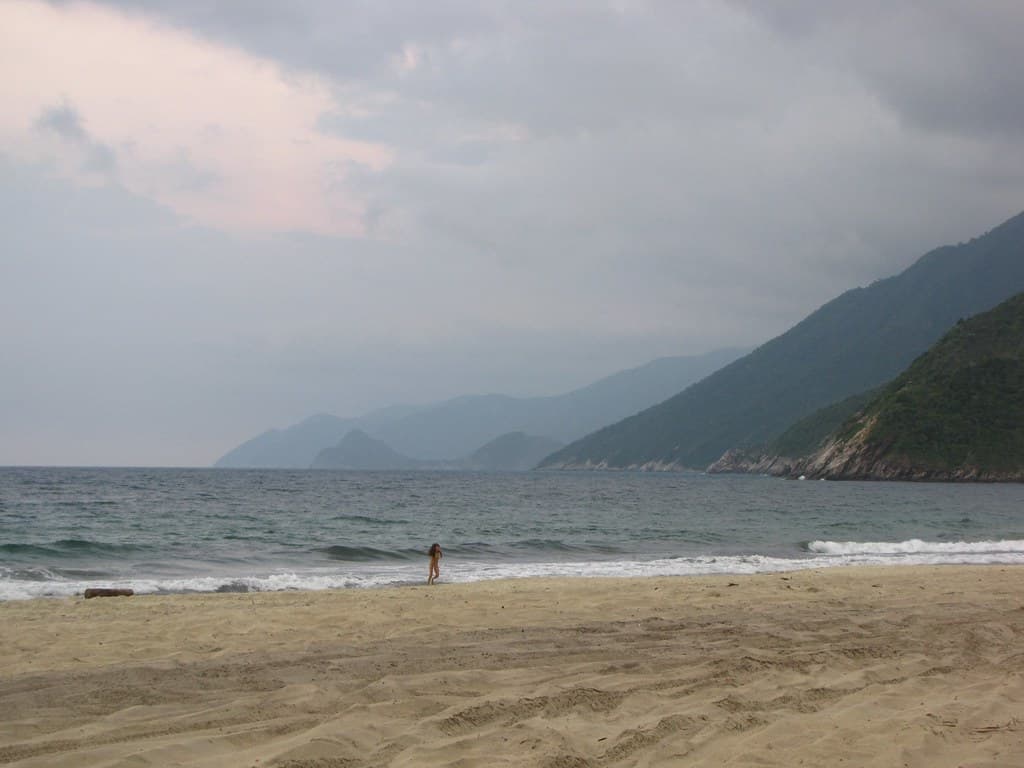
The ciénaga—a coastal lagoon fed by seasonal streams and tidal pulses—empties here through a throat maybe thirty meters wide, its current reversing with the moon. At flood tide the Caribbean pours in, turning the lagoon glassy and raising the water temperature five degrees; at ebb, the outflow carves ripples in the sand and carries leaf litter seaward in rafts. You stand at the divide, one foot in lagoon-warm shallows, the other in the cooler surf, and watch needlefish arrow through the mixing zone. Mangroves guard the eastern margin in a dense tangle of prop roots and pneumatophores, their canopy alive with boat-tailed grackles and the occasional mangrove warbler. The western spit is bare sand, scoured clean by tidal flux, dotted with bleached conch shells and the occasional Portuguese man o' war stranded by the outgoing current. Frigatebirds wheel overhead, their scissor tails black slashes against cumulus, and pelicans roost on half-submerged snags that mark the lagoon's drowned former shoreline. Sunset here feels amphibious: the sky's reflection doubles in the lagoon's mirror plane, and the horizon dissolves into uncertain geometry. Fishermen pole dugouts through the shallows, their silhouettes stretched long, checking gill nets set at the channel's edge. You hear the ocean before you see it—a low, rhythmic exhale—then the first wavelets lap your ankles, salinity spiking on your tongue, the transition from stillness to motion measured in footsteps.
Places, rentals, tours and events within walking and driving distance of Playa Boca de La Ciénaga.
Photos
Lagoon-entrance beaches typically offer calmer conditions than open ocean beaches, but currents can be tricky where the lagoon meets the sea. Water exchange between the lagoon and ocean creates tidal flows that vary throughout the day. Swimming is generally safer than exposed coastline, but always check current conditions locally. The lagoon connection means water may be brackish and visibility can vary depending on sediment from inland drainage. Since this is a hidden beach requiring boat access, emergency services are limited, so swim conservatively.
Visit during Venezuela's dry season, roughly December through April, when you'll find the best weather and fewer crowds. This period offers calmer seas for boat access and clearer skies for sunset viewing. The Henri Pittier coastal drainage system is less turbulent during dry months, meaning clearer lagoon waters. Weekdays see fewer Venezuelan visitors than weekends or holidays. Early mornings and late afternoons provide the most serene atmosphere at this hidden spot, with sunset being particularly scenic at this lagoon entrance location.
Boat access is required to reach this lagoon-entrance beach. You'll need to arrange water transport from nearby coastal towns in the Aragua region, likely through the Henri Pittier National Park coastal area. Local fishermen or tour operators can provide boat services from towns like Ocumare de la Costa or other nearby settlements. The journey involves navigating through or around lagoon systems, so a knowledgeable local guide is valuable. Road infrastructure to this specific beach is non-existent, making advance planning for boat transport essential.
This hidden, boat-access beach has no facilities on-site. La Ciénaga settlement may offer very basic services, but infrastructure is minimal in this remote Henri Pittier coastal drainage area. Most visitors bring their own food, drinks, and supplies for the day. For accommodation, you'll need to stay in larger towns like Ocumare de la Costa or other Aragua coastal communities where guesthouses, posadas, and restaurants are available. Plan as a day trip and pack everything you need, including sun protection and sufficient water.
This beach represents a key ecological transition zone where the inland lagoon system meets the Caribbean Sea. The dynamic interaction between fresh and salt water creates unique brackish conditions supporting diverse wildlife and bird species. Part of the Henri Pittier coastal drainage area—Venezuela's oldest national park region—it offers exceptional natural scenery. The hidden, boat-only access keeps crowds minimal. Sunset views are particularly dramatic where the lagoon mouth frames the horizon. For nature enthusiasts, the blend of lagoon and coastal ecosystems makes this an especially rewarding, albeit challenging-to-reach, destination.