

The beach at Scotia Bay announces itself not with sand but with pebbles the size of robin's eggs, smoothed by centuries of katabatic winds and the grinding advance and retreat of sea ice. You step from the inflatable tender onto stones slick with spray, your boots crunching as you climb the short slope to the graveled apron where penguin colonies press close to the Argentine research station. The air smells of guano and kelp, sharp and unmistakable, while elephant seals sprawl along the shoreline like enormous punctuation marks.
“The only beach where you can stand beside Antarctica's oldest continuously staffed research station while gentoo penguins nest within arm's reach.”
 Credit: Pexels
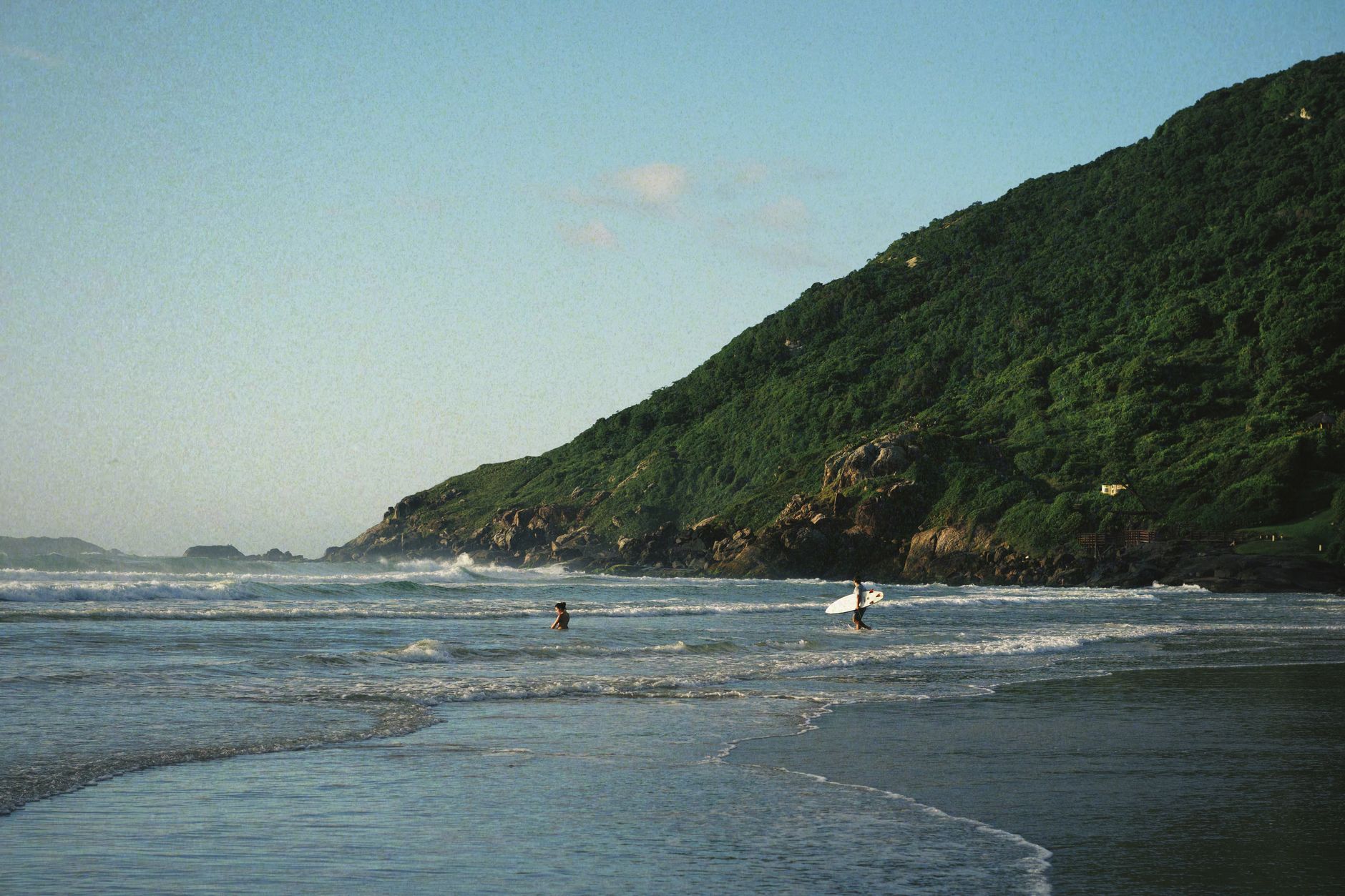
Peaceful summer day at Florianópolis beach with surfers and lush hills.
Base Orcadas has occupied this windswept notch of Laurie Island since 1904, its handful of winterers the only permanent human presence for hundreds of miles. You time your visit during the austral summer—November through February—when twenty-four-hour daylight softens the landscape and research activity peaks. Even then, the bay remains unvisited for days at a stretch. The surrounding peaks wear their snowcaps low, and icebergs the size of houses drift past the headland, calved from glaciers you cannot see.
No amenities exist here, no boardwalks or benches. You bring everything you need on your back, mindful that the Antarctic Treaty requires you to leave no trace. The pebbles shift underfoot as you walk the tideline, each step a small negotiation with a beach that belongs first to the wildlife and only briefly, conditionally, to you.


